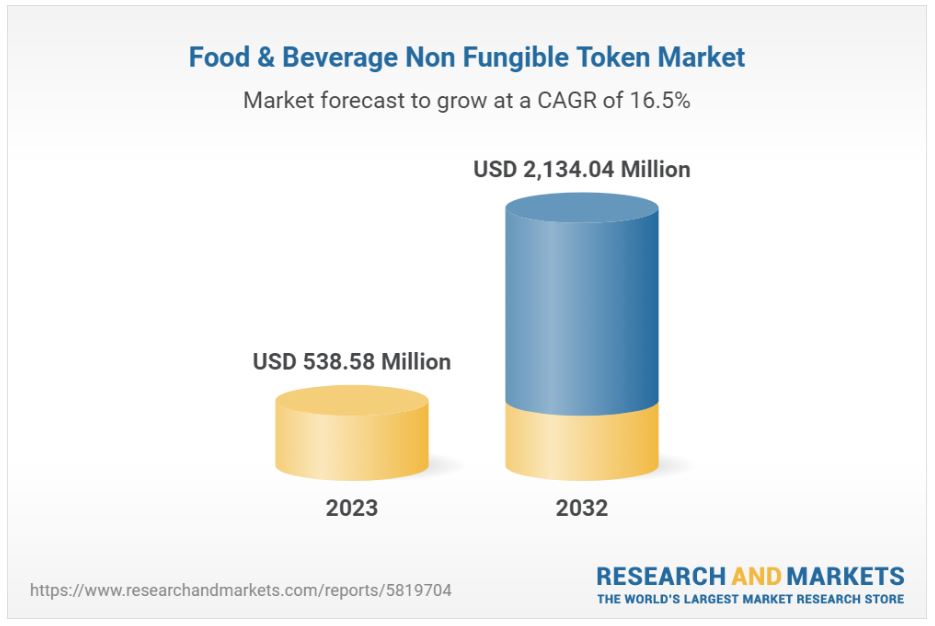
Graphic representation of predicted growth for the Food & Beverage $NFT market. Source: Research and Markets
NFTs are unique digital assets verified on a blockchain network. These are created using blockchain technology, a decentralized digital ledger that records transactions transparently and securely.
The value of an $NFT can vary greatly depending on the rarity and popularity of the item it represents, with some NFTs selling for millions of dollars. In the food industry, the $NFT market gains traction due to the demand for transparency and traceability. Tracking and verifying food origin, quality and safety is crucial for consumers, retailers and regulators.
In March 2021, Pizza Hut Canada joined the $NFT trend with "1 Byte Favorites," a digital pizza collection. The NFTs represented pizza slices with unique recipes on Rarible, featuring popular choices like Hawaiian, Pepperoni, Canadian and Margherita. The NFTs gained popularity and sold out, being used as a marketing campaign to promote their pan pizzas and engage customers.
Related: $NFT-styled debit cards the future of Web3 — Animoca founder on $30M hi investment
Papa John's International, Inc., a pizza take-out chain, entered the $NFT market with its "Hot Bags" collection. These NFTs showcased handbag designs to promote their new business line, Papa John's X Cheddar, which offers merchandise. The NFTs were minted on the Tezos blockchain, with the numbers symbolizing the company's founding year (1984).
However, the report mentions that $NFT adoption in the food & beverage industry is hindered by technical complexities, especially for smaller producers. Limited awareness among consumers and industry stakeholders about $NFT benefits also poses a challenge.
Magazine: Tokenizing music royalties as NFTs could help the next Taylor Swift

 cointelegraph.com