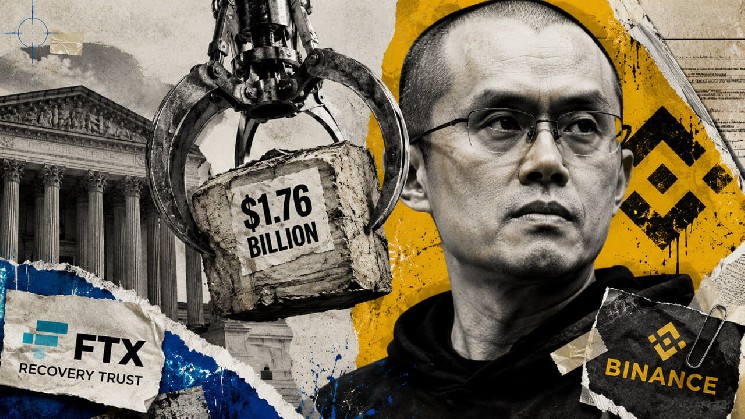
The trust alleges that the transferred assets were worth at least $1.76 billion. That is the amount sought and an alleged value, not a court-set valuation or an award.
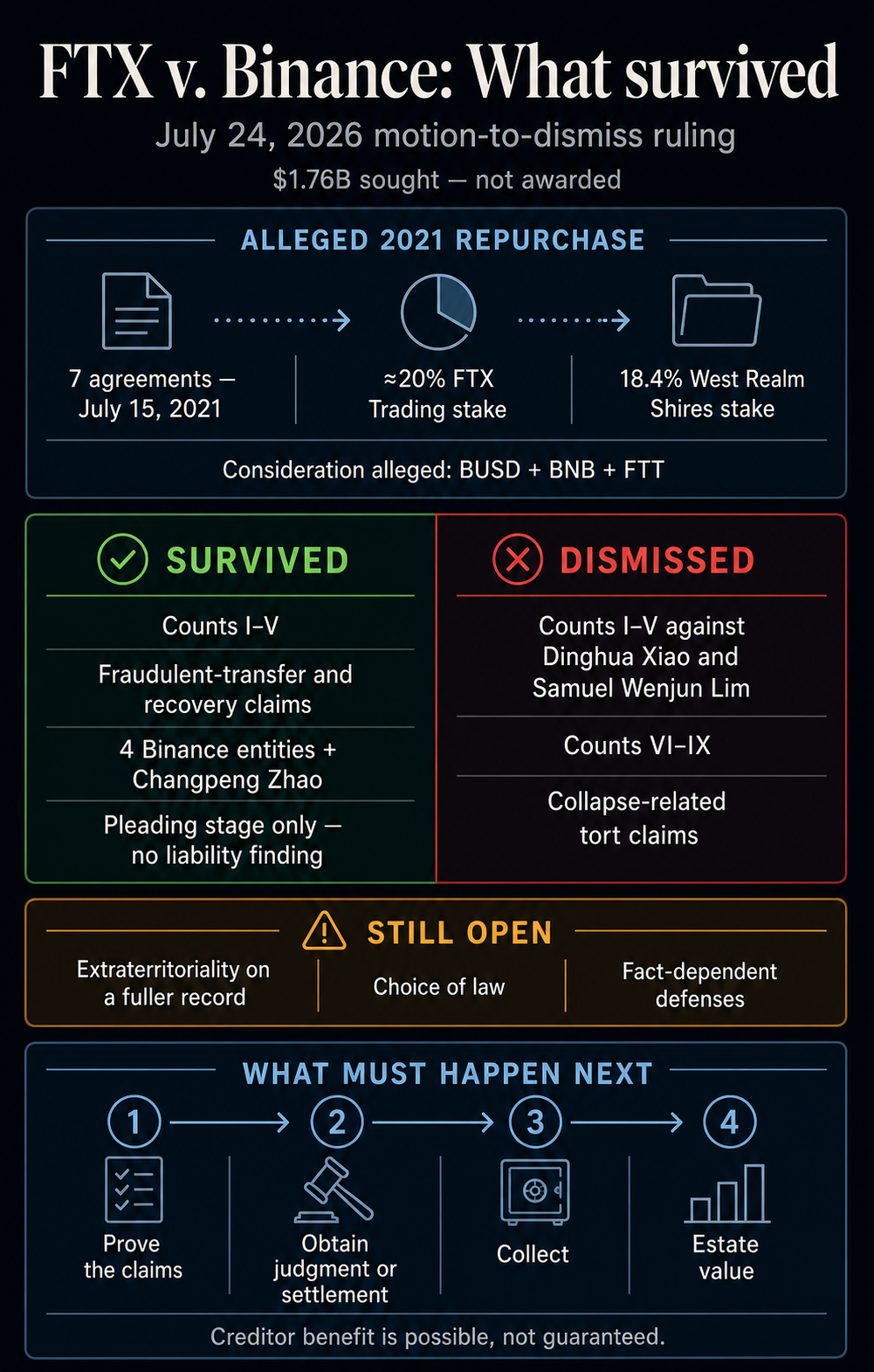
Owens allowed Counts I through V to proceed against Binance Holdings Limited; Binance Capital Management Co. Ltd., now known as Digital Anchor Holdings Limited; Binance Holdings (IE) Limited; Binance (Services) Holdings Limited; and Zhao. Those counts assert constructive and actual fraudulent transfers and seek recovery of the transferred property or its value. The court dismissed those counts against Xiao and Lim.
The judge also dismissed Counts VI through IX for injurious falsehood, fraud, intentional misrepresentation and unjust enrichment over statements linked to FTX's collapse. The court applied the in pari delicto doctrine and rejected the plaintiffs' asserted exception under the sole-actor rule. Its analysis made only limited pleading-stage determinations about alleged falsity and causation; it did not decide ultimate liability or determine how much the statements contributed to the collapse.
What happens next
The court found bankruptcy subject-matter jurisdiction and held that the plaintiffs made an initial showing of personal jurisdiction over the four Binance entities and Zhao. It also found that a domestic transfer was plausibly alleged at this stage, while leaving the broader extraterritoriality question open as the record develops.
Owens deferred a final choice-of-law decision. She also declined to compel arbitration and rejected dismissal under the Bankruptcy Code's section 546(e) safe harbor because the defense had not been established on the pleadings.
For creditors, the ruling preserves a potentially large recovery path but creates no recoverable value by itself. The trust must prove its fraudulent-transfer claims, address any defenses that return on a fuller record, obtain a judgment or settlement and collect. Only then could the case add assets to the bankruptcy estate.

 cryptoslate.com