
 bsc.news
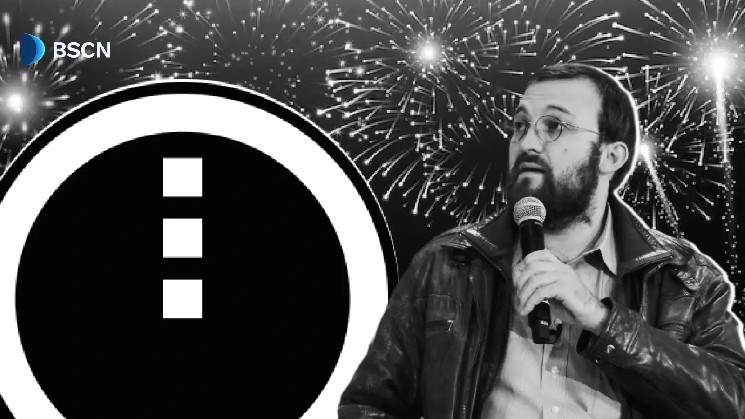
Charles Hoskinson's Midnight blockchainlaunched on Monday, bringing a privacy-focused layer-1 network to mainnet with Google, Vodafone and eToro among its first validators. The network uses zero-knowledge proofs to let users verify personal data without exposing it, and operates as a partner chain to Cardano.
Midnight is Live and we are having a good $night pic.twitter.com/TAumNCQ6Dr
— Charles Hoskinson (@IOHK_Charles) March 31, 2026
What Is Midnight And Why Did Hoskinson Build It?
Hoskinson, who founded Cardano, invested roughly $200 million into Midnight across six years of development. He describes it as a response to three core flaws in how crypto currently works: transparent ledgers that expose user data, wallets too complex for most people, and the risk of permanent, irreversible fund loss.
"The question I've been asking for eight years is: why didn't the revolution happen?" Hoskinson said.
His answer centres on three things he says blockchain has always been missing: simplicity, privacy and rules. Midnight is built to deliver all three together.
How Does Midnight Protect User Data?
Midnight runs on a dual-state architecture that keeps public and private data separate. Transaction proofs and smart contract code go on-chain where validators can verify them. Sensitive personal and business data stays in user-controlled local storage and never reaches the network.
The link between these two states is zero-knowledge cryptography, specifically recursive zk-SNARKs, short for Zero-Knowledge Succinct Non-Interactive Arguments of Knowledge. In plain terms, a zk-SNARK lets one party prove a statement is true to another without sharing the supporting details. A user can confirm they are over 18 without revealing their birth date, or verify they have sufficient funds without disclosing their balance.
Midnight generates proofs of just 128 bytes regardless of computation complexity, and validators confirm them in milliseconds.
Selective Disclosure In Practice
Unlike privacy coins such as Monero, which hide everything by default, Midnight uses selective disclosure. Users choose what to share and with whom. Regulators or auditors can receive an expanded view with relevant data, while the public only sees verified proofs. This design is built to work with frameworks like GDPR, CCPA and HIPAA, all of which require both data protection and the ability to share specific information with authorized parties when legally required.
Who Is Running The Network?
Hoskinson confirmed the launch during a live session on X. "Midnight is running. She's live. She's happy," he said, noting the average block time was holding steady at six seconds. The network launched as a federated model, with a transition to full decentralization planned for later phases.
Early validators include:
- Google, contributing cloud infrastructure and security tools including Mandiant monitoring
- Vodafone, exploring IoT and device-level transactions
- eToro, bringing trading and financial services experience
The participation of major corporations as operators from day one lends the network significant technical and reputational weight.
What Are $NIGHT And DUST Tokens?
Midnight uses a dual-token model. $NIGHT is the governance and security token, with a total supply of 24 billion. DUST, generated continuously by holding $NIGHT, functions as the resource used to pay transaction fees. DUST is not a standalone tradable token but a shielded network resource tied directly to $NIGHT holdings.
The separation is intentional. Transaction costs stay predictable because fees are not subject to auction dynamics the way Ethereum gas prices are. Users do not need to chase volatile assets to keep the network accessible.
Midnight distributed 100% of the $NIGHT supply through the Glacier airdrop in December, reaching 37 million wallets across eight blockchains including Bitcoin, Ethereum, Solana and BNB Chain. The token briefly crossed a $1 billion market cap and currently trades near $0.047, giving the network a market cap of roughly $850 million.
Early Real-World Deployments
London-based Monument Bank has announced plans to tokenize up to £250 million ($330 million) in retail deposits on Midnight, making it one of the first fully licensed banks to bring customer funds onto a public blockchain under regulatory protection.
Other early use cases include confidential financial products, enterprise identity verification and private on-chain voting.
What Midnight Delivers
Midnight launches as a live, production network with a working dual-state architecture, zero-knowledge proof generation, six-second block times and a dual-token model separating governance from transaction fees. It supports private smart contracts written in Compact, a TypeScript-based language designed to make zero-knowledge development accessible without deep cryptographic expertise.
With Google, Vodafone and eToro running as validators, Monument Bank tokenizing retail deposits on the network, and 37 million wallets already holding $NIGHT tokens from the Glacier airdrop, the infrastructure is in place. The rollout continues in phases, moving from foundational infrastructure toward open application deployment and decentralized governance.
-
Midnight Network on X: Posts (March, 2026)
-
Charles Hoskinson on X: Posts (March, 2026)
-
Report by CoinDesk: Charles Hoskinson’s $200 million bet: Midnight goes live to tackle crypto’s biggest flaws
-
Midnight docs: About Midnight
-
Midnight website: General info