
 u.today
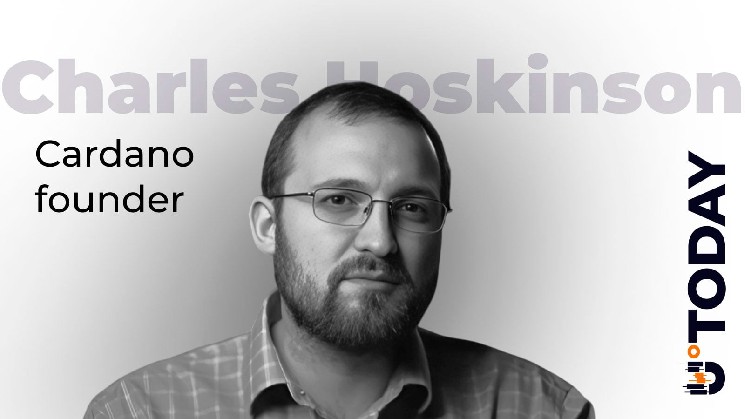
Cardano founder Charles Hoskinson stepped into a dispute between Emin Gün Sirer from Avalanche and Brad Garlinghouse, CEO of Ripple, mocking one of the main fan slogans of the $XRP ecosystem.
The trigger was an April Fools’ post by Emin Gün Sirer. The head of Ava Labs jokingly “announced” that banks are massively choosing Ripple’s technology but clarified a minute later that it was a joke.
The joke was not accidental. Sirer has long criticized Ripple’s centralized model and its plans to launch a stablecoin, calling them "a step backward" for the industry. Garlinghouse, in response, said that Ripple sits "rent free" in the rival's head.
Why Cardano sides with Avalanche against Ripple
The day after, Charles Hoskinson joined the discussion with a brief but eloquent comment: “But it’s the Standard!!!”
But it's the standard!!!
— Charles Hoskinson (@IOHK_Charles) April 2, 2026
This phrase is a direct reference to a long-standing slogan of the $XRP community, which supporters of the coin use to promote the idea that $XRP will become a unified bridge for all global cross-border payments. Hoskinson’s irony highlights his skepticism toward Ripple’s claims of global dominance in the banking sector.
The sharpness of Hoskinson’s reaction is interesting in the context of late March 2026 events, when Cardano's creator publicly opposed the Ripple-backed Clarity Act.
In his view, the bill creates exclusive conditions for $XRP, effectively establishing its status as a “standard” at the legislative level, which could negatively impact decentralized projects like Cardano.
As of April 2026, all three projects — Cardano, Avalanche and $XRP Ledger — are in an active phase of competition for the real-world asset (RWA) tokenization market.
While Ripple focuses on cross-border corridors, Avalanche promotes its institutional subnets, and Cardano bets on research-driven security, making such public clashes an inevitable result of intense competition.