
What To Check Before Your First Crypto Poker Deposit
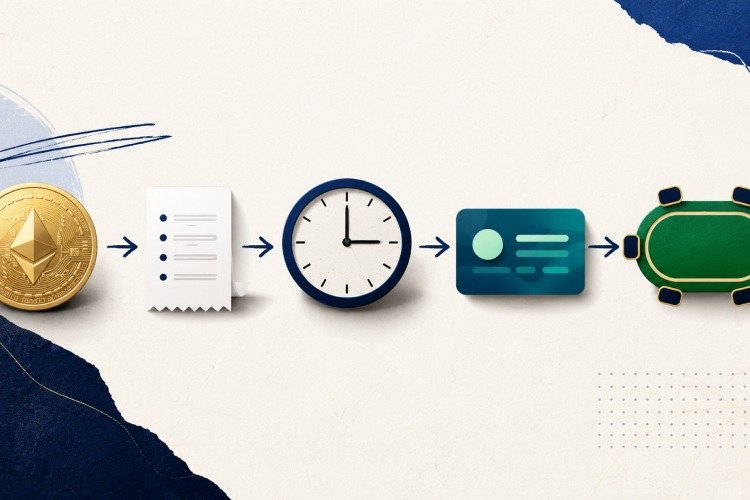
A crypto poker deposit has moving parts that are easy to scan past. The coin list tells you what can be sent. The fee wording tells you what the site charges. The timing section tells you when funds may show in the account. The poker page then has to connect that payment flow to tables, tournaments, and an AUD balance that a player can follow without doing mental math.
That is why payment wording matters as much as the coin logo. A 2025 Future Internet study on consumer acceptance of blockchain-based digital payment systems found that perceived usefulness, ease of use, and the conditions around a payment system all affect acceptance. For crypto poker payment methods, the practical question is simple: can a reader tell which coin is accepted, what happens after a transfer, and how the balance is shown?

Know when your
coins move
Alerts, real-time prices, and market news — all in one app
 4.8 based on 40K reviews in the App Store and Google Play


Before The Money Reaches the Table
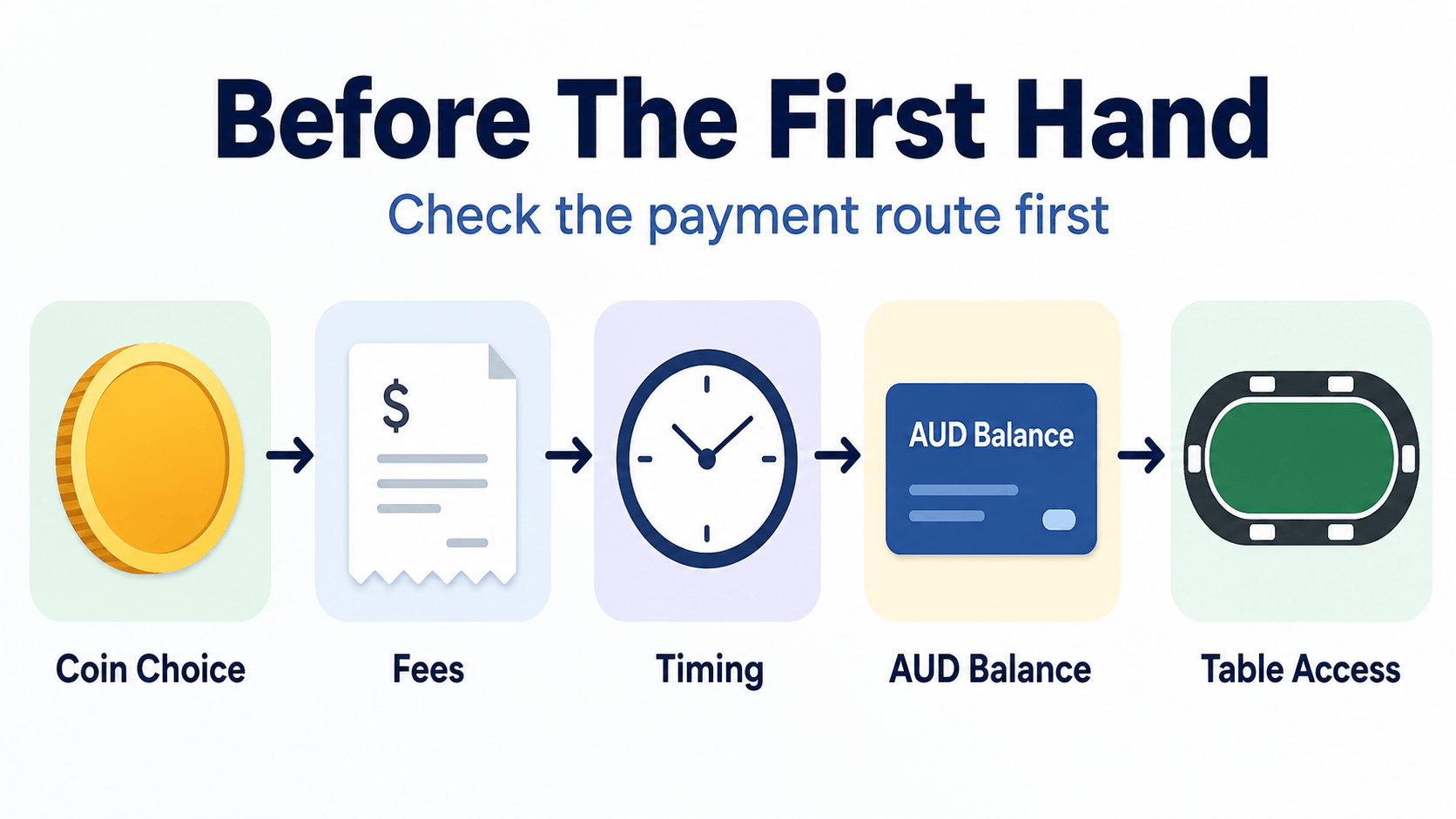
The cleanest way to read a crypto poker page is to separate payment mechanics from game access. First comes the transfer. Then comes the balance. Only after that does the reader need to think about the table or tournament choice.
For an Australian example, crypto poker Australia points to a page where poker access and cryptocurrency payments sit on the same screen. It lists Bitcoin, Ethereum, Bitcoin Cash, Bitcoin SV, USD Tether, and Litecoin as accepted coins, then ties those options to deposits, withdrawals, AU dollar conversion, and access to tables and tournaments. That makes it useful for Aussie readers wanting to understand the whole payment route, rather than treating “crypto poker” as a vague label.
The details to slow down for are the accepted coin list, deposit and withdrawal timing, transaction-fee wording, account-balance conversion, and any table that compares limits across coins. The page also separates its own no-deposit or withdrawal fee wording from the gas fee that may come from a crypto exchange. That distinction is easy to miss, especially when a reader is moving quickly from wallet terms to poker terms.
The same reading habit applies to social posts around the product. A recent Instagram post points followers toward Telegram for rewards, content, and giveaways, which works as an update channel and can provide explanations for anything that remains unclear. For anyone comparing payment pages, the useful move is to keep product details, coin mechanics, and promotional updates in separate boxes.
https://www.instagram.com/p/DUwNGRQE644/
Read The Coin List Like a Payment Choice
A supported coin list is the first practical filter. If a page accepts Bitcoin, Litecoin, USDT, and other assets, the reader should not assume those choices behave the same once sent from a wallet or exchange. They can differ in network habits, transaction costs, confirmation times, and user familiarity.
USDT can make value reading easier because it is dollar-pegged. Litecoin may be familiar from quicker transfers elsewhere. Bitcoin is the name many readers recognize first. Realizing that the coins behave differently is a key step to getting comfortable with crypto payments.
The next thing to check is how the page turns crypto into a playable balance. Australian readers may send a coin, but the account may display the equivalent value in AUD. That helps during play because the reader does not need to calculate every table amount in coin units.
Do Not Read Speed and Fees as One Line
Deposit speed and withdrawal speed answer different questions. A deposit section is about how funds move into the account before play. A withdrawal section is about how funds are sent back out after approval. If a page shows both in a comparison table, read them separately.
Fees need the same split. A page can say it does not charge deposit or withdrawal fees, while the user still faces a gas fee or exchange fee outside the site. That is two different parts of the transaction. The page controls its own charges. The chain or exchange can still bring separate costs.
Limits are worth reading with the same care. A maximum deposit, a maximum withdrawal, and a weekly withdrawal limit are different pieces of information. They help explain how the payment rail is structured, especially when several coins appear in the same table.
Keep Poker Terms Apart from Payment Terms
Once the payment side is clear, the poker language becomes easier to read. Tables and tournaments describe where the balance may be used. Coin lists and transfer times describe how the balance gets there. Mixing those two layers is where many payment pages start to feel busy.
A simple order helps: coin, fee wording, timing, displayed balance, and then poker formats. That keeps the reader from treating a promotional phrase as a payment detail, or a payment detail as a promise about the game.
Good crypto poker pages do not need heavy technical language. They need enough plain information for a wallet user to follow the route from coin selection to account balance before the cards are dealt. That same principle appears in wider crypto research: awareness, ease of use, usefulness, and trust are closely linked in cryptocurrency acceptance and adoption.
Image source: Infographics by the author