
Bitcoin Volatility Is a Bankroll Problem. And Poker Players Already Know How to Solve It
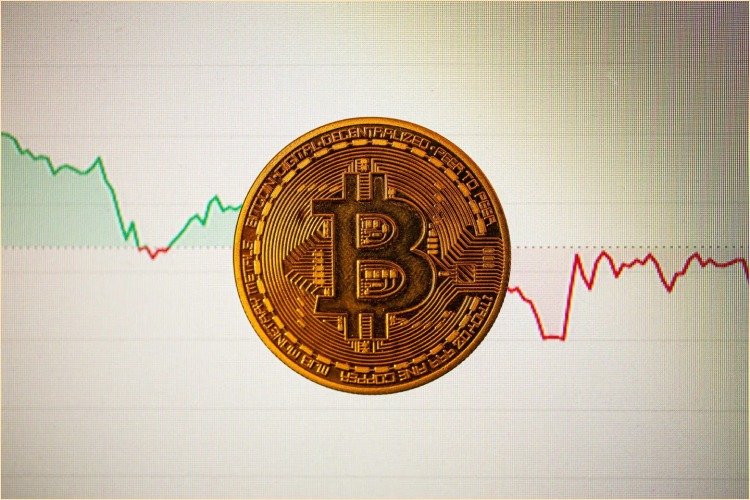
Bitcoin shed roughly 35% from its $93K peak to the $60K range it’s been grinding through this month. That drawdown wasn’t a black swan. It was the predictable consequence of most holders having no coherent position-sizing discipline at all. They sized into BTC like it was a savings account, then panicked or froze when it started behaving like what it actually is: a highly volatile, speculative asset with a Fed meeting (July 28, 29) capable of moving it another 10% in either direction inside a single session.
The clearest treatment of this I’ve found outside traditional finance comes from the Pokerology blog, where bankroll management is treated not as caution but as the core skill separating profitable players from busted ones. That framing maps onto crypto holding almost perfectly. And right now, with $72K call spreads expiring right as Kevin Warsh sits down with the FOMC, it’s worth unpacking exactly how.
The Mistake Almost Everyone Made on the Way Down
Here’s the thing: most people didn’t lose money when BTC dropped to $60K because they were wrong about the long-term thesis. They lost money. Or at least suffered needlessly. Because they were wrong about sizing.

Know when your
coins move
Alerts, real-time prices, and market news — all in one app
 Point your phone camera to install
 4.8 based on 40K reviews in the App Store and Google Play


They went in heavy at $85K, $93K with no predefined exit logic, no stop-loss framework, and no answer to the question every serious poker player answers before sitting down: how much of my total stack am I prepared to lose at this table today?
None. They had none of that. Just conviction.
Conviction without sizing is just gambling badly.
Kelly Criterion Isn’t a Poker Concept. It’s a Risk Concept
The Kelly Criterion gets taught in poker because it works in any game with probabilistic outcomes and asymmetric payoffs. The formula, developed by John Kelly at Bell Labs in 1956, tells you the mathematically optimal fraction of your bankroll to risk on any single bet given your estimated edge and the odds on offer.
Applied to poker, the rule keeps skilled players from busting during variance swings even when they’re statistically ahead. Applied to Bitcoin, it does the same thing.
Say you believe BTC has a 60% probability of trading above $72K by month-end. Roughly the bet the options market is pricing right now via those call spreads CoinDesk reported on this morning. Kelly says you shouldn’t risk your whole stack on that view. It gives you a specific fraction. Most practitioners use a half-Kelly or quarter-Kelly to account for model uncertainty, which in crypto means accounting for the Fed, geopolitics, exchange liquidity, and the fact that your probability estimate is almost certainly wrong by a few percentage points in some direction.
The key insight isn’t the math. It’s the discipline of asking the question at all before you’re already in the position.
Stop-Loss Logic: The Rule Poker Players Follow That Crypto Traders Ignore
Serious poker players set a stop-loss before every session. Lose two buy-ins, and you leave. Doesn’t matter how good you feel about the next hand. Doesn’t matter that you’re convinced the table is soft. You leave, because staying tilted at a table you’re reading poorly is how good players go broke.
Crypto traders, almost universally, refuse to do this. I’ve watched it across two full market cycles now. Someone rides BTC from $93K to $80K telling themselves it’s a dip. Then to $72K. Still a dip, they’re long-term anyway. Then $65K, then $60K. By the time the June ETF outflow data dropped (the $4.5 billion figure reported by CoinDesk on July 9, 10 was the largest single-month outflow in the asset class), they were bag-holding with no plan because they never set the exit condition.
A stop-loss isn’t a prediction that the asset is going lower. It’s a pre-commitment that your judgment at loss X is probably worse than your judgment before you entered the trade. Poker players accept this about themselves. Crypto traders think they’re the exception.
They’re not.
Game Selection: The Most Underrated Risk Management Tool
In poker, game selection. Choosing which table to sit at based on your edge relative to the field. Is considered more important than in-game technical skill by most winning regulars. A world-class player sitting in the wrong game goes broke. A mediocre player in the right game makes money.
This concept translates directly to crypto portfolio construction. Right now, with BTC compressing in the $60K, $65K band and the Fed meeting six trading sessions away, the “game” has changed. The volatility regime is different from January. The liquidity profile is different. The dominant player type has shifted. Retail is largely out, the call-spread volume on Deribit suggests institutional positioning.
If you’re a retail holder with a 24-month time horizon and a modest stack, you’re not supposed to be playing the same way as a prop desk. You’re at the wrong table if you’re trading around Fed day. The move is to acknowledge the game changed and either adjust your stake sizing significantly or sit out the session entirely.
Sitting out isn’t weakness. It’s game selection.
What the July 28, 29 Fed Meeting Actually Means for Your Stack
Kevin Warsh’s recent Congressional testimony on crypto was deliberately non-committal, which the market correctly read as uncertainty rather than comfort. Bitcoin news has been tracking the rate-hike probability shifts daily. As of July 14, traders were already lifting bets that the Fed moves aggressively, which pushed BTC lower.
The Fed meeting is the kind of high-variance event a poker player calls a “cooler” scenario: a situation where you can play correctly and still lose badly because the outcome is outside your control. The professional response to a cooler isn’t to avoid it entirely. It’s to make sure your stack going in is sized so that the worst outcome doesn’t end your game.
If you’re holding more BTC than you can afford to see cut in half before the end of August, you’re not positioned for a Fed meeting. You’re positioned for a specific Fed outcome. Those are very different things.
Size for the range of outcomes. Not the one you’re hoping for.
Shot-Taking Rules: When to Go Bigger
This isn’t all caution. Poker bankroll management also includes explicit shot-taking rules. Predefined conditions under which you move up in stakes to capture asymmetric upside. Grinding the $1/$2 table forever isn’t the goal. The goal is to be solvent and positioned when the right conditions arrive.
For BTC, the shot-taking framework looks something like this: if the Fed meeting produces a dovish surprise. A hold with language signaling cuts before Q4. And BTC clears $70K on volume, that’s a shot-taking trigger. Not because you know it’ll work. Because the probability distribution shifted materially and your pre-defined condition was met.
The condition has to be set before the meeting. Not after the price moves and you’re chasing.
That’s the whole point. Discipline is a pre-commitment technology. It doesn’t function if you apply it retrospectively.
FAQ
What is the Kelly Criterion and how does it apply to Bitcoin?
The Kelly Criterion calculates the optimal fraction of your capital to risk on a single bet, given your estimated probability of winning and the payoff odds. For Bitcoin, it prevents over-sizing into volatile positions. Most practitioners use a half-Kelly or quarter-Kelly to account for model uncertainty in crypto markets.
Should I sell my Bitcoin before the July Fed meeting?
That depends on how you’re sized. If your BTC position is larger than you’d be comfortable holding through a 20% drawdown in 48 hours, you’re already too exposed regardless of your long-term view. The meeting itself isn’t the problem. Your position size going in is.
What does a crypto stop-loss actually look like in practice?
Set a specific price level or percentage loss before you enter a position. Say, 15% from your entry. If BTC hits that level, you exit automatically or on a pre-committed basis. The point is to remove in-the-moment judgment from a situation where emotion typically dominates rational decision-making.
How does poker game selection translate to crypto portfolio construction?
Game selection in poker means choosing tables where your edge is highest relative to the field. In crypto, it means recognizing when a volatility regime or liquidity environment has shifted away from your skill set or time horizon, then adjusting exposure accordingly. Or staying out entirely until conditions improve.
Is bankroll management relevant if I’m a long-term BTC holder?
Yes, especially during high-volatility macro events. Long-term conviction doesn’t eliminate the risk of being forced to sell during a drawdown because your position was oversized relative to your actual financial position. Bankroll discipline protects your ability to stay in the game long enough for the thesis to play out.
Position Sizing Is the Only Edge You Can Control
Bitcoin’s fundamentals haven’t changed. The Fed is going to do what it does. The call-spread traders betting $72K by month-end will be right or they won’t. None of that is in your hands.
What’s in your hands is how much you have at risk when the answer arrives, and whether you set your shot-taking conditions and stop-loss levels before the meeting or after it. Poker players figured out a long time ago that the outcome of any individual hand is largely noise. What separates winning players over time is mechanical discipline applied consistently, regardless of the last result.
That’s the framework. It’s available. Most crypto holders just haven’t picked it up yet.
Gambling of any kind involves risk. Please only risk capital you can afford to lose. If gambling is becoming a problem, visit BeGambleAware.org or call 1-800-GAMBLER.