
How to Buy a House With Crypto in 2026
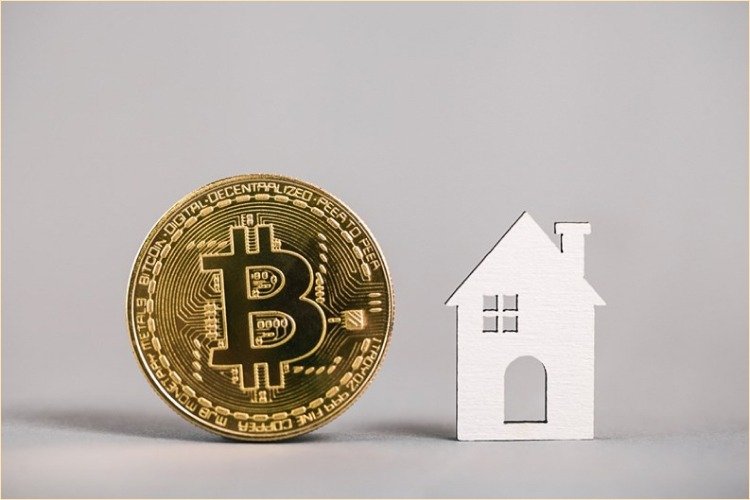
Buying a house with crypto has gone from a novelty story to an actual, if still niche, path to homeownership.
Interest has climbed as long-term holders look to diversify gains into real-world assets, and the infrastructure (lenders, title companies, conversion services) has caught up enough to make the process realistic rather than experimental.
Here’s how it actually works in 2026, and what to plan for at each stage.

Know when your
coins move
Alerts, real-time prices, and market news — all in one app
 Point your phone camera to install
 4.8 based on 40K reviews in the App Store and Google Play


On and Off Ramping Crypto
Almost every path on how to buy real estate with cryptocurrency runs into the same friction point: most sellers, escrow companies, and title agents still want U.S. dollars (or local fiat), not Bitcoin or Ethereum. That means on and off ramping crypto — converting it to fiat — is usually part of the transaction even when the buyer never intends to hold cash long-term. This conversion step is not merely technical; it can also trigger a taxable event, as disposing of cryptocurrency for fiat may be treated as a sale subject to capital gains tax, separate from any taxes associated with the property purchase itself.
In addition, buyers in certain countries may run into currency control restrictions once the funds are converted to fiat — limits on how much can be brought in, converted, or transferred across borders — which can complicate or delay closing even after the crypto-to-fiat conversion is complete.
The good news is this step has become far more routine. Specialized services convert crypto to fiat at the moment of closing and wire the proceeds directly to escrow, so the seller is paid in dollars while the buyer funds the deal with a single crypto transfer.
This sidesteps the older, clumsier process of selling crypto on an exchange weeks in advance, waiting for funds to clear a bank account, and hoping the price doesn’t move against you in the meantime.
Three Ways to Buy a House With Crypto
Liquidate, then buy with cash
The simplest approach: sell your crypto, let the proceeds settle in your bank account, and buy the house like any cash buyer. It’s straightforward, but it’s also the most tax-expensive route for anyone holding significant unrealized gains, since the sale triggers capital gains tax immediately — federal long-term rates plus, for some sellers, an additional net investment income tax.
Use a crypto-secured mortgage. A growing number of lenders let you pledge Bitcoin or Ethereum as collateral for a mortgage without selling it. The crypto sits in institutional custody for the life of the loan — you keep ownership and exposure to any price appreciation, but you can’t sell or transfer it while it’s pledged, and a sharp price drop can trigger a margin call requiring more collateral.
It’s worth noting that not all lenders allow loan repayments to be made directly in crypto — many require repayment in fiat instead, largely due to tax and regulatory considerations on their end.
This setup carries its own risks: crypto volatility can affect the value of the pledged collateral throughout the loan term, regulatory frameworks around crypto-backed lending are still evolving and can shift, and converting crypto to fiat for repayments may itself trigger tax consequences. Lenders also typically set minimum loan amounts for crypto-backed mortgages, ensuring they hold sufficient collateral to offset the currency’s price swings.
This avoids the immediate capital gains hit of liquidating, which matters most for buyers with large unrealized gains, though it comes with its own interest costs and collateral risk.
Transfer crypto directly, converted at closing
This is increasingly the most common version of how to buy real estate with crypto for buyers who don’t want a loan at all. A conversion service handles the fiat side: you send crypto from your wallet, the service converts it and wires fiat to escrow, and the seller never has to touch a crypto wallet or accept price risk.
Some of these services lock in your crypto’s value at the moment of closing, specifically to remove volatility from the equation between offer and settlement.
What to Plan for at Each Step
Whichever path you choose, a few practical steps apply across the board. Work with a title company or attorney who has actually closed crypto-funded deals before — they’ll know what documentation a lender or county recorder expects, and that experience often determines whether a closing happens on schedule or gets stuck in compliance review.
Expect AML and KYC checks on the source of your crypto, regardless of the method, since this is now standard practice rather than an extra hurdle reserved for large transactions. If you’re using a direct transfer or conversion service, confirm exactly when your crypto’s value gets locked in relative to your offer, since a multi-week gap between offer and closing in a volatile market can meaningfully change your numbers.
And document everything: cost basis, transaction history, and wallet provenance, since the IRS treats crypto as property, and any sale along the way is a taxable event you’ll need to report accurately.
Risks and Challenges of Buying Real Estate with Cryptocurrency
Despite growing adoption, purchasing property with cryptocurrency carries several risks that buyers should weigh carefully. Legal recognition remains inconsistent worldwide — not every country treats crypto payments as a valid method for real estate transactions, largely due to the absence of clear regulatory frameworks or outright restrictions on crypto use in property deals.
Tax treatment adds another layer of complexity: buyers may face capital gains tax on the appreciation of their crypto holdings at the point of sale, and some jurisdictions offer preferential tax regimes for crypto-related transactions that are worth researching in advance.
In certain markets, such as Georgia, companies facilitating crypto transactions are also subject to licensing requirements, which can affect which platforms or intermediaries are legally permitted to process the deal. Security is a further concern: sending large sums via blockchain exposes buyers to the risk of address-swapping attacks (where malware alters a copied wallet address before a transaction is confirmed), and once a transfer is sent, it cannot be reversed.
Finally, cryptocurrency’s price volatility remains a persistent challenge — since most real estate deals take days or weeks to finalize, the buyer bears the risk of significant value fluctuations between agreeing on a price and completing the transaction.
Final Thoughts
So, how to buy a house with cryptocurrency in 2026? It isn’t a single process — it’s a choice between liquidating, borrowing against your holdings, or converting at the point of sale, each with different tax and risk tradeoffs.
None of them make a real estate closing simpler than a traditional purchase, but they no longer require selling everything months in advance and hoping the bank account clears in time.
Talk to a tax professional before you decide which path fits your situation, since the difference between these structures can run into tens of thousands of dollars depending on how much your crypto has appreciated.