
Why European Cities Are Ripping Out Parking Lots and Replacing Them With Forests
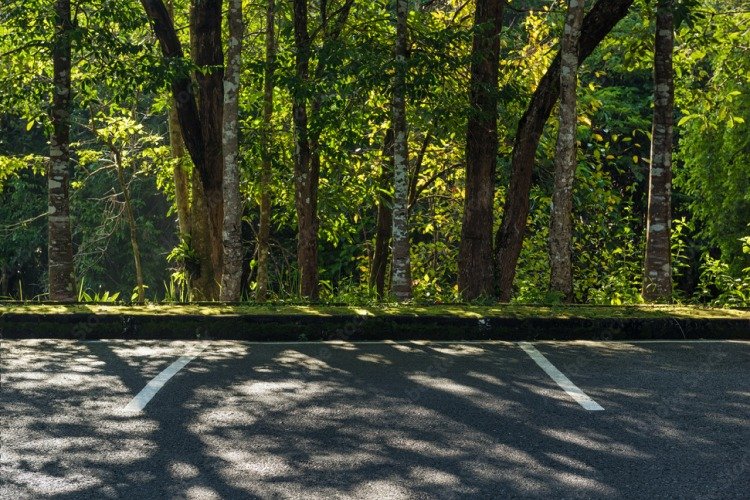
For most of the postwar period, the implicit deal between European cities and their residents was that asphalt would expand outward forever. Streets widened, lots multiplied, garages crept beneath public squares, and every new development came with mandatory parking minimums. Around 2018, the deal began to reverse. Paris is committed to removing 60,000 parking spaces by 2030 and replacing them with trees. Warsaw pulled cars out of Plac Trzech Krzyży and put a pedestrian island in their place. Dutch municipalities turned the removal of paving slabs into a national competition. London and Madrid began experimenting with Miyawaki micro-forests on former parking sites. The shift isn’t sentimental — it’s a calculated response to a measurable climate problem, and the political debate has moved from “Should we?” to “How fast can we?”
The Climate Math Behind the Asphalt
The case for replacing asphalt with trees rests on numbers that have only recently become precise enough to drive policy. A 2021 ETH Zurich study using satellite land-surface temperature data from 293 European cities found that urban trees produce surface temperatures 0–4 K cooler than continuous urban fabric in Southern European cities and 8–12 K cooler in Central European cities. Treeless green spaces — bare lawns, paved plazas with planters — were two to four times less effective. A 2023 study in Nature Climate Change concluded that nature-based solutions across 54 major EU cities could reduce urban anthropogenic carbon emissions by an average of 17.4%. A 2023 modeling study in The Lancet projected that increased tree canopy could cut summertime heat-related deaths in European cities by roughly one-third.
Paved roads and parking already account for nearly 30% of land cover in many cities and over 60% in some dense ones. That asphalt actively heats the city and prevents stormwater absorption.

Know when your
coins move
Alerts, real-time prices, and market news — all in one app
 Point your phone camera to install
 4.8 based on 40K reviews in the App Store and Google Play


Paris Is Leading; Other Cities Are Catching Up
Paris’s 2024-2030 Climate Plan is the most public commitment, but it sits inside a continent-wide pattern. The EU Nature Restoration Regulation requires member-state cities to prevent further loss of green space and tree cover by 2030. The Joint Research Center’s 2026 assessment found that less than 15% of the European urban population currently meets the 3-30-300 standard — three visible trees per home, 30% neighborhood canopy, and a green space within 300 meters — meaning regulatory pressure is closer to “minimum compliance” than aspiration.
|
City |
What’s Happening |
|
Paris |
60,000 parking spaces removed by 2030; 300 ha of new green space; first Miyawaki forest, 2018 |
|
Amsterdam |
Tegelwippen tile-flipping campaign and ongoing depaving in public spaces |
|
Rotterdam |
Co-founder of the national tegelwippen contest: depaving as climate-resilience policy |
|
Warsaw |
Plac Trzech Krzyży pedestrianized; EBRD Green Cities partner |
|
London |
200+ Miyawaki tiny forests planted by Earthwatch Europe and partners |
|
Madrid and Barcelona |
Tactical depaving and microforest pilots in low-canopy districts |
The combined picture is less a single policy and more a coordinated retreat from the assumption that cities should be designed around vehicle storage.
The Two Techniques Doing the Heavy Lifting
Two methods are doing most of the practical work behind the headlines:
-
Miyawaki micro-forests, invented by Japanese botanist Akira Miyawaki in the 1970s, pack 600+ native trees and shrubs into plots as small as 100 square meters and reach ecological maturity in 20–30 years.
-
Earthwatch Europe has planted more than 285 tiny forests across the UK and mainland Europe since 2022, with roughly 140 on school grounds involving close to 80,000 children.
-
The Dutch tegelwippen competition has removed more than 11 million paving slabs since 2021, with two-thirds of all Dutch municipalities now participating.
-
Volunteer-led depaving has become a recognized civic practice in cities including Amsterdam, London, and Berlin.
-
Targeted micro-interventions like bioswales, permeable pavers, and tree-pit retrofits often outperform single large parks per square meter of intervention.
The combined effect is what planners call “urban acupuncture” — many small, precise interventions producing benefits that exceed what fewer large projects would deliver.
The Spillover on Leisure and Daily Life
The economic and social effects of removing parking extend well beyond shade and stormwater. Cities that reduce car infrastructure tend to see foot traffic, cycling, and outdoor dining increase, reshaping which businesses thrive. Some leisure habits adapt by shifting toward venues people can reach without a car. Others shift online entirely, where the underlying infrastructure becomes data centers and broadband rather than parking lots and access roads. Online platforms in entertainment, retail, gaming, and gambling — including licensed operators like FieryPlay casino — represent the digital end of that displacement, offering experiences that previously required physical venues and the parking that came with them. Urban planners are increasingly designing around the assumption that physical leisure infrastructure will keep shrinking while digital leisure expands.
What the Critics Get Right
The skeptics have legitimate points. Miyawaki forests in Mediterranean climates haven’t been studied long enough to confirm long-term resilience, and forestry researchers have flagged that some of the more enthusiastic claims (10x growth, 100x biodiversity) come from advocacy organizations rather than peer review. Political controversies have emerged over whether the Miyawaki method is appropriate for fire-prone climates, where dense ground litter creates wildfire fuel ladders. Removing parking can also produce real friction with low-income residents who depend on cars because public transit doesn’t reach their neighborhoods. None of these objections kills the broader project, but they demand that depaving be done with the same precision that the climate data demands of every other intervention.
What the Cities Are Really Betting On
The deeper bet underneath the depaving is that the postwar trade-off — convenience for cars in exchange for heat, runoff, pollution, and lost green — was unsustainable in ways invisible until satellite data made them measurable. The cities currently moving fastest have stopped treating parking as a neutral default and started treating it as an active cost. Whether the result is a fully forested boulevard or a single Miyawaki patch on a former curbside, the principle is the same: ground that does work for the climate, the watershed, and nearby residents beats ground that does work only for a car briefly occupying it. The asphalt is coming up. What replaces it is being decided block by block.