
Oil Trading for Crypto Traders: Why a Barrel in the Gulf Can Move Your Bitcoin
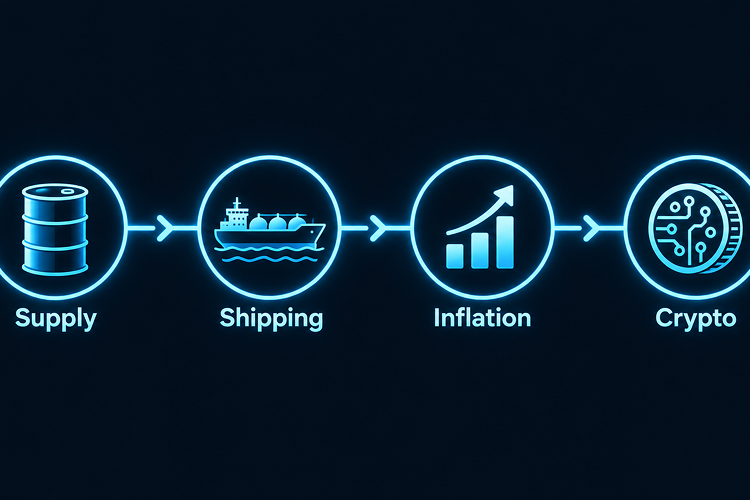
On 7 October, Brent crude climbed back above US$101 a barrel after a run of attacks on shipping in and around the Strait of Hormuz. Bitcoin slid about 3% the same day, dipping below US$83,000, and close to US$1 billion in leveraged crypto positions were liquidated within 24 hours. For crypto traders, that’s a reminder that oil now shapes the macro backdrop they trade in. Some are looking at oil trading directly. Before doing that, it helps to understand why the two markets are moving together and how trading oil differs from trading coins.
Why oil suddenly matters to crypto markets
The link runs through inflation and interest rates. Higher oil feeds into transport, food and energy costs, which raises inflation expectations. Higher inflation expectations push bond yields up, and higher yields make riskier assets, from tech stocks to Bitcoin, less attractive. Decrypt’s coverage of the 7 October sell-off noted that stocks, gold and Bitcoin fell together as oil and yields rose. The 10-year US Treasury yield was near 5.34% at the time.
The pressure may not fade quickly. In its October Short-Term Energy Outlook, the US Energy Information Administration raised its forecast for the Brent crude oil spot price to an average of US105 per barrel in Q4 2026, US14 per barrel higher than in its September outlook. The EIA expects oil flows from the Middle East to remain constrained through the end of 2026, but anticipates a gradual recovery in production and exports over the forecast period. It expects Brent to average about US$84 per barrel in 2027.

Know when your
coins move
Alerts, real-time prices, and market news — all in one app
 Point your phone camera to install
 4.8 based on 40K reviews in the App Store and Google Play


How oil trading works through CFDs
Most retail traders don’t buy physical barrels or trade exchange futures directly. They use contracts for difference (CFDs), which track the price of an oil benchmark and let you go long or short with leverage.
The two benchmarks you’ll see most often are Brent, which prices much of the world’s seaborne crude, and WTI, the main US benchmark. They usually move together, but news hitting a particular region can open a gap between them.
easyMarkets is one broker listing these instruments. Its oil trading page for South African clients offers WTI Crude, Brent Oil and Natural Gas CFDs, plus an “Oil 24/7” product that trades through the weekend. The page advertises fixed spreads and a guaranteed stop-loss, available for a wider spread. Accounts through that page are opened with EF Worldwide Ltd under a Seychelles licence, which the site says has no investor compensation scheme, and the site isn’t aimed at residents of several countries. As with any broker, check which entity you’d contract with and whether it accepts residents of your country.
What changes when you move from coins to oil
Trading hours
Crypto never closes. Standard oil CFDs follow their underlying markets: on the easyMarkets schedule, WTI trades from Sunday evening to Friday evening GMT with a short daily break, and Brent trades weekdays only. News over a weekend can therefore open the market far from Friday’s close, skipping past an ordinary stop-loss. A weekend oil product avoids the closed market, but the main oil futures markets are shut at weekends, so ask the broker how weekend prices are set before you trade it.
What moves the price
Coin prices respond to flows, sentiment and crypto-specific news. Oil responds to supply decisions, shipping disruptions, inventory data, refinery demand and the global economy. The EIA’s October outlook, for example, pointed to tight diesel markets and falling global inventories as reasons for its higher forecast. Following those drivers takes a different reading list.
Leverage on a news-driven market
Oil can jump sharply on a single headline. Combined with leverage, that can wipe out a position before you have time to react — the same mechanism behind the 7 October crypto liquidations. A guaranteed stop-loss caps the loss at a set level for a cost, while an ordinary one may fill at a worse price in a fast market.
Frequently asked questions
Does a rising oil price always push Bitcoin down?
No. The recent pattern reflects inflation and interest-rate fears. Bitcoin’s reaction to oil depends on what’s driving oil and how markets expect central banks to respond.
Is oil a hedge against crypto losses?
Not reliably. In early October, both moved in opposite directions, but that relationship can change. A leveraged oil position is a separate bet, not a hedge.
What’s the difference between Brent and WTI?
Brent is the main international benchmark for crude shipped by sea, while WTI is the main US benchmark. Their prices are usually close but can diverge on regional news.
Can I trade oil with crypto deposits?
Some brokers accept crypto funding, but your oil position is still a CFD priced in US dollars. Check deposit and withdrawal methods and any conversion fees first.
Conclusion
The oil shock of October 2026 shows how quickly energy prices now flow through to crypto markets, via inflation fears and higher yields. Oil trading through CFDs gives crypto traders a direct way to act on that view, but it comes with closed weekends, different price drivers, and the same leverage risk that wiped out crypto longs this month. Learn the benchmarks, check the broker’s entity and trading hours, and size positions for headlines you can’t predict.
CFDs on commodities are leveraged products with a high risk of losing money rapidly. This article is general information, not financial advice.