
Getting Paid by Overseas Clients in Singapore: Bank Transfer vs. Stablecoin
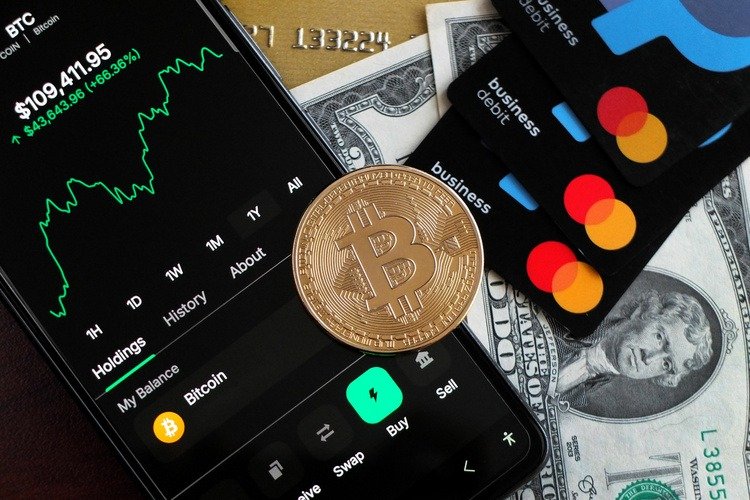
Winning an overseas client feels great right up until the invoice clears. Then you notice the amount that landed is smaller than the amount billed, and the money took four days to show up.
If you freelance, run a small agency, or sell services beyond Singapore, this is a recurring tax on your work. Two main ways exist to collect that money, plus a middle option worth knowing about. Here is what each one actually costs you.
Where your money goes on a normal bank transfer
A traditional international transfer moves through SWIFT, a messaging network linking banks worldwide. Your client's bank sends instructions, which may hop through one or two intermediary banks before reaching your Singapore account.

Know when your
coins move
Alerts, real-time prices, and market news — all in one app
 4.8 based on 40K reviews in the App Store and Google Play


Every stop takes a cut. Expect these charges on a typical inbound payment:
- Sending fee paid by your client, often S$20 to S$50, which some clients quietly deduct from your invoice.
- Intermediary bank fees of roughly US$15 to US$30 per correspondent bank in the chain, taken from the payment itself.
- Receiving fee charged by your Singapore bank, commonly between S$10 and S$20.
- Exchange rate margin of around 2% to 3.5% above the mid-market rate, which is usually the biggest cost and the least visible one.
On an invoice of S$2,000, total leakage often lands between S$80 and S$130. Settlement typically takes one to four business days, sometimes longer when a payment gets held for review.
Bank transfer still wins on one thing that matters enormously: universality. Every client can do it, your accountant already understands it, and nothing about it requires explanation at tax time.
The middle option: multi-currency business accounts
Before jumping to anything exotic, consider a multi-currency account from a fintech provider. Services of this type give you local receiving details in several countries, so your US client pays into what looks to them like a domestic US account.
That structure skips most correspondent banking fees entirely. Exchange rate margins usually sit closer to 0.4% to 1%, and funds often arrive the same day. Many providers pair the account with a corporate card, and this breakdown of corporate cards built for SMEs covers how the foreign transaction fee side works.
For most Singapore freelancers and small businesses, this is the sensible upgrade. It requires no new knowledge from your clients and removes the bulk of the cost.
Where stablecoins fit
Stablecoins are digital tokens designed to hold a steady value against a currency, usually the US dollar. USDC and USDT are the two most widely used. One token is intended to be worth one dollar, a design that sets them apart from Bitcoin or Ethereum.
Getting paid this way works simply enough. Your client sends tokens to your wallet address, the transfer settles in minutes at any hour, and you convert to Singapore dollars through a licensed exchange when you choose to.
The advantages are real. Transfer costs are typically a few dollars regardless of amount, so a S$20,000 invoice costs roughly the same to receive as a S$500 one. Weekends and public holidays make no difference. Clients in countries with capital controls or unreliable banking can often pay this way when a wire would fail.
The drawbacks are equally real. Your client must already hold crypto, which most do not. You need to understand wallet security, because sending tokens to a wrong address means losing them permanently with no reversal process. Conversion back into SGD adds a step, and IRAS treats the payment as ordinary business income, valued in SGD at the date received, so record-keeping needs to be tighter than usual.
Licensing is the other thing to check. Providers handling conversion in Singapore should hold a Major Payment Institution license from the Monetary Authority of Singapore, which covers requirements around safeguarding customer funds, transaction monitoring, and security. Independent Reserve was the first exchange licensed under the Payment Services Act for this category, and MAS publishes its full list of licensed providers, so verifying any platform takes about two minutes.
Which one suits you
Stablecoin payment makes sense if several of these describe your situation:
- Your clients already operate in crypto, for example, Web3 companies, overseas exchanges, or blockchain startups
- Invoice values are high enough that percentage-based fees genuinely hurt
- You bill clients in markets where bank transfers regularly fail or stall
- Cash flow timing matters, and waiting four days creates actual problems
- You are comfortable managing wallet security carefully
Stick with bank transfer or the multi-currency option if any of these apply:
- Clients would find the request strange or unprofessional
- Invoice volume is low, making the learning curve poor value
- Your bookkeeping is already stretched
- Losing funds to a mistyped address would be a serious blow
There is no prize for choosing the more sophisticated option. Most solo operators and small agencies should open one of these accounts, recover several hundred dollars a year in fees, and leave things there.
A few practical habits
Whichever method you pick, a handful of small moves protect your margin:
- Put payment terms in the contract. Specify who covers transfer charges. "Client bears all bank fees" prevents the awkward conversation later.
- Invoice in one currency and stick to it. Switching between USD and SGD across invoices makes reconciliation painful at year end.
- Record the SGD value on the day funds arrive. IRAS wants Singapore dollar figures, and reconstructing rates months later wastes hours.
- Test small first. Send a S$50 payment through any new method before trusting it with a full invoice.
- Keep payment admin separate from payroll admin. If you have staff or contractors, those systems benefit from their own tools, and this guide to streamlining SME payroll covers that side well.
The bottom line
Traditional bank transfers cost Singapore's smaller operators somewhere between 3% and 6% of every overseas invoice once fees and exchange margins are counted. That is money you already earned.
Multi-currency accounts recover most of it with almost no downside, which makes them the right starting point for nearly everyone reading this. Stablecoins solve a narrower problem very well, and if the people paying you already live in that world, they are worth understanding properly. Just choose a licensed provider, keep clean records, and never let the payment method become more complicated than the work itself.