
The Defining Traits of Crypto Sportsbooks
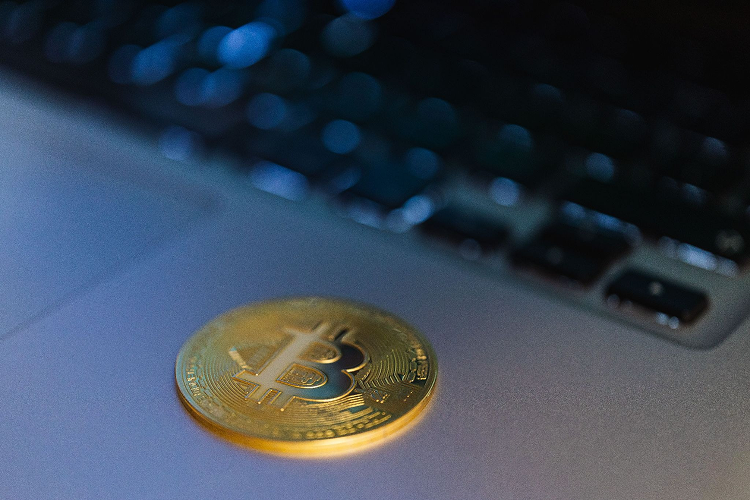
It’s hard to fathom whether the move toward blockchain transactions has been a real transition for online gambling. In general, it sits outside the availability factor that regulated markets provide, and that’s what has followed it in terms of the main source of reticence. People stick with the devil they know, and the devil can’t use crypto.
Well, it’s not necessarily so when you look at estimates for the crypto casino gaming market that sits in either unregulated or gray-area spaces on the internet. There have been licenses that allowed these operators to run with a so-called certification, but their relevance regarding standards is hard to consider legitimate.
So, how are sportsbooks related to the idea of crypto gambling? Are they truly harnessing the advantages of the blockchain to integrate their services, or are they just posturing to help themselves seem more high-tech?

Know when your
coins move
Alerts, real-time prices, and market news — all in one app
 4.8 based on 40K reviews in the App Store and Google Play


This article will try to answer these questions. We will address whether crypto sportsbooks are truly what they claim to be, what they try to achieve with their reliance on the blockchain, and whether the inherited mechanisms from traditional, off-chain gambling are inevitable.
Knowing the difference between real and tangential crypto sportsbooks
When defining a crypto sportsbook, we need to understand that there are two major ways in which they actually use cryptocurrencies.
The most widespread one, including Stake and Cloudbet, simply uses crypto payments as a way of handling transactions. They are what the industry calls ‘custodial’ sportsbooks that they use with an internal ledger and data feed. Settlement is much more in-house, and the overall system relies on the benefits of running the payment system through them.
However, there is also the much smaller type that actually creates an infrastructure based on blockchain methodologies. In these cases, all the money movements, including wagers, are smart contracts that can even operate with peer-to-peer orders. Others use third-party systems that have clear on-chain protocols.
As backed up by tentative data sourced by the BetBrain team, it’s most likely that most of the online gambling platforms claiming to be crypto casinos or sportsbooks are just regular bookmakers that use crypto as an excuse to stay out of the regulated space while handling crypto payments.
The speed is the signature advantage of such platforms
Aside from the idea of operating in a new-age, decentralized frame that goes outside the traditional parameters of online gambling, crypto sportsbooks are simply fast. They’re fast, objectively, when you consider the comparative key points of their relationship with traditional gambling.
With normal bookmakers that rely on fiat currencies and bank transactions, an entire business day can be a normal waiting time. Bigger payments also mean more days, and the issue stems from the verification requirements for such money movement.
For this reason, custodial crypto sportsbooks do not harness the entire capability of blockchain transactions. The reason is simple: documentation. You still need to verify your account as you do at standard online gambling platforms, and that’s where the bottleneck can create issues. It’s fast compared to a traditional bookie, so you may wait something like an hour, which is much faster than an entire day.
When discussing completely on-chain platforms, there is no longer an hour-long verification process that comes from the custodial system. Once there is a settlement via the smart contracts that govern every bet, you’re free to redeem your tally. Yes, there can be a bit of a delay in this part as well, but such a platform usually has this process figured out by the point it reaches the market.
Stablecoins help with the issue of crypto price volatility
Stablecoins are increasingly relevant in the overall financial market because they are a paragon of compromise. Big finance accepts them because governments accept them, and the government itself is okay with stablecoins because they have the right insurance that would back up their issuance.

Their tie to the price of a fiat currency is helpful in specific betting situations because they shield the gambler from price volatility. Once you place a wager on USDT, you know that your return will be at the valuation of the dollar, so it’s very easy to assess and verify in terms of actual value.
When the bet is made with cryptocurrencies that can vary quite a lot in valuation, then the difference shows itself in cases like future bets. A gambler can place these outrights for a tournament that will conclude months away from the moment of the bet.
If there is a wild change in valuation for the coin, then the user’s actual winning ratio may be either incredibly rewarding or highly problematic for them. That’s the kind of volatility that can raise questions.
Assessing the margins
The house edge is a definitive trait for virtually every sportsbook on the market. That’s how it works. You can have prediction market platforms claiming to use the trading method as a way of eliminating the margin it keeps, but it can simply ask for handling fees for the actual trade. Different method, same result.
For custodial bookmakers, the system is simple to understand because it’s the same as with a normal sportsbook, so about 4-6% in vig. Each set of odds has an overround, and that’s how the margin balances the books from the operator’s standpoint. The differences in margin size are quite negligible, but they may be a bit smaller for a crypto custodial bookie.
With on-chain, peer-to-peer-style bookmakers, the system is akin to an exchange in most cases. It’s an order book, so there’s no house margin that one would need to effectively pay, but there are commissions that each platform will charge because, after all, that’s the entire business model.
Is identity verification still necessary at crypto sportsbooks?
Yes, identity verification at crypto sportsbooks is still necessary. They operate as custodial bookmakers that implement cryptocurrencies, which are a payment method. The entire validation of an account is a prerequisite for making a transaction, especially requesting a withdrawal.

KYC is necessary to satisfy any AML quota or to put a guardrail against underage gambling. Otherwise, even the most non-KYC casino that postures as a privacy-driven platform will ask you for some identification if you start winning big, especially in a row. Even Stake implemented mandatory verification!
So, to re-answer this question, any custodial sportsbook will ask you to show who you are, where you live, and what age you are before they even allow you to see any winnings in crypto. That’s the main bottleneck that we referred to when discussing speed.
Conclusion
This is the end of our article, and these are the facts that best define what it means to be a cryptocurrency sportsbook in the current gambling climate. Most are posturing as a crypto platform without having anything to do with the blockchain outside of the payment itself, which is still conditioned by KYC.
If you’re into gambling, it’s best to do your research case by case with these platforms and see which ones are actually legit. Don’t forget to bet responsibly since gambling addiction is a risk regardless of payment processing!