
What “Provably Fair” Actually Means in Crypto Casinos — and How to Check It Yourself
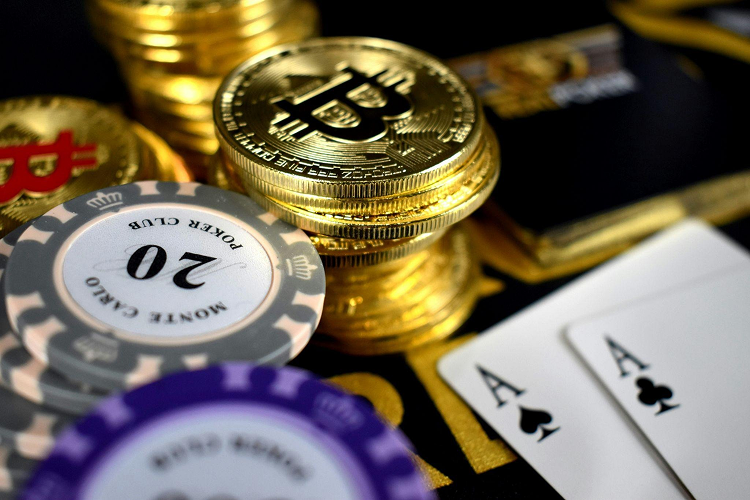
“Provably fair” is a term that appears frequently in crypto gambling marketing, but many players never test the claim. The point of the system is that you do not have to take the casino’s word for it. With a browser-based verifier, you can check whether a game outcome was generated according to the casino’s stated process.
What “Provably Fair” Means
Provably fair technology is a method for showing that a game outcome was not changed after the fact. Instead of relying only on a licence or the casino’s reputation, players receive the cryptographic information used to generate the result and can reproduce the calculation themselves.
The Problem It Solves
Traditional online casinos generally generate outcomes on private servers that players cannot inspect. Players must therefore trust that the outcome-generation system is working correctly and has not been manipulated.

Know when your
coins move
Alerts, real-time prices, and market news — all in one app
 4.8 based on 40K reviews in the App Store and Google Play


Provably fair systems reduce that reliance on trust. Before you place a bet, the casino commits to a randomly generated server seed by publishing a cryptographic hash of it. After the round, it reveals the original seed and other inputs used to generate the result. Players can then check whether the outcome was changed after the bet was placed.
This verifies the integrity of the disclosed result, but it does not audit the casino’s finances, withdrawal practices, security, or overall business operations.
The Cryptography Behind It
Server Seeds and Hashes
A server seed is a random value generated by the casino. Instead of revealing it immediately, the casino publishes a hash of the seed. A hash acts like a digital fingerprint.
Once the seed is revealed, you can hash it yourself and compare the result with the previously published commitment hash. If implemented correctly, changing the seed while producing the same hash should be computationally infeasible.
Hash Functions
Different platforms use different methods. These may include SHA-256, SHA3-256, HMAC-SHA-256, HMAC-SHA-512, or another published algorithm. SHA-256, one of the algorithms covered by NIST’s Secure Hash Standard, converts input data into a fixed-length 256-bit value. Other systems may use SHA-3 functions or HMAC-based methods. For a properly chosen secret input, cryptographic hash functions are designed to make it computationally infeasible to recover that input from the hash.
Always follow the platform’s own formula. The hashing method and the way the result is converted into a game outcome can vary between casinos and games.
How to Verify a Bet
The exact process depends on the platform, but it usually involves these steps:
- Save the server seed or commitment hash shown before the bet.
- Record the client seed and nonce.
- Obtain the revealed server seed after the round or session.
- Hash the revealed server seed and compare it with the original commitment hash.
- Use the server seed, client seed, nonce, and published formula to reproduce the result.
- Compare the recalculated result with your betting history.
You are checking two separate things: whether the revealed server seed matches the original commitment, and whether the disclosed inputs reproduce the game result.
Many platforms provide a built-in verifier. For example, Cloudbet’s provably fair casino section offers tools for checking previous bets. Keep in mind that this calculator applies only to Cloudbet Originals, not to third-party games from other providers. Its published materials describe the use of a server seed, client seed, nonce, and SHA3-256 or SHAKE256 for certain game results. If the calculator produces a match, it confirms that the result was generated from the disclosed inputs according to the platform’s formula.
Why It Matters in Crypto Casinos
Crypto casinos often emphasise provably fair technology because many users in the crypto sector value independently verifiable systems. The approach also fits the broader crypto principle of reducing reliance on intermediaries. However, provably fair verification is only one part of due diligence. Check licensing, security practices, withdrawal policies, reputation, responsible gambling tools, and operator transparency.
Responsible gambling matters too. Setting spending limits, taking breaks, and using self-exclusion tools can help you manage gambling more safely. If gambling is causing concern, consult a recognised gambling-support organisation in your jurisdiction for information and assistance.
If you use cryptocurrency to gamble, it is also worth keeping an eye on market conditions. Checking crypto market capitalisation and prices can help you understand how the value of your funds may change over time.
Frequently Asked Questions
Does provably fair mean a game cannot be rigged?
No. It does not make manipulation physically impossible. It makes certain forms of manipulation detectable after the fact. If the revealed seed, hash, nonce, or calculation does not match the original information, that may indicate a problem.
Do I need technical skills to verify a bet?
Usually not. Most platforms provide a built-in verifier. You generally need to enter or review the server seed, client seed, nonce, and any other required values.
Is provably fair the same as being licensed?
No. A licence may subject an operator to regulatory oversight, while provably fair verification lets you check whether a specific result followed the casino’s stated method. For example, the UK Gambling Commission’s random number generation requirements address qualities such as unpredictability, uniform distribution, and acceptable randomness. These regulatory requirements are separate from a player’s ability to verify an individual result through a provably fair system. A reputable platform may offer both regulatory oversight and provably fair verification, but one does not replace the other.
Why is there a client seed?
The client seed adds another input to the randomisation process. When you choose or change it yourself, the casino does not know that value in advance, which limits its ability to control the outcome alone. Some platforms generate client seeds automatically.
What is a nonce?
A nonce is a number that typically changes with each bet or round. It helps prevent the same pair of server and client seeds from producing the same input for every result. The platform’s instructions should explain how the nonce is assigned.
Can provably fair technology be used outside casinos?
Yes. The same commit-and-reveal principle can be used in raffles, lotteries, random draws, and online games where one party needs to show that it did not change a result after seeing the participants’ inputs.
Conclusion
Provably fair technology is more than a marketing badge. It gives players a way to check whether a game outcome was generated according to the casino’s stated process.
It does not eliminate every risk associated with crypto gambling or replace licensing and wider due diligence. But it lets you test one important claim independently. The key question is not whether you trust the casino—it is whether the result can be verified.