
Beating the House Edge: The Mathematical Reality of Advantage Play in Modern Table Games
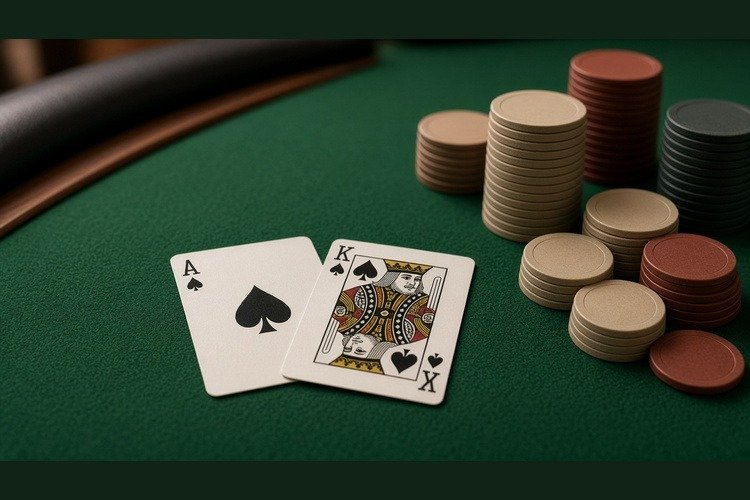
Ask a dealer, a mathematician, and a forum regular about the house edge, and you'll get three different answers. The math, though, is the same for all of them: every table game has a built-in margin, and it quietly does its work over thousands of hands. That holds in a land-based room, and it holds just as much if you're scrolling through the table section at Pinco Casino, where the same arithmetic sits quietly behind each game on every single table.
So where does advantage play fit in? It's the claim that a patient player can, under narrow conditions, turn that margin around. I think the honest answer is «sometimes, barely, and at a price.» This article goes through advantage play math in modern table games, shows what the numbers say about counting, and explains why a realistic casino strategy tends to be dull. It matters because the internet is full of «beat the casino» stories that skip the boring bits, like variance.
What the House Edge Actually Tells You
Think of the house edge as a long-run average, nothing more. If a game carries a 1% edge, the casino keeps about a dollar of every hundred that goes through it, but only across a huge sample. In one evening you can be far ahead or well behind, and neither says much about the game.

Know when your
coins move
Alerts, real-time prices, and market news — all in one app
 Point your phone camera to install
 4.8 based on 40K reviews in the App Store and Google Play


Here are rough figures for the games people ask about most.
Rough Margins at a Glance
| Game | Approx. margin | Does skill matter? |
|---|---|---|
| Blackjack (3:2 payout, basic strategy) | 0.5–1% | Yes, a lot |
| Blackjack (6:5 payout) | close to 2% | Yes, but the rule change hurts |
| Baccarat | 1.06–1.24% | Almost none |
| European roulette | 2.7% | None |
| American roulette | 5.26% | None |
Only blackjack really rewards good decisions. Roulette and baccarat don't care how clever you are, and no routine changes that.
Where Advantage Play Math Gets Real
Strip away the movie version, and one method is left that's well documented and needs nothing but a good memory: counting cards in blackjack.
Counting, Without the Mystique
When low cards leave the shoe, what's left is richer in tens and aces. That favors the player. A counter keeps a running tally, divides by the number of decks still to come, and ends up with a «true count.» Each point of true count is worth roughly 0.5% to the player. Since basic strategy sits about half a percent behind the casino, a true count of +1 gets you to even, and anything beyond that is a small plus.
Small is the key word. Take a six-deck shoe dealt down to about 75%. A good counter, scaling exposure with the count, might reach an edge around 1%. Play 100 hands an hour with ten units in play per hand, and the expected gain is about ten units an hour. The standard deviation for that same hour is near 115 units. So you can easily lose for a whole weekend while doing everything right, and the math only shows itself after hundreds of hours.
What Else Is Out There
A few other ideas float around, and most come with strings:
- Shuffle tracking - following groups of cards through a shuffle. Machines have mostly ended it.
- Edge sorting - spotting tiny differences on card backs. Courts in the UK and US sided with casinos in the best-known disputes.
- Rule shopping - picking tables with better payouts and fewer decks. Boring, legal, and the only one here that's open to anyone.
None of them is a shortcut. Counters get «backed off» all the time, and a polite request to leave is the usual ending.
Online and Live Tables Change the Picture
Counting relies on a deck that remembers. Online tables reshuffle after every hand. So there's nothing to remember. And many live dealer studios use continuous shufflers for the same reason. That's why the counting folklore mostly belongs to older casino floors. An operator such as Pinco builds each game around a fixed margin tied to its rules and payouts. There's no gap for clever timing to slip through.
What a Practical Casino Strategy Looks Like
For most people it has little to do with counting. Learn basic strategy for blackjack, which brings the margin under 1%. Skip side options like insurance, which sits near 7%. Check the payout before you sit down: 3:2 and 6:5 are very different games. And decide on a time limit in advance, treating whatever happens as the price of entertainment. None of this is exciting, but it's where the numbers actually help.
To sum up: the house edge is built in, and advantage play can dent it in one narrow corner, blackjack with deep shuffles and a lot of practice. Even there, swings are huge, and casinos can show you the door. Understanding that is the real takeaway; it's why no system beats roulette and why a sober casino strategy beats a clever-sounding one.