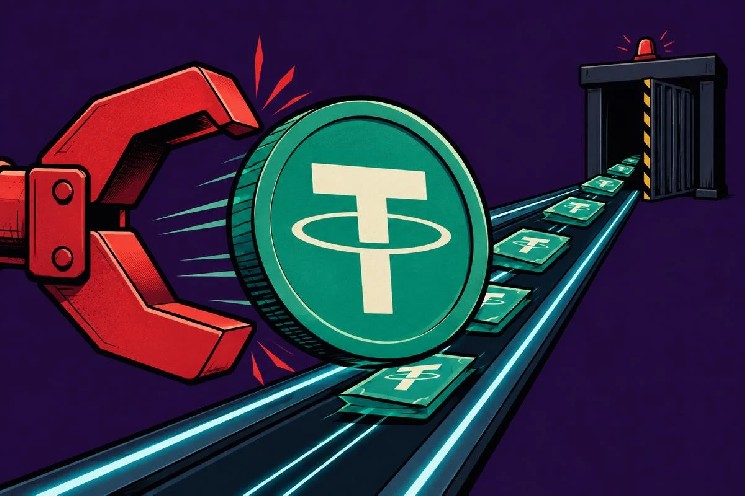
How $USDT freeze delays on Tron arise
Tether’s $USDT freeze process on Tron requires approval from two of three multisignature wallet owners. One owner proposes adding an address to the blacklist; a second confirms the instruction and executes the freeze.
The multisignature wallet controls the $USDT contract on Tron. The proposal transaction includes the contract address and the instruction addBlackList(address), with the target address publicly visible before the restriction takes effect.
FreezeCheck measured a median delay of 9.7 minutes across its 4,199-address timing sample. For 1,257 addresses—about 30%—the interval between proposal and execution exceeded one hour.
Funds moved between proposal and execution
Among addresses still frozen at the study’s cutoff, 219 sent 65.4 million $USDT during their proposal-to-execution windows. FreezeCheck measured 27.9 million $USDT in outgoing transfers over equally long periods immediately before those proposals.
That put the amount transferred during the freeze windows at about 2.3 times that of the preceding periods. The comparison matched the duration for each address, rather than comparing activity across unequal stretches of time.
A 15.2 million $USDT transfer before restrictions began
The largest cited transfer was approximately 15.2 million $USDT on September 20, 2026. On-chain timestamps place it about five minutes after the freeze proposal and 64 minutes before execution.
The target address specified in the proposal matched the one subsequently logged in the $USDT contract’s blacklist event, and both the proposal and its execution were linked by a common multisignature transaction identifier.
After excluding 723 addresses that had since been unfrozen, the transfer analysis focused on 3,476 addresses still frozen as of November 8, 2026. According to FreezeCheck, 1.42 million transfers were examined, with contract events sourced from TronGrid and transfer records pulled from SQD Portal.
For each address, the project compared activity during the $USDT freeze delay on Tron with an equally long interval ending when the proposal was submitted. It published addresses, timestamps and transaction hashes in a CSV, with an additional archive on Zenodo.
Frozen addresses can still accept payments
A completed freeze blocks an address from sending $USDT onward, but it does not prevent incoming transfers. FreezeCheck recorded 104.2 million $USDT sent by 1,945 senders to 982 addresses that were already frozen.
Those payments comprised 3,033 transfers of at least 1 $USDT. Of that total, 280 transfers occurred within an hour after the recipient’s freeze took effect.
For exchanges and payout services, FreezeCheck recommends checking a recipient’s blacklist status immediately before payout. That check addresses a different stage from monitoring pending proposals: the recipient is already restricted from moving the payment onward.
FreezeCheck operates a wallet-checking bot. Its project disclosure also describes plans to offer paid wallet checks and volume plans.
Article produced with the assistance of artificial intelligence and reviewed by the editorial team.

 en.cryptonomist.ch