
Source: ZachXBT
In a separate social media post, the onchain investigator wrote that the case is “sealed,” and Circle had “zero basis” to freeze the fiat-pegged tokens. He added:
“In my 5-plus years of investigations, it could potentially be the single most incompetent freeze I have seen. This is what happens when you outsource your freezing decisions to literally any random federal judge instead of having a process.”
Cointelegraph sought comment from Circle about the claims but did not obtain a response by the time of publication.
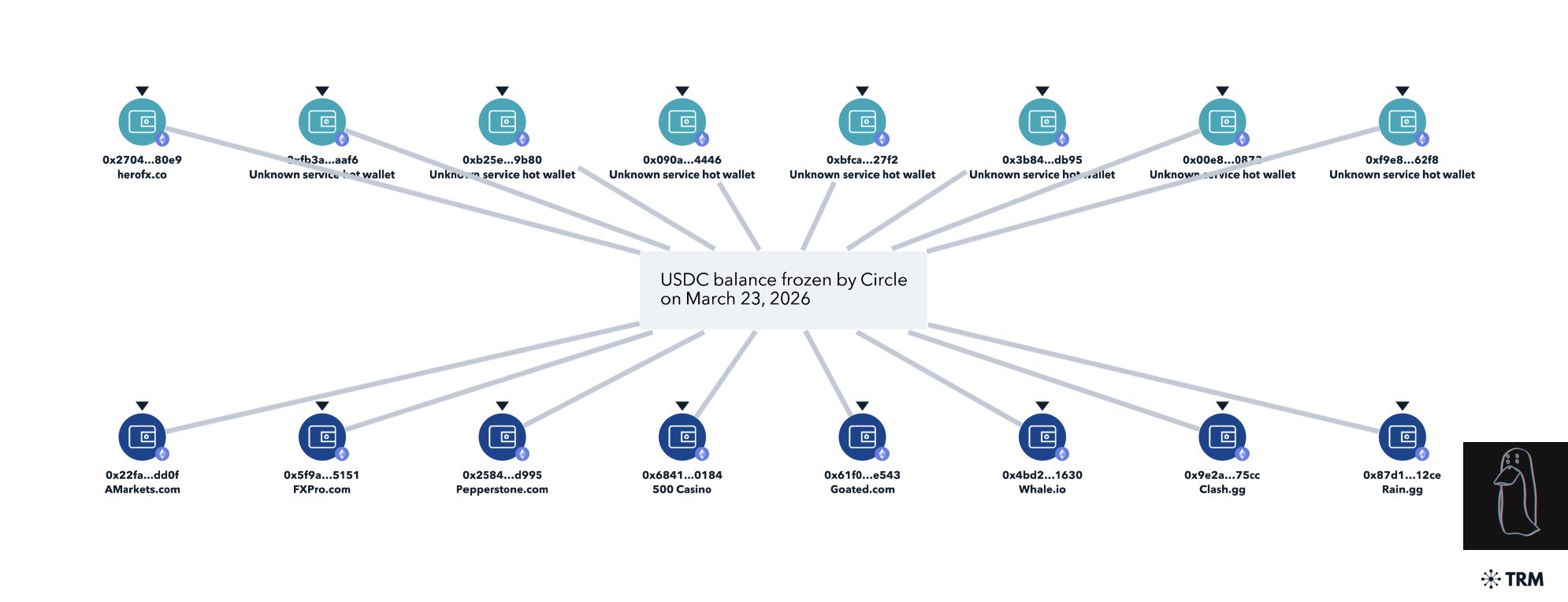
A simplified illustration of the $USDC wallets frozen by Circle. Source: ZachXBT
Centralized stablecoins can be frozen by the issuer, which goes against the core value proposition of cryptocurrencies as permissionless, censorship-resistant assets, critics of the technology say.
Crypto executives warn that regulated stablecoins are gateway to CBDCs
“This is your 10th reminder that centrally issued stablecoins are not actually yours; they can be frozen, unlike cash,” Mert Mumtaz, founder of remote procedure call (RPC) node provider Helius, said in response to the $USDC wallet freezes.
Jean Rausis, co-founder of the Smardex decentralized trading platform, said that provisions in the $GENIUS stablecoin regulatory framework laid the groundwork for a privately managed central bank digital currency (CBDC) to emerge.
Centralized stablecoins effectively give the issuer the same financial surveillance and asset freezing capabilities that a standard CBDC would provide, he said.
Former US lawmaker Marjorie Taylor Greene echoed Rausis’s warning in May 2025, arguing that regulated stablecoins under the $GENIUS bill are a “CBDC Trojan Horse.”

 cointelegraph.com




