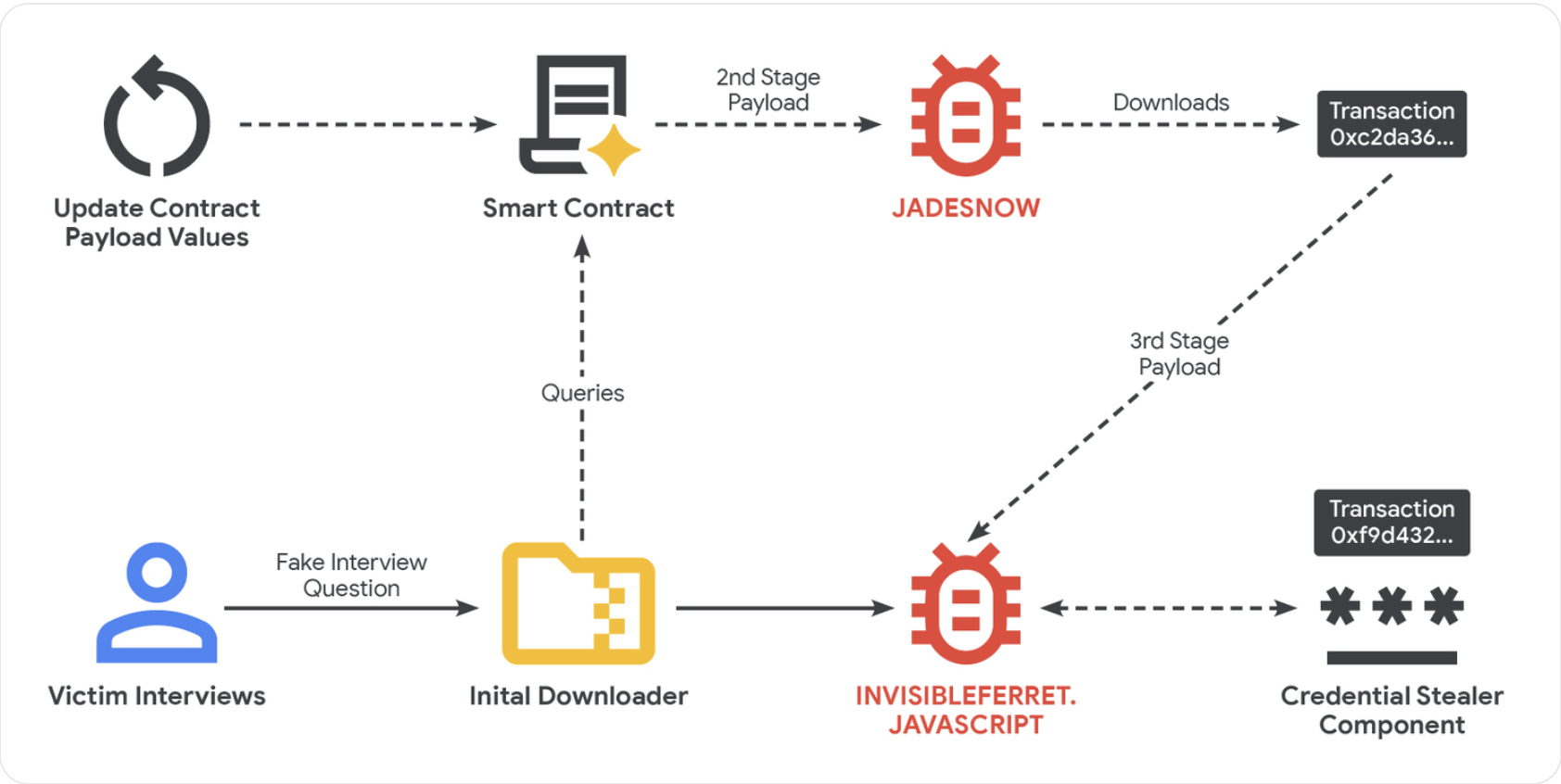
Simplified illustration of how the “EtherHiding” hack works. Source: Google Cloud
The compromised website will communicate with the blockchain network using a “read-only” function that does not actually create a transaction on the ledger, allowing the threat actors to avoid detection and minimize transaction fees, Google researchers said.
The report highlights the need for vigilance in the crypto community to keep users safe from scams and hacks commonly employed by threat actors attempting to steal funds and valuable information from individuals and organizations alike.
Related: CZ’s Google account targeted by ‘government-backed’ hackers
Know the signs: North Korea social engineering campaign decoded
The threat actors will set up fake companies, recruitment agencies and profiles to target software and cryptocurrency developers with fake employment offers, according to Google.
After the initial pitch, the attackers move the communication to messaging platforms like Discord or Telegram and direct the victim to take an employment test or complete a coding task.
“The core of the attack occurs during a technical assessment phase,” Google Threat Intelligence said. During this phase, the victim is typically told to download malicious files from online code repositories like GitHub, where the malicious payload is stored.
In other instances, the attackers lure the victim into a video call, where a fake error message is displayed to the user, prompting them to download a patch to fix the error. This software patch also contains malicious code.
Once the malicious software is installed on a machine, second-stage JavaScript-based malware called “JADESNOW” is deployed to steal sensitive data.
A third stage is sometimes deployed for high-value targets, allowing the attackers long-term access to a compromised machine and other systems connected to its network, Google warned.
Magazine: Inside a 30,000 phone bot farm stealing crypto airdrops from real users

 cointelegraph.com