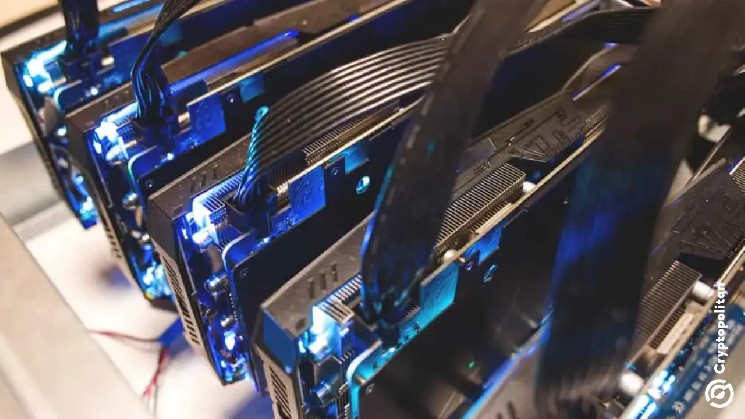
Optimizing the market and allowing comparisons will open a new wave of competition for the best offers on GPU compute.
Is crypto competitive in GPU compute?
Crypto projects have focused on AI infrastructure for years. The sector, known as DePIN, has already created several marketplaces. Usually, DePIN projects aggregate idle available GPU compute power from data centers, as well as consumer electronics. Some of the DePIN projects turn this market into the basis of participation and network security.
This secondary market often undercuts traditional cloud providers. Prices from traditional providers range from $3.93 to $10.68 per hour, depending on the model or available GPU capacity.
For DePIN competitors, the secondary market allows prices to fluctuate, often undercutting the leading GPU providers. Average prices show that some task-specific or general networks can compete in the newly expanding market for third-party computation.
Following the recent increase in interest in the compute market, the DePIN sector recovered slightly. Top DePIN coins and tokens are valued at $7.87B, rising by 3.1% in the past 24 hours.
A16Z backs new GPU compute market
The major flaw of GPU compute offerings is the lack of a common settlement space. For crypto, this means market fragmentation, where every project has a different target audience and limited users.
Currently, there are also concerns that some of the newly built GPU capacity may be sitting idle, after the initial wave of hoarding the best available GPUs.
In anticipation of a new wave of reselling GPU compute, A16Z has backed a marketplace project to boost price discovery.
Odig, a Web3 project, is building such a marketplace, backed by several large-scale VC funds. Odig raised $33M in a seed round led by A16Z, with the participation of Galaxy Ventures, Nordstar, Crucible Capital, and others.
The appearance of a compute market may make Web3 viable again, tapping the experience in organizing decentralized marketplaces and real-time price discovery.

 cryptopolitan.com