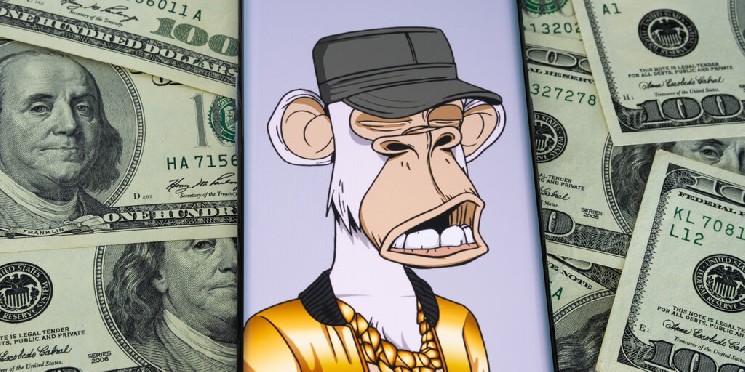
Bored Ape NFTs fail to trigger the necessary “common enterprise” prong of the test used by courts to determine whether an asset is a security, Olguin determined.
“In sum, plaintiffs have not alleged the type of ‘interplay’ between the alleged securities and proprietary ‘ecosystem’ that underpinned the logic of Dapper Labs and DraftKings, and therefore have not adequately alleged horizontal commonality,” he wrote.
The judge further found that Yuga Labs’ collection of a creator royalty fee on every Bored Ape sale suggests “a de-coupling of [plaintiffs’] fortunes from those of defendants, who stood to gain even if plaintiffs sold their own NFTs at a loss.” $NFT issuers rely on creator royalties as a form of revenue, collecting a baked-in fee—sometimes upwards of 10%—each time the collectible token is bought and sold.
The court’s logic contrasts sharply with legal arguments made by the SEC during the Biden administration—particularly that creator royalties indicated an asset was a security, one encouraged by its creators to be resold.
For years, Yuga Labs has been at the front lines of a legal standoff with the federal government over the security status of NFTs, given the company’s prominence in the sector. Once red hot status symbols that have since faded in value and cultural relevance, Bored Ape NFTs have nonetheless seen a seismic $7.2 billion worth of trading volume since launching in 2021.
Earlier this year, Yuga Labs announced the SEC had closed its yearslong investigation into the company, as a part of the Trump administration’s aggressive pro-crypto realignment. The SEC also closed a similar investigation into $NFT marketplace OpenSea.
It’s one thing for the SEC to decline to pursue certain cases against $NFT projects though, and another for a federal court to definitively rule on the matter, as it did in Yuga’s case this week.
Despite the significance of the ruling, Bored Ape NFTs seem largely unaffected. The collection’s floor price—the price of the cheapest available $NFT in a collection—is down 2% in the last 24 hours, to $37,337 at writing. That’s a decline of 90% from the project’s all-time high of $369,900, reached in April 2022.
Representatives for Yuga did not immediately respond to Decrypt's request for comment on this story.

 decrypt.co