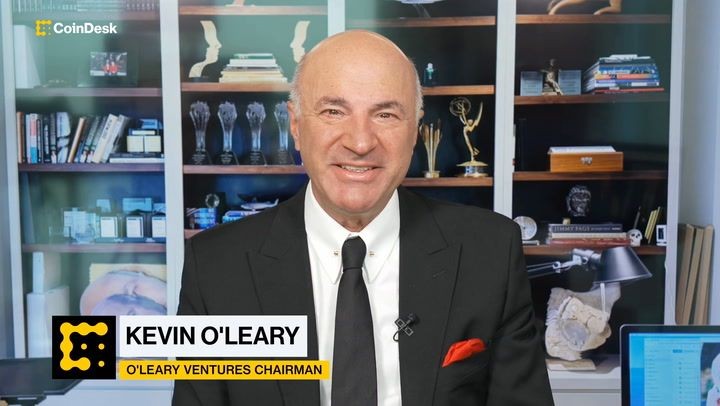
Pouring millions into rare sports cards isn’t a passion project—it’s a calculated bet. "It once traded for $75,000 years and years ago, but it shows you the price appreciation," O'Leary said.
"Grown men are going to weep when they see this," he added.
Tokenization over NFTs
Despite the overlap with tokenization, O’Leary made it clear that he has no interest in NFTs.
"NFTs turned out to be a fad," he said. "I'm only buying assets that are physical assets... That [$NFT] fad came and went. I'm very fortunate I didn't get involved in that because I never understood it."
O’Leary’s sharp dismissal of NFTs comes just a few years after the market exploded in popularity. In 2021, trading volume on $NFT marketplaces surged to $25 billion, up from just $95 million the year before, according to data from DappRadar and Chainalysis. Celebrities like Snoop Dogg, Paris Hilton and Steph Curry rushed to launch collections, while major brands including Nike, Adidas and Coca-Cola entered the space.
But the hype was short-lived. $NFT sales volumes fell more than 80% by mid-2022 amid the broader crypto downturn, and prices for high-profile collections like Bored Ape Yacht Club and CryptoPunks plunged from their peaks, according to the data.
O’Leary's issue with NFTS is the lack of physical existence of the assets. "Where is the asset? Where can I put my white glove on and go touch it? That's what you can't do with an $NFT."
However, he said his collectibles "will one day be tokenized," because "it would be much easier to deal with and manage them in an index that way."
Wall Street on chain
O’Leary frames this shift as part of a larger mission: "Wall Street on chain."
He believes blockchain infrastructure can modernize how assets are managed—improving transparency, liquidity and trust in markets that still rely heavily on intermediaries.
He remains bullish on foundational cryptocurrencies like bitcoin and Ethereum, and infrastructure plays like mining operators and exchanges.

 coindesk.com