Sprankling explained that California's anti-SLAPP statute acts as a preventive measure, going beyond the protections of the First Amendment to ensure people are not threatened or deterred from expressing themselves freely. The hearing showcased the complexities and nuances surrounding the intersection of free speech, artistic expression, and NFTs in the legal realm.
The anti-SLAPP motion contended that Yuga Labs had filed the lawsuit as a response to Ripps' criticism of Bored Apes on social media, with the intention of silencing him and burdening him with legal costs.
However, the judges on the panel appear skeptical of this argument, focusing their analysis on the secondary sale of the copycat NFTs, not the additional criticisms from Ripps and Cahen.
Circuit Judge Morgan Christen expressed doubt, saying, "I'm still not seeing it," and suggested they were looking for a clearer principle to determine whether this legal action is permissible.
Legal Battle Unfolds as Artist Accuses Bored Ape NFTs of Controversial Imagery
In January 2022, Ripps began posting on his social media claiming BAYC $NFT artwork contained racist caricatures of Black and Asian individuals, and that the project's logo and branding incorporated references to Nazi symbolism and language.
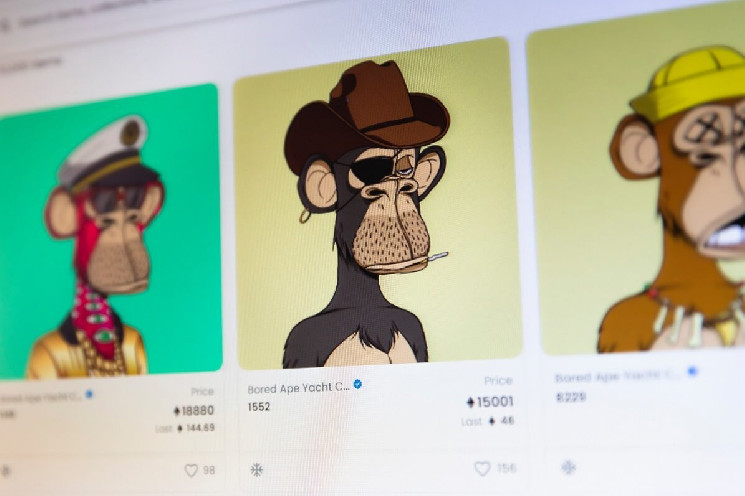
In mid-May, Ryder Ripps launched RR/BAYC (Ryder Ripps Bored Ape Yacht Club), an $NFT project that directly borrowed imagery and names from BAYC as a form of conceptual art protest.
Later In June 2022, Yuga Labs initiated legal proceedings against Ripps and Cahen, accusing them of making millions of dollars through trademark infringement, false advertising, cybersquatting, amongst other charges. This legal action stemmed from the release of a derivative $NFT collection named RR/BAYC.
Yuga Labs' legal team contended that RR/BAYC was intentionally causing confusion among potential BAYC customers, leading them to believe that RR/BAYC had a legitimate association with Yuga Labs.
In response, Ripps has argued that the RR/BAYC project serves as a form of satire and appropriation, with the intention of protesting and educating people about BAYC and the world of NFTs.
In April, a United States District Court for the Central District of California found that Ripps and Cahen had infringed Yuga Lab’s trademarks with their $NFT collection.
The court has ruled that Yuga Labs is entitled to an injunction and damages, which will later be determined at trial to assess the scope of damages to be paid to Yuga Labs.
However, the Californian District Court Judge John Walter has already held a bench trial to assess the scope of damages but is yet to announce the conclusion of the case, including the potential damages fee to be paid.

 cryptonews.com