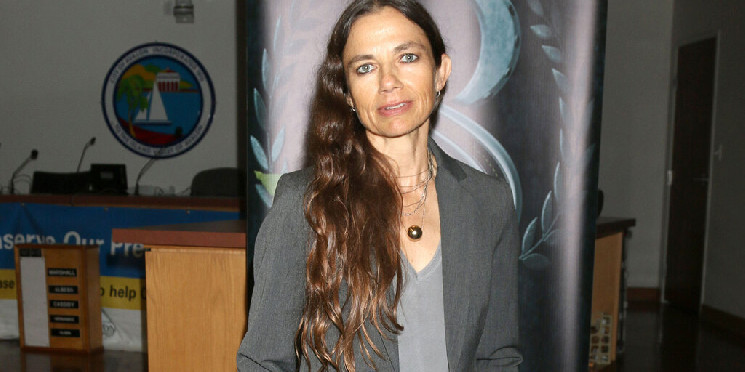
Bateman, best known for playing Mallory Keaton in the 1980s sitcom "Family Ties" alongside Michael J. Fox, has a degree in computer science and digital media management from UCLA. Bateman also took aim at the use of computer-generated images trained on actors' likenesses and voices that she said could be tripled and quadrupled booked.
AI Invasion: Hollywood Writers Strike to Save Your Netflix From Robot Takeover
Earlier this month, the popular generative A.I. image platform Midjourney released its latest version 5.1, making it easier to create visually stunning images and deep fakes with minimal effort.
Bateman encouraged actors to demand “iron-clad protection” against the use of their image and voice to protect their livelihood.
“Demand it from [the Screen Actors Guild and the American Federation of Television and Radio Artists] and do not accept any AMPTP proposal that does not have it,” she wrote.
To prove the point, Bateman shared a tweet from Twitter user and A.I. blogger Lorenzo Green showing a video of what an A.I.-generated Lord of the Rings by director Wes Anderson would look like.
Here are some visual aids (and they are probably outdated): https://t.co/SKfZAgLtqk
— Justine Bateman (@JustineBateman) May 14, 2023
Since the launch of OpenAI’s ChatGPT in November, the race to bring A.I. into the mainstream has many sounding the alarm about A.I.’s potential takeover of the workforce.
The WGA, seeing the potential threat, included a proposal in its negotiations with the Alliance of Motion Picture and Television Producers that blocked the use of A.I. to write or rewrite literary material, be used as source material, or train A.I. The AMPTP rejected the proposal, according to the WGA.
“Training an A.I. program on an older [hit] TV series, and creating an additional season. Family Ties, for example, has 167 episodes. An A.I. program could easily be trained on this, and create an eighth season. We only shot seven,” Bateman said.

 decrypt.co