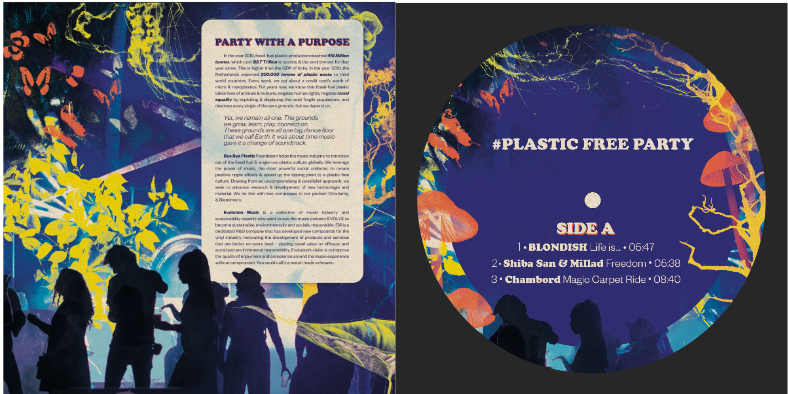
The upcoming biodegradable vinyl from BLONDISH. Source: BLOND:ISH, Bye Bye Plastic, Evolution Music
The vinyl itself is made from “naturally occurring bacteria” that mimics plastic and can decompose in any environment including the ocean. Typically, vinyls are pressed from the material polyvinyl chloride, also known as PVC, and releases twelve times the amount of greenhouse emissions.
NFTs have been used in the past by artists as a component to album releases, and even as a new mode for music streaming. This latest vinyl drop is an example of the growing phygital trend in the $NFT scene, in which digital assets have a physical component to them.
Related: Preserving and reinventing music festival legacy in the metaverse
Last August, the popular rock group Muse released an $NFT album. The album being released as an $NFT was a music industry landmark as it became the newest chart-eligible album format to be added in seven years.
Many mainstream music artists like Snoop Dogg, who is a long time champion for the Web3 space, have utilized NFTs in single releases or to promote additional content alongside their music.
There have even been questions of a new genre of $NFT-driven music coming onto the scene for artists who inextricably tie their releases to $NFT projects.
Music industry behemoth Sony Music filed a trademark application for $NFT-authenticated music back in September 2022, while last month Spotify tested a new Web3 wallet integration for token-enabled playlists.
Magazine: Andy Warhol would have loved (or possibly hated) NFTs

 cointelegraph.com