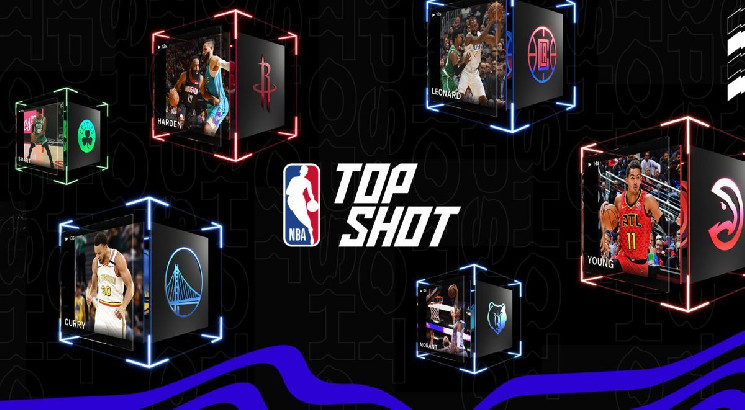
On the other hand, the volume momentum on the NBA Top Shot NFTs has significantly decreased compared to the first few days of the rollout. According to the compiled market data provided by Cryptoslam, the current sales volume for NBA Top Shot is around $71,113.
This amount was generated by approximately 1,504 buyers & 1,555 sellers. The sales volume and several participants in the company were 10 times higher than they are today compared to two years ago.
As a result of the firm's creation of several NBA Top Shot NFTs and subsequent sale of those NFTs on the secondary market via $NFT marketplaces, the corporation is now facing (1) legal litigation that is analogous to the case brought against Ripple by the SEC.
If Dapper Labs is found to be guilty of marketing unregistered securities through the NBA Top Shot NFTs, then there is the possibility that a settlement will be reached.
An Examination Complaint Filed by the NBA
Even though Dapper Labs' legal team argued that NBA Top Shot NFTs are comparable to baseball cards or basketball cards, Judge Victor Marrero from the United States ruled that the case would move forward regardless of their position.
Lead plaintiffs Gary Leuis and John Austin, together with co-plaintiff John Austin, charged Dapper Labs and its CEO of breaking securities laws by engaging in unregistered sales of shares.
"Considering everything, the financial consequences of this matter support the judgment that the AC's charges can stand up to scrutiny at this level of the proceedings. "
In conclusion, the judge argued that the plaintiffs adequately established that Dapper Labs' sale of the $NFT, Moments, was an offer of an "investment contract" and, as a result, a "security," which was required to be registered with the SEC.
It is alleged that Dapper Labs and its chief executive officer made millions of dollars by selling unregulated securities to the general public.
The two are also accused of keeping the market for moments, and the total price of NBA Top Shot artificially inflated by restricting users from retrieving their money for months. This is said to have been done to prop up the market.
The legal team representing Dapper Labs and its CEO contended that the sale was of a product rather than an investment for fundraising. When Dapper sold its Moments, it was not selling formed items as part of a capital fundraising effort; it was selling formed products as products.
The legal team observed that "this was not a campaign for financial investment nor an appeal to passive investors; rather, this was the sale of cards to collectors."

 coinnounce.com