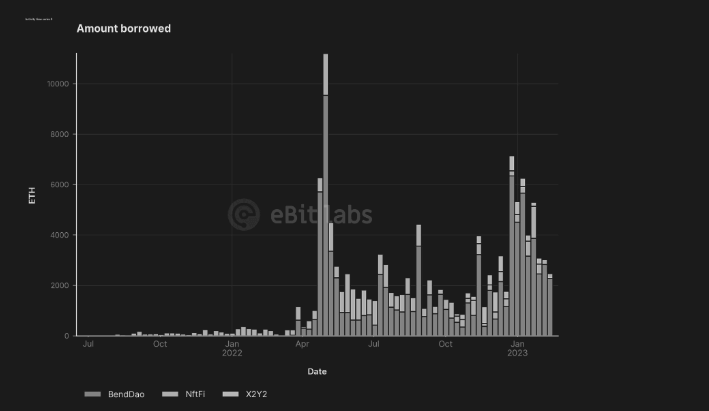
In the midst of 2022, the lending industry gained widespread attention as the declining floor price of BAYC sparked market pressure and heightened concerns about potential liquidation, ultimately leading to a liquidity crisis, the report also found.
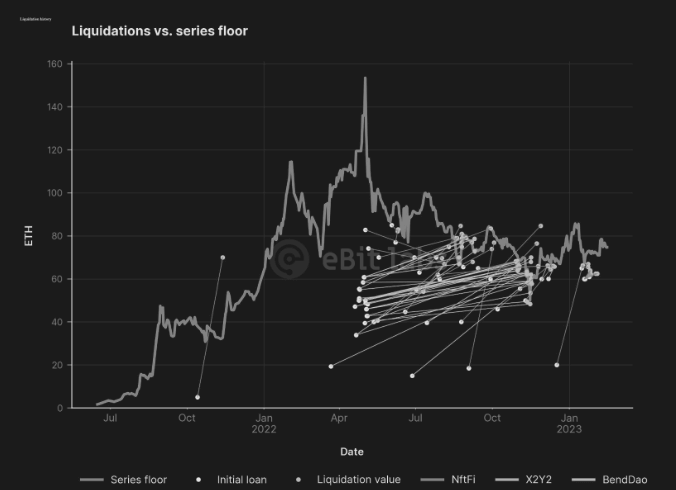
Competition among platforms gets more intense
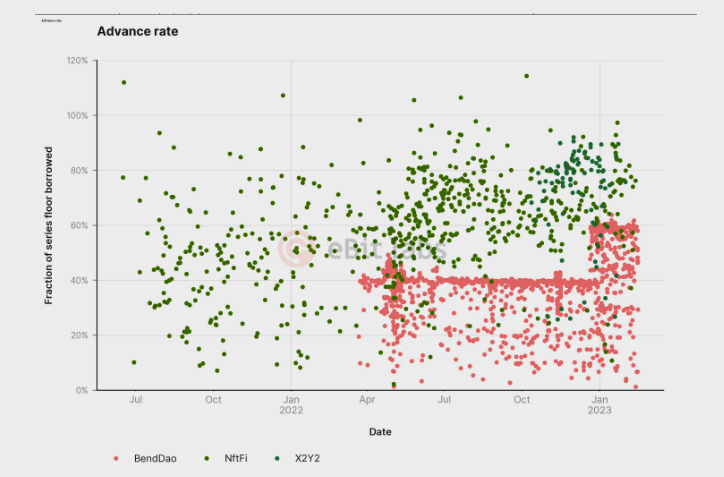
Since its launch, BendDao has maintained a consistent maximum advance rate of 40%, notably lower than the advanced rates of up to 80% offered by other peer-to-peer NFTfi platforms.
However, in September 2022, the entry of X2Y2 into the market disrupted this status quo by offering advance rates exceeding 100%. As a result, BendDao faced intense competition and user attrition, prompting it to raise its advance rates to 60% to remain competitive. This adjustment was made during the winter holiday season.
Janusry 2023 peaks
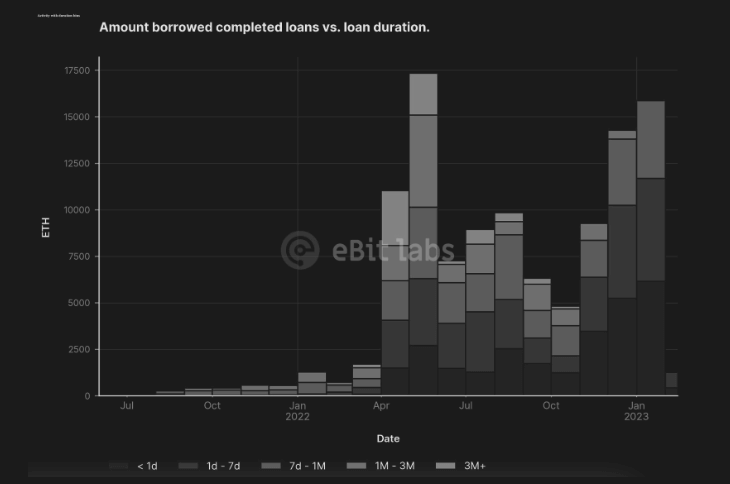
Several factors propelled January’s surge in $NFT lending, the report says. One major factor was market exuberance and the Yuga Labs’ Dookey Dash News, which encouraged users to ramp up Yuga-related lending activity. According to research, the bulk of loans issued across the three primary lending platforms was against Bored Apes, with short-term loan balances for BAYC hitting record highs in January 2023.
Insights
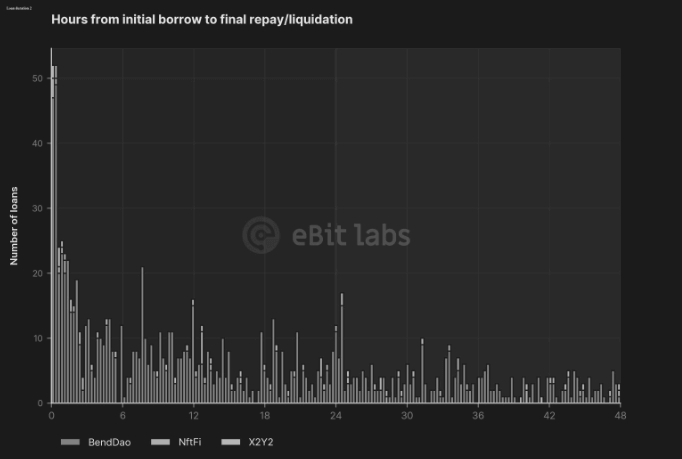
The data shows that the overwhelming majority of loans are either repaid or liquidated within a single day, with longer-term loans constituting a much smaller portion of the total. This trend suggests that potentially many borrowers are utilizing these loans to address immediate liquidity requirements rather than as a hedge against market-value fluctuations.
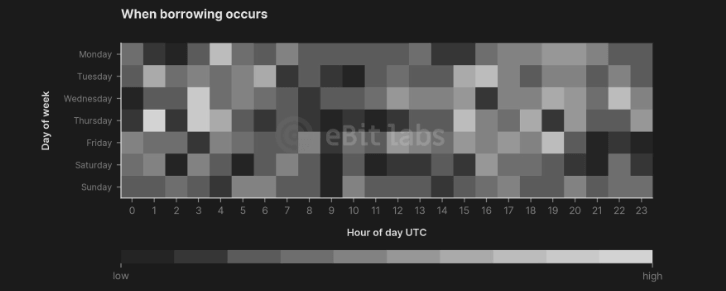
A lull in activity between the 6th and 14th hour (UTC) on weekdays – outside the general US waking hours – suggests that a substantial portion of the activity occurs within the United States.
Overall, the report concluded that:
“The availability of $NFT lending meets a valuable market need and helps fuel the ongoing development and sophistication of the entire $NFT ecosystem. Drivers for the borrowing are likely wide-ranging, however it’s clear that these loans can meet both short and longer-term liquidity needs and also provide valuable market-value hedges.”

 cryptoslate.com