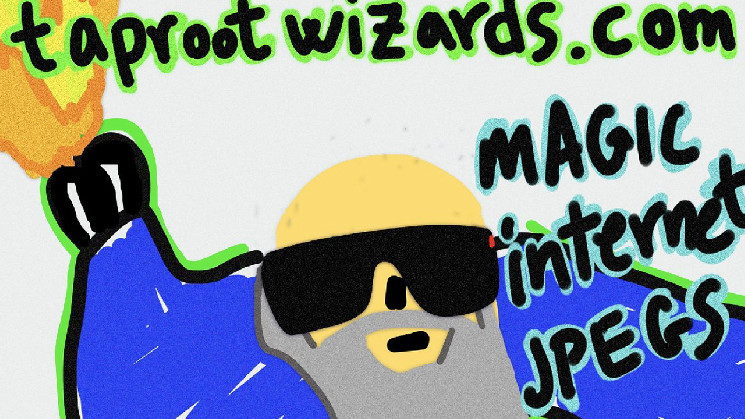
A 3.96 MB block #774628 has been just added to Bitcoin by @LuxorTechTeam exploiting buggy Taproot! The previous record was just 2.77 MB. Here's the list of the largest blocks: https://t.co/LsavqjLFEq
This will trigger many! Are we on the verge of a new blocksize war? 🤓
— Nikita Zhavoronkov (@nikzh) February 2, 2023
Essentially, Taproot allows multiple participants in a transaction to create a single combined digital signature, making transactions more efficient and private. Since the creation of Ordinals, it has been discovered that using a Segregated Witness (Segwit) “discount” in combination with Taproot allows for a full block to be 4 MB in size, bypassing the 1 MB limit encoded in the Bitcoin blockchain. It was previously known that Segwit slightly increased block sizes, with the largest block before Luxor’s 3.96 MB being 2.765 MB (#748,918) mined on Aug. 11, 2022.
Concerns Raised Over Immutable Nature of Bitcoin and So-Called ‘Dangerous’ Content
Meanwhile, Ordinals were already controversial among some bitcoin maximalists, and the 4 MB block mined with only 63 transactions and a Wizard JPEG caused further upset. For instance, bitcoin developer Luke Dashjr, who called Ordinals an “attack,” quickly created a node patch to filter or censor Ordinal “spam.” “$NOT a protocol change or soft fork/hard fork, just a harmless (if it works right) spam filter,” Dashjr wrote. “Also a quick hack and $NOT suitable for opening a PR to Core – please write a proper fix for that.”

The record-breaking 3.96 MB Bitcoin block (#774,628) mined on Feb. 1, 2023.
Many bitcoin advocates were dissatisfied with the record-breaking block size, and the topic was discussed on the Reddit forum r/bitcoin. The most upvoted comment in the thread read: “I would much rather see such a block full of real monetary transactions from thousands of people, instead of this idiocy.”
Another individual agreed with this opinion and argued that the Taproot scheme that produced a 4 MB block was dangerous. “Yeah … This is rather dangerous. We’re one bad actor or one automated miner away from cementing vile and disgusting things to a permanent, globally distributed, uncensorable database. It will be interesting to see if there is a free market solution to this.”
Someone has just uploaded DOOM to the $BTC blockchain.
Go here to try it out:https://t.co/DLuBYj06CS
— Hector Lopez (@hlopez_) February 2, 2023
In addition to the stir caused by the Wizard-block Ordinal, an unsavory image was inscribed into inscription #668. Although the image was removed from the Ordinals website, it remains immutable and cannot be removed from the Bitcoin blockchain. Furthermore, a game, “DOOM,” was uploaded to the blockchain and can be found in inscription #466.
Some bitcoin advocates expressed dissatisfaction with the mining pool Luxor, which mined the 4 MB block. One person responded to Luxor’s tweet, saying, “There’s nothing revolutionary in what you did. You stuffed a nasty JPEG with zero artistic value into the blockchain. Okay…you could have crafted the same stupid image 10,000 times smaller. Why did you make it 4 MB? Because it’s mischief; you are trolls.”
What is your take on the 4 MB block controversy in the Bitcoin network? Do you believe it is a potential threat or a harmless addition to the blockchain? Share your thoughts in the comments section below.

 news.bitcoin.com