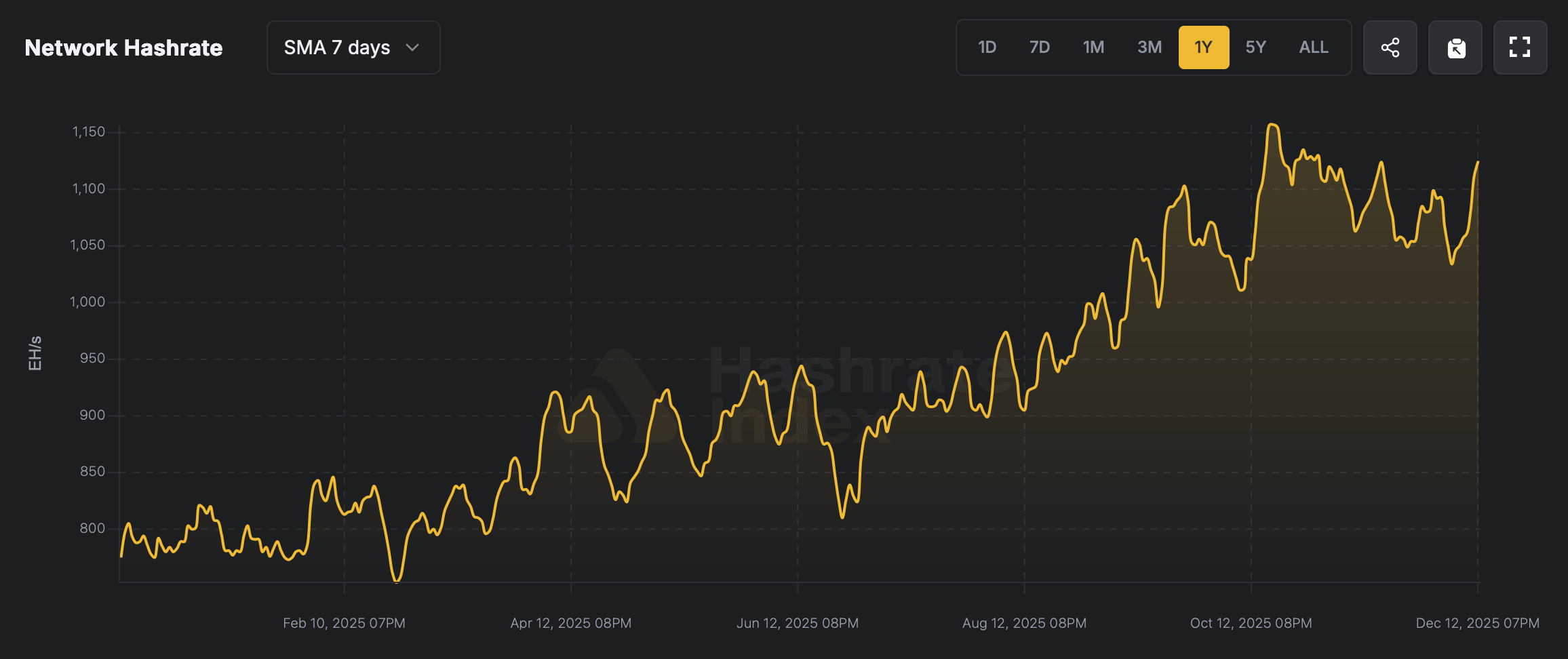
Bitcoin’s total hashrate as of Dec. 13, 2025, via hashrateindex.com.
As a result, the next difficulty epoch is expected to trend higher, though it remains some distance away, with just 18% — or 369 of the 2,016 blocks — completed so far, leaving ample room for the final adjustment to diverge from the current projection of more than a 6% increase. Notably, the elevated hashrate and faster block intervals are unfolding even as miner revenue remains thin.
Read more: Google Trends Data Shows Bitcoin Quietly Holding Its Place as the Year Comes to a Close
The hashprice, or the expected value of a single petahash of hashrate, is 9.85% lower than it was 30 days ago on Nov. 13, 2025. At that point it stood at $42.70 per petahash per second (PH/s), and today it sits at $38.49, reflecting softer bitcoin prices and the fact that onchain fees now make up only a sliver of the block reward.
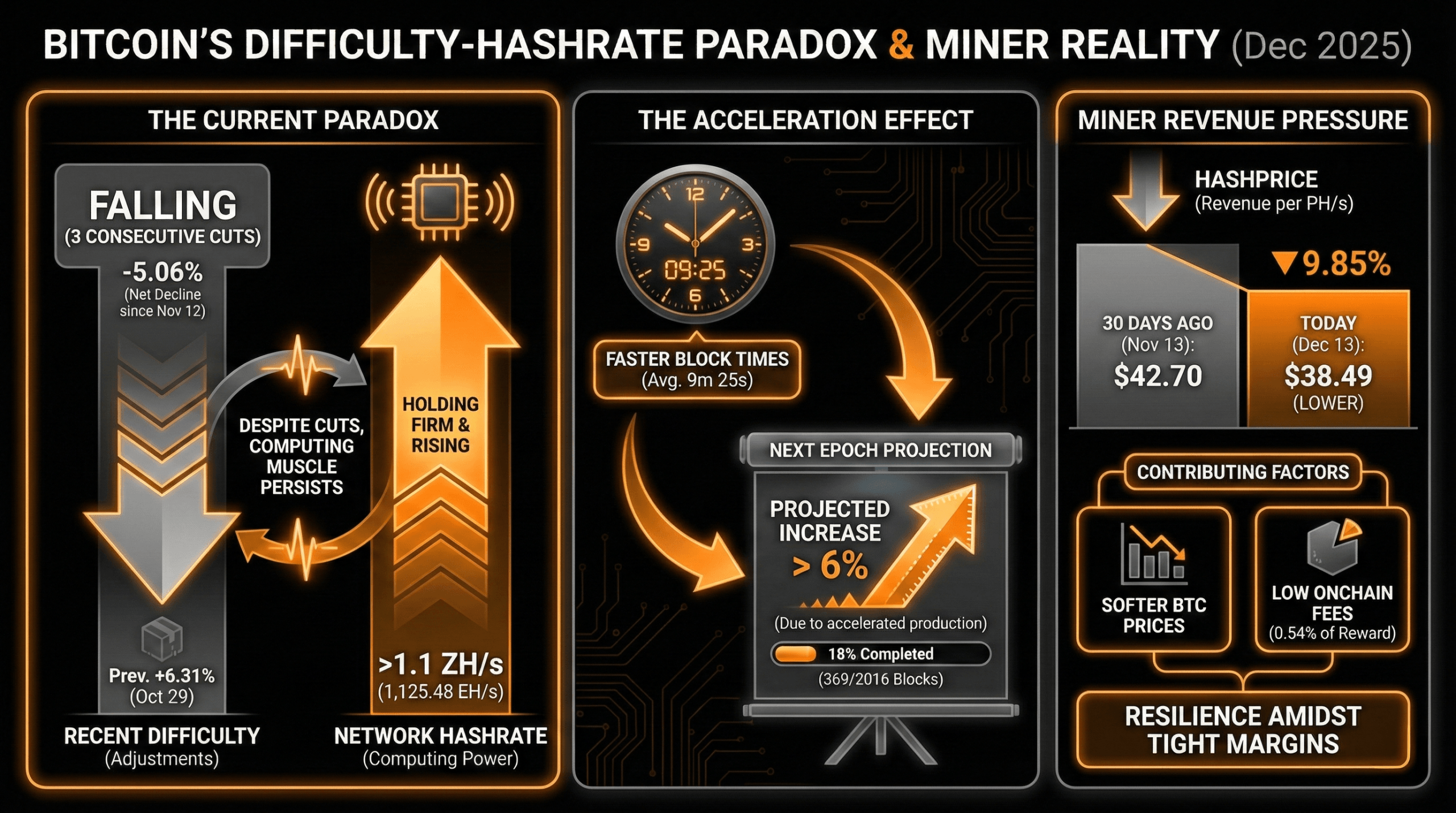
Over the past 24 hours, data from Luxor’s hashrateindex.com show onchain fees well below the 1% threshold, accounting for just 0.54% of a block reward during the period. Even so, miners are once again displaying their resilience, a reminder that this kind of pressure is far from unfamiliar territory. Time will tell whether pricing conditions improve for miners or whether added strain awaits as 2026 gets underway.
FAQ ⛏️
-
What is bitcoin’s current network hashrate? Bitcoin’s total hashrate is holding above 1.1 zettahash per second, with aggregate hashpower measured at about 1,125.48 exahash per second.
-
Why has bitcoin difficulty declined recently? Bitcoin difficulty has adjusted lower three times since Nov. 12 as mining conditions shifted, even while overall network hashrate remained elevated.
-
How fast are bitcoin blocks being produced right now?As of Dec. 13, average block times are running at roughly 9 minutes 25 seconds, faster than the 10-minute target.
-
Why are bitcoin miners under revenue pressure in late 2025?Lower bitcoin prices and minimal onchain fees, which recently made up just 0.54% of block rewards, have weighed on miner earnings despite high hashrate.

 news.bitcoin.com




