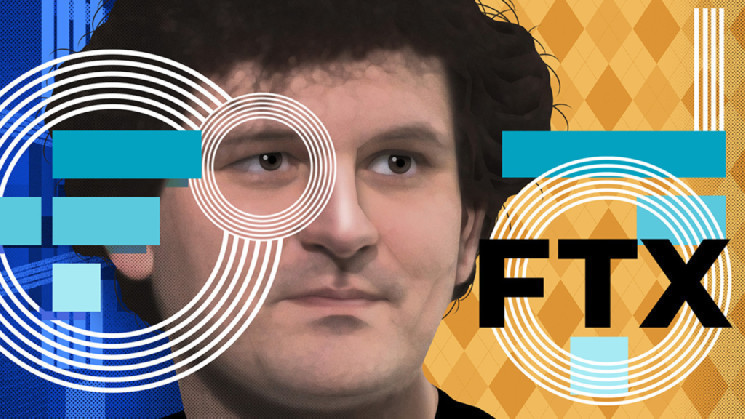
Head of FTX Europe Patrick Gruhn was previously the chief legal officer for Digital Assets AG, a Germany company that handled the tokenization process for CM-Equity, a German-based securities bank which helped bring traditional stock trading to FTX customers outside the US.
European customers are currently served by the international FTX.com, but the new operation will allow FTX to align itself more closely with Europe’s regulatory apparatus.
FTX founder enters fourth decade
Sam Bankman-Fried, who Forbes called “the world’s richest 29-year-old” last year, estimating his wealth at $22.5 billion, celebrated his 30th birthday on Sunday.
In a TV appearance on CNBC, he commented on the use of crypto to help citizens of countries with unstable currencies.
“We often see a spike in digital asset activity coming when there is economic unrest in an area. I think Russia itself is almost an exception to that because of the sanctions in place have made it difficult for people to access digital assets as well as everything else.”
The past few weeks have seen huge spikes in $BTC & #crypto activity in #Russia, #Ukraine & other countries seeing massive devaluation of fiat currencies as #war rages…. @FTX_Official's @SBF_FTX games out on @cnbci the situation, and how #sanctions might work on #DeFi #ausbiz pic.twitter.com/ojVwLeCqh2
— Will Koulouris (@WillKoulouris) March 7, 2022
The potential use of cryptoassets to evade sanctions has been a hot-button political topic, particularly in Washington D.C.
Bankman-Fried, who testified to the House Financial Services committee in December about crypto regulation broadly, co-authored a policy document published on Friday, March 4, that outlines tools for maintaining compliance with sanctions. In it, he and FTX US President Brett Harrison concluded that crypto cannot be effectively used to avoid sanctions, due to the necessity of crypto exchanges as fiat on- and off-ramps.
That conclusion is based not only on exchanges KYC and AML regimes, but also on the use of “advanced dynamic on-chain risk-analysis and transaction monitoring tools, such as Chainalysis and TRM Labs, that help identify cryptocurrency transfers that originated from any known illicit or sanctioned source,” the policy document says.
Moreover, the pair argue, the transparent nature of open, public blockchains rules out their use at the scale that would be required by the Russian government to work around international sanctions.
Harrison and Bankman-Fried close by marveling at the fact that tens of millions of dollars worth of cryptoassets have been donated to the Ukrainian government and relief organizations using crypto rails so far.
Bankman-Fried regularly extols the virtues of philanthropy in interviews, and has said he intends to donate almost all his personal income to good causes.
Get the day’s top crypto news and insights delivered to your inbox every evening. Subscribe to Blockworks’ free newsletter now.

 blockworks.co