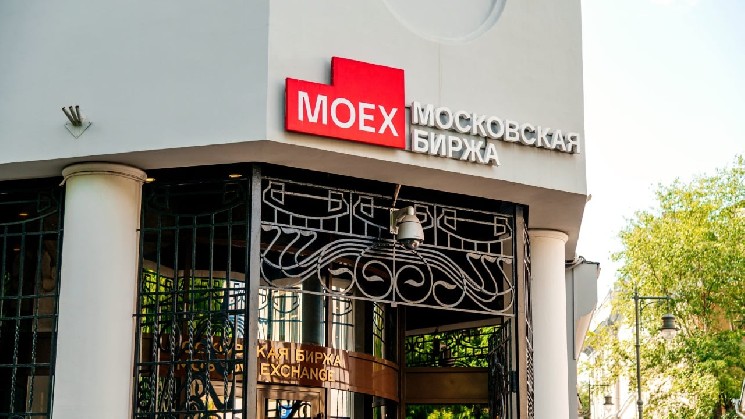
Bitcoin (BTC), ether (ETH), and Tether’s USDT stablecoin will be the first supported assets, with trading offered in both address-based and addressless modes. Moscow Exchange said it intends to expand the selection over time to include additional international cryptocurrencies and Russian digital assets.
The exchange also confirmed that customers will have access to same-day and next-day settlement options, known as TOD and TOM, respectively. Swap transactions will also be available to help market participants manage liquidity.
Retail participation will remain restricted under Russia’s new regulatory framework. Non-qualified investors must pass a knowledge assessment before purchasing cryptocurrencies and will be limited to 300,000 rubles, approximately $3,700, in annual purchases through each broker.
Ready to Launch After Pilot
The announcement builds on preparations previously reported by Bitcoin.com News in October, when Moscow Exchange executive Boris Blokhin revealed that the platform had begun testing cryptocurrency transactions with professional market participants.
Speaking on Oct. 8, Blokhin said the exchange had started its pilot roughly a week earlier and was targeting Dec. 1 for the launch. He also explained that Moscow Exchange could introduce crypto trading using its existing licenses without obtaining additional regulatory approvals.
The initiative represents a significant development in Russia’s efforts to bring cryptocurrency transactions into its regulated financial system, potentially redirecting activity from offshore platforms and informal trading channels.
However, the transition could face challenges. As Bitcoin.com News previously reported, Russian banking giant Sberbank estimated that cryptocurrency trading could reach at least 4 trillion rubles, approximately $46 billion, during the first year of the new regulatory framework.
Despite that substantial projected volume, Sberbank anticipated that only about 20% of transactions would pass through regulated exchanges, with the remainder continuing outside officially supervised markets.
Moscow Exchange’s December launch will provide an early test of whether Russia’s new regulations and established financial institutions can attract a larger share of the country’s cryptocurrency trading activity.

 news.bitcoin.com