Circle Pushes Deeper Into Latin America With USDC Settlement in Colombia
decrypt.co
1 h
In brief
Circle has tapped ACI Worldwide to integrate $USDC settlement into existing banking infrastructure across Latin America, starting with a pilot in Colombia built on ACI’s Bre-B instant-payments system.
The effort pairs Circle’s $USDC with ACI’s Connetic orchestration platform to show banks how stablecoin settlement can run alongside traditional rails.
It extends Circle’s regional push into dozens of emerging markets and an earlier $USDC foothold via Mercado Pago.
Circle is extending its reach across Latin America, teaming up with payments-technology firm ACI Worldwide to fold $USDC settlement into the region’s existing banking rails, starting with a pilot in Colombia.
Announced Tuesday, the collaboration pairs Circle’s $USDC infrastructure with ACI Connetic, ACI’s cloud-based payments orchestration platform, to show financial institutions how stablecoin settlement can run alongside traditional payment systems rather than replace them.
Know when your coins move
Alerts, real-time prices, and market news — all in one app
Point your phone camera to install
4.8 based on 40K reviews in the App Store and Google Play
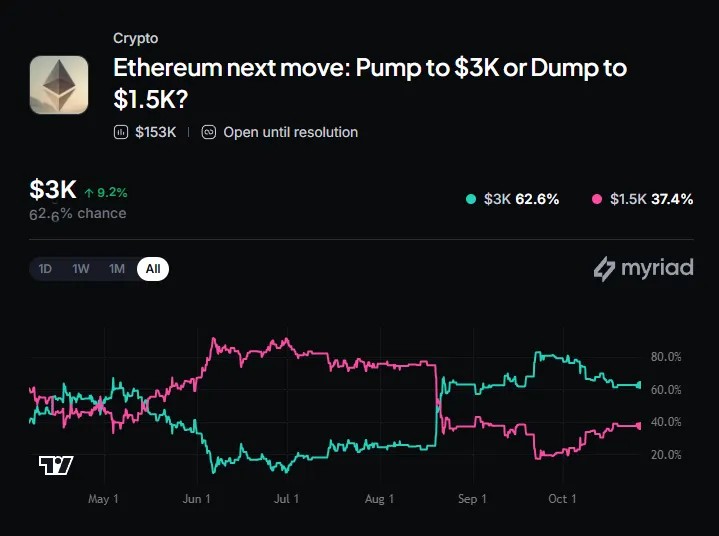
Myriad: Where does ETH go next? Click to make your prediction.
The initial focus is Colombia, where ACI built the central infrastructure behind Bre-B, the country’s interoperable instant-payments network. The idea is to test how a digital dollar like $USDC can slot into that real-time, account-to-account system to create what the companies call a multi-rail ecosystem.
The framing reflects a shift in how banks are approaching stablecoins. Rather than debating the technology itself, institutions increasingly want to know how digital dollars fit into the treasury operations, governance and settlement processes they already run.
“The conversation around stablecoins is moving from possibility to practicality,” said Craig Ramsey, ACI’s global head of account-to-account payments, describing the effort as a way to integrate regulated stablecoins into workflows banks already trust.
Kash Razzaghi, Circle’s chief commercial officer, said financial institutions across Latin America are increasingly looking at how stablecoins can support the evolution of payments “within the infrastructure they already use,” framing $USDC as a bridge between traditional finance and the digital economy.
The move builds on Circle’s steady regional expansion. The company has pushed into dozens of emerging markets as stablecoins go mainstream, and earlier gained a Latin American foothold when Argentina’s Mercado Pago added $USDC.
Colombia is a logical next target, given high cross-border remittance volumes and a population well-acquainted with dollar-denominated savings as a hedge against inflation.
Circle positioned the pilot as technology-agnostic: while it runs on $USDC, ACI’s platform is built to support other payment networks and digital-asset providers over time. For Circle, the deal is another step in weaving its stablecoin into the plumbing of mainstream finance, this time in a fast-growing payments market where instant-payment adoption is already accelerating.

 decrypt.co