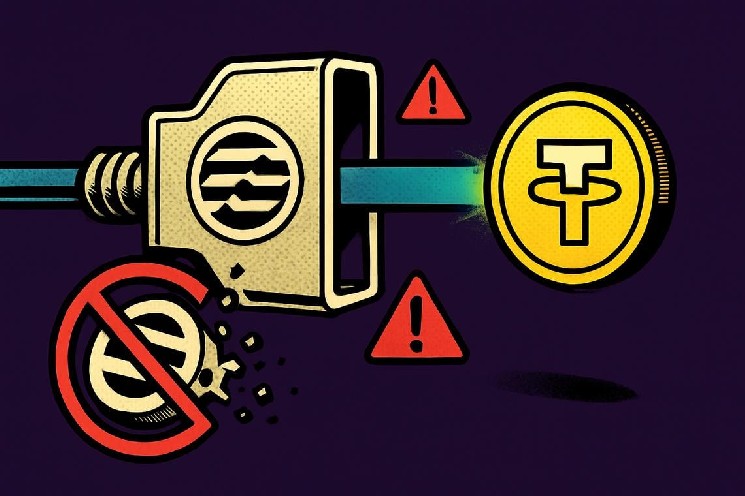
Direct TWD to $USDT Conversion Without Bridges
The practical upshot for Taiwanese users is a cleaner path between fiat and crypto. Someone can deposit Taiwanese Dollars, purchase $USDT that lives natively on Aptos, and then withdraw straight to an Aptos wallet. The process also runs in reverse. There’s no wrapped asset acting as a stand-in and no cross-chain bridge sitting in the middle of the transaction — a detail that matters for anyone who has dealt with the delays or security concerns that bridged tokens sometimes carry.
New Trading Pairs Added Alongside Integration
MAX timed the Aptos $USDT rollout with a broader expansion of its trading lineup. Four new pairs — $HYPE, $GRAM, $APT, and $RENDER — are scheduled to open for trading on September 30 at 15:00 GMT+8. Pairing the native $USDT launch with new listings gives MAX users more direct routes into these assets using TWD-backed liquidity, rather than routing through intermediary tokens.
User Guidance and Risk Warnings for Aptos $USDT Deposits
MAX has flagged one caveat that users can’t afford to overlook: selecting the correct Aptos network when initiating a deposit. Sending funds on the wrong network can result in permanent loss of assets, with no way to recover them. This is a standard risk across the industry whenever a token exists on multiple networks or a blockchain offers more than one deposit pathway, but it’s worth repeating because the consequences are irreversible. Traders moving $USDT onto MAX for the first time should double-check network selection before confirming any transfer.
Origin and Market Adoption of Aptos-native $USDT
Native $USDT support is a bigger deal than it might initially sound. Rather than relying on a third party to wrap or bridge the token, native $USDT is issued directly by Tether on the blockchain in question. It was in late 2024 that Aptos first received this treatment, as Tether started minting $USDT natively on the network.
Since then, adoption has spread beyond niche platforms. Major exchanges including Binance and Bithumb have also added support for Aptos-native $USDT, which suggests the network has built enough liquidity and trust to justify direct integration rather than relying on wrapped alternatives. MAX joining that list places Taiwan’s leading exchange alongside some of the largest global platforms on this particular piece of infrastructure.
Taiwan’s Crypto Market Context and Regulatory Environment
Why does a Taiwan-specific integration matter beyond the island’s borders? Because the Taiwanese Dollar occupies an unusual position in global crypto trading. TWD isn’t nearly as widely supported on international exchanges as the US Dollar, Euro, or Japanese Yen, which leaves local platforms like MAX to fill a gap that bigger, foreign exchanges simply don’t address.
That local role comes with added weight given how MaiCoin Group has positioned MAX. The group has framed the exchange as a compliance-focused platform at a time when regulatory clarity around digital assets in Taiwan is still taking shape. MaiCoin also issues its own utility token, MAX, which gives holders trading fee discounts on the platform — a separate but related piece of the exchange’s broader ecosystem.
For Taiwanese traders, the combination of native $USDT, a direct TWD on-ramp, and new listings for tokens like $HYPE and $RENDER effectively narrows the gap between local currency access and global crypto markets. Whether that translates into meaningfully higher volumes will likely depend on user awareness and how quickly liquidity builds around the new pairs — but the infrastructure, at least, is now in place.
Article produced with the assistance of artificial intelligence and reviewed by the editorial team.

 en.cryptonomist.ch