
 en.cryptonomist.ch
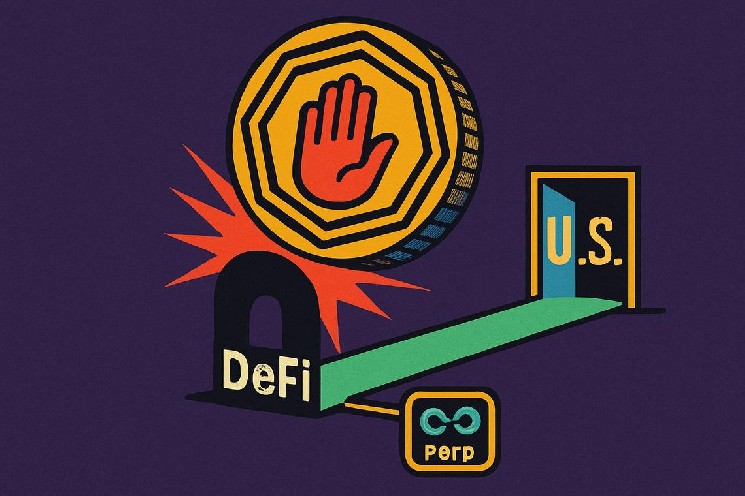
Hyperliquid Labs, the operator of one of crypto’s busiest decentralized derivatives platforms, is reportedly closing in on a deal that would let American traders access crypto perpetual futures tied to its markets for the first time. According to Bloomberg, the arrangement would run through Payward, the parent company of Kraken, using its regulated subsidiary Bitnomial as the U.S. gateway. If it clears regulators, the deal would mark a rare bridge between a decentralized exchange and the tightly supervised world of American derivatives trading.
Key takeaways
- Hyperliquid Labs and Kraken parent Payward are in advanced talks to offer crypto perpetual futures to U.S. traders through Payward’s subsidiary Bitnomial.
- Payward has already presented the CFTC with a proposed structure, but formal regulatory approval has not been granted.
- Former SEC counsel Ashley Ebersole estimates the approval process could take 10 to 12 months, involving both the SEC and CFTC.
- Hyperliquid’s decentralized exchange processes more than $4 billion in daily volume but currently excludes U.S. customers entirely.
- $HYPE token is trading near $84, up more than 85% over the past year after touching an all-time high above $86.
Hyperliquid and Payward Move Toward a U.S. Crypto Perpetual Futures Deal
The core of the plan is straightforward: give registered American users a regulated way into a slice of Hyperliquid’s derivatives markets without touching the underlying decentralized exchange directly. Perpetual futures — derivatives that track an asset’s price without ever expiring — have exploded in popularity on offshore and decentralized platforms, but U.S. law has kept most of that activity out of reach for domestic traders.
Proposed Market Offering and Target Audience
Under the structure described by Bloomberg, Bitnomial would list a limited selection of crypto perps linked to markets running on Hyperliquid’s decentralized exchange and its underlying Layer 1 blockchain. That means U.S. traders wouldn’t be plugging directly into Hyperliquid’s platform. Instead, they’d be trading a regulated product that mirrors those markets, with Bitnomial standing between them and the decentralized infrastructure.
Role of Bitnomial as Regulated Venue
Bitnomial isn’t a new name in U.S. derivatives. Payward acquired the firm earlier this year for up to $550 million, picking up a CFTC-licensed derivatives stack that spans exchange, clearing, and brokerage functions. That existing license is the whole reason this deal is even plausible — building a compliant crypto perpetual futures venue from scratch would take far longer than plugging into infrastructure that’s already approved.
Why Regulatory Approval Could Still Take Nearly a Year
Nothing about this deal is finalized, and the regulatory runway looks long. Payward has already pitched the Commodity Futures Trading Commission on the outline of the structure, but no green light has been issued.
What the CFTC Proposal Still Needs
Ashley Ebersole, a former senior SEC counsel now serving as co-founder and chief legal officer at real-world asset platform tx., told reporters that both the SEC and the CFTC may need to weigh in before U.S. traders get access. Regulators would likely have to write revised interpretive rules covering custody and the mechanics of routing standards — the technical plumbing that determines how trades and assets move between a decentralized platform and a regulated U.S. venue.
The 10-to-12-Month Clock
Ebersole’s estimate is blunt: the review could take at least 10 to 12 months, “assuming things went quickly.” That timeline reflects how unusual this structure is. Regulators have previously flagged concerns about decentralized and permissionless platforms tied to market manipulation, anti-money laundering gaps, and sanctions enforcement — all issues that tend to slow down approval when a decentralized exchange is anywhere in the chain, even indirectly.
What Hyperliquid’s U.S. Blackout Means for the Market
Hyperliquid’s decentralized exchange currently processes more than $4 billion in daily trading volume, yet it blocks American users outright. That gap is exactly what this deal is designed to close, without opening the decentralized platform itself to U.S. traffic. The proposed structure keeps American activity inside a regulated wrapper, with Bitnomial handling compliance and U.S. customers never getting direct access to Hyperliquid’s platform.
$HYPE Token and the Broader Push for Onshore Perps
The market has taken notice. $HYPE, Hyperliquid’s native token, was trading around $84 at last check, up more than 85% over the past year and recently touching an all-time high just above $86. That price action lines up with a broader regulatory thaw: in May, the CFTC cleared KalshiEX and Coinbase to list crypto perpetual futures, and in June it opened a request for comment on crude oil perpetual contracts and 24/7 trading. President Donald Trump has also name-checked Hyperliquid publicly, noting that CFTC Chair Michael Selig was pursuing efforts to establish the platform within American borders “with complete regulatory adherence and legal fashion.” Separately, the Hyperliquid Policy Center has pushed the SEC and CFTC to harmonize their treatment of perpetual contracts, arguing that clearer rules would pull more trading volume onshore rather than losing it to offshore venues. A Kraken spokesperson declined to comment on the talks.
Why this matters for the wider industry is fairly clear: if a decentralized platform like Hyperliquid can find a compliant path into U.S. markets through an acquired, licensed subsidiary, it sets a template other offshore-heavy platforms could copy. It also tests how far regulators are willing to bend existing custody and routing rules to accommodate decentralized infrastructure without compromising the safeguards those rules exist to enforce. For now, the deal remains a proposal on a regulator’s desk — not yet a product traders can use.
FAQ
What are crypto perpetual futures?
Crypto perpetual futures are derivatives that track an underlying asset without a fixed expiration date, letting traders hold positions indefinitely as long as they meet margin requirements.
Why is regulatory approval important for launching crypto perpetual futures in the U.S.?
Regulatory approval matters because crypto perpetual futures are tightly regulated in the U.S. to address risks like market manipulation and anti-money laundering, and any product tied to a decentralized exchange faces extra scrutiny.
Which regulatory bodies are involved in approving the proposed crypto perpetual futures?
Both the Commodity Futures Trading Commission and the Securities and Exchange Commission may need to be involved in writing the interpretive rules required for the structure to move forward.
How will U.S. customers access Hyperliquid’s crypto perpetual futures?
U.S. customers would access the products through Bitnomial, Payward’s CFTC-licensed subsidiary, and would not have direct access to Hyperliquid’s decentralized platform.
Article produced with the assistance of artificial intelligence and reviewed by the editorial team.