
 en.cryptonomist.ch
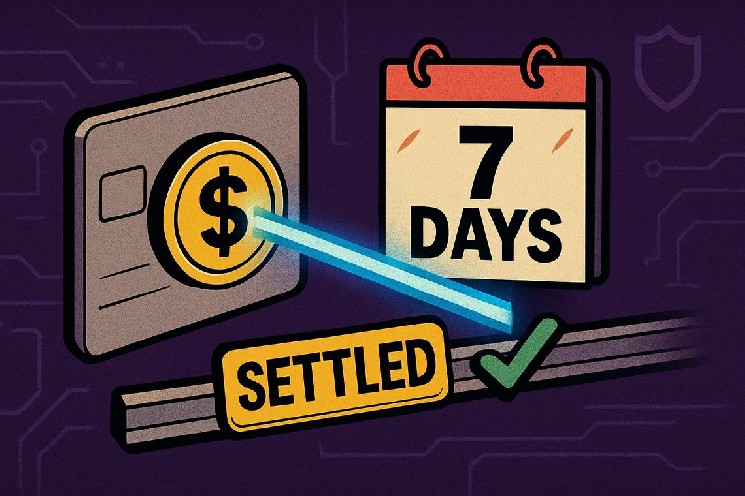
Visa is testing whether stablecoins can settle payments every single day of the week, weekends and holidays included, in a pilot that could reshape how banks move money across borders. The card network has partnered with cross-border payments firm Nium for a trial under Singapore’s BLOOM initiative, aiming to prove that regulated stablecoins can close the gaps left by traditional banking hours. The Visa stablecoin settlement pilot marks the company’s first project inside the framework run by the Monetary Authority of Singapore, and it signals a deeper push by major payment networks to build settlement rails that never really close.
Key takeaways
- Visa has selected Nium as its first partner for a pilot under Singapore’s BLOOM initiative, testing seven-day settlement using regulated USD and euro-backed stablecoins.
- The trial aims to allow settlements on weekends and public holidays, something traditional banking-day cycles do not support.
- BLOOM is a Monetary Authority of Singapore program designed to connect existing payment systems with stablecoin rails while preserving compliance and security controls.
- The pilot targets settlement infrastructure between institutions, not the way customers initiate transactions.
- Visa and Nium have not disclosed a launch date, participating institutions beyond themselves, or expected transaction volumes.
Visa and Nium Launch Pilot for Seven-Day Stablecoin Settlement
The pilot is built to test whether regulated stablecoins can settle cross-border payment obligations without pausing for weekends or public holidays. Visa said the Monetary Authority of Singapore-led BLOOM program will examine how financial institutions can link conventional payment systems with stablecoin payment rails while keeping existing security and compliance controls intact. Nium becomes Visa’s first partner chosen for this specific settlement experiment.
Pilot Focuses on Regulated USD and Euro-Backed Stablecoins
Regulated stablecoins backed by the U.S. dollar and the euro will be the assets used in the trial. Visa and Nium have not named the specific tokens involved, keeping the initial scope limited to those two currency denominations while the companies study how faster settlement might reduce friction for participating institutions.
Settlement Extended Beyond Traditional Banking Hours
Traditional settlement processes are tied to banking days, which means parts of a transaction can sit unfinished over a weekend or during a public holiday. The pilot is meant to test whether **stablecoin**-based rails can close that gap by allowing settlement obligations to move seven days a week, giving institutions quicker access to funds regardless of the calendar.
Monetary Authority of Singapore’s BLOOM Initiative Shapes the Pilot
BLOOM gives Visa’s project its regulatory backbone, since the Monetary Authority of Singapore designed the program specifically to connect traditional payment infrastructure with stablecoin rails without loosening existing oversight. The framework was introduced in 2025 to develop settlement systems built around tokenized bank liabilities and regulated stablecoins, and it builds on the MAS’s earlier Project Orchid work on programmable money, which included more than 10 trials exploring practical digital-money use cases before parts of that research moved into commercial projects.
BLOOM already counts participants such as Circle, DBS, OCBC, Partior, Stripe and UOB, and the program has been aimed at institutional applications including corporate treasury, trade finance and automated payments. One earlier BLOOM test involved Ripple and supply-chain finance company Unloq using RLUSD on the XRP Ledger to link settlement with shipment verification and financing conditions. Visa’s arrival adds a global card network and a cross-border payments specialist to that roster, with the added focus on interoperability between conventional rails and stablecoin settlement.
Adeline Kim, Visa’s group country manager for Regional Southeast Asia and senior vice president for Global Clients and Acquirers in Asia Pacific, framed the project as part of a broader shift in how money moves. “The future of payments will be shaped by how different forms of money and payment networks work together for different use cases,” Kim said. She added that Visa is examining how stablecoins can complement existing systems while preserving “the security, resilience and compliance standards that underpin global commerce.”
Pilot Objectives and Scope Focus on Settlement Infrastructure and Interoperability
This is not a consumer-facing change. The **Nium stablecoin payments** trial is aimed squarely at the plumbing behind transactions, not at how everyday customers pay for things.
Settlement Layer Focus Instead of Customer Transaction Initiation
For participating financial institutions, the test concentrates on the settlement layer behind payments rather than altering how customers start a transaction. Visa said stablecoins could make payment flows more programmable, letting institutions manage settlement outside normal banking hours while still relying on Visa’s network, security systems and compliance controls.
Establishing Interoperability Between Payment Systems and Stablecoin Rails
Nium’s chief risk and compliance officer, Amaresh Mohan, described the goal as building infrastructure that connects established payment networks with stablecoin rails. “This convergence is not only inevitable, it’s essential,” Mohan said, adding that pairing existing payment networks with programmable digital currencies could give financial institutions new settlement options. Mohan also said the BLOOM work is meant to establish **interoperability** between traditional and stablecoin-based rails while keeping compliance requirements embedded directly in the settlement process.
Key Pilot Details Remain Undisclosed
No launch date has been set, and neither company has said which financial institutions might join beyond Visa and Nium themselves. Expected transaction volume for the trial has also not been disclosed. That leaves the **Singapore BLOOM pilot** at an early stage, with the underlying framework and objectives public but the operational specifics still under wraps.
Visa’s Broader Stablecoin Push
This pilot builds on infrastructure Visa has already put in place. The company’s stablecoin settlement network spans nine blockchain networks, including Ethereum, Solana, Polygon, Base, Canton, Arc, Tempo, Avalanche and Stellar, after an April expansion added several of those chains. Visa reported an annualized stablecoin settlement run rate of about $7 billion at the time, up 50% from the prior quarter, and has supported multiple tokens including $USDC and euro-backed EURC to avoid depending on a single stablecoin.
By June, Visa said issuing banks in its onchain programs could already settle seven days a week, and the company was working to extend that same **cross-border settlement** capability to acquirers, which handle funds on behalf of merchants after card transactions process. During Visa’s July fiscal third-quarter earnings call, chief executive Ryan McInerney described the company’s approach as “multi-coin, multi-chain,” saying Visa did not intend to pick a single stablecoin winner.
For Nium, the BLOOM pilot extends work it started earlier this year, when the company integrated $USDC through Coinbase to support cross-border business payouts across more than 190 countries, letting clients fund payments on demand instead of maintaining prefunded balances in every market.
FAQ
What is the main goal of Visa and Nium’s pilot under Singapore’s BLOOM?
The pilot tests seven-day settlement of payments using regulated USD and euro-backed stablecoins, aiming to enable settlement beyond traditional banking days, including weekends and public holidays.
Does the pilot change how customers initiate transactions?
No. The pilot focuses on the settlement infrastructure behind payments rather than altering how customers start a transaction.
What is the BLOOM initiative?
BLOOM is a Monetary Authority of Singapore program designed to connect traditional payment systems with stablecoin rails while maintaining security and compliance standards.
Have Visa and Nium announced when the pilot will launch or which institutions will participate?
No. The companies have not revealed a launch date, the participating institutions beyond themselves, or expected transaction volume.
Article produced with the assistance of artificial intelligence and reviewed by the editorial team.