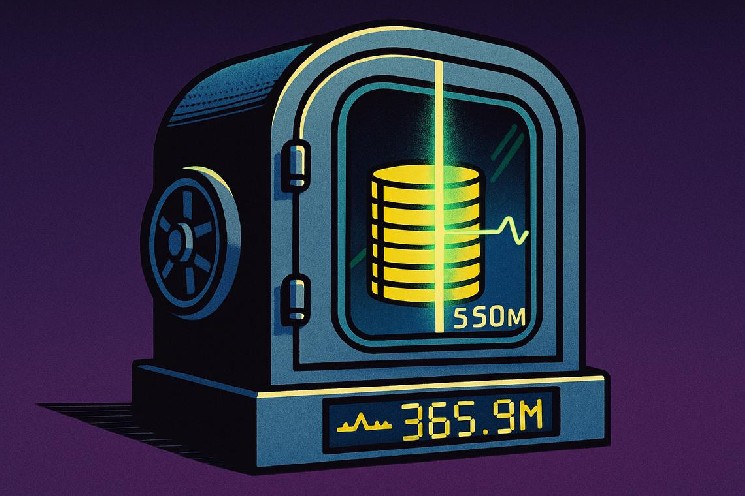
Fund valuation range and average
According to Bitget’s own reporting, the fund hit its lowest point of the month at $329.8 million on July 1, then climbed to a peak of $365.9 million by July 21. That range — roughly $36 million wide — reflects how sensitive a Bitcoin-denominated reserve can be to price swings, even over a single month. Despite that movement, the Bitget Protection Fund valuation never fell below the $300 million figure the exchange originally committed to when the fund launched, staying comfortably above it for the entire period.
Bitcoin price influence on fund reserves
Because the fund’s reserves sit in 5,500 $BTC rather than fiat, its dollar value is essentially a mirror of Bitcoin’s own performance. Bitcoin traded between $59,968 and $66,521 throughout July, a recovery that followed a broader correction across digital asset markets in June. As $BTC climbed through the first three weeks of the month before easing slightly toward the end, the fund’s valuation rose in tandem, ending the period roughly 17% above its founding commitment.
This matters for a simple reason: a reserve fund that only holds value during good times isn’t much of a safety net. The fact that Bitget’s buffer stayed above its $300 million floor even during a month that started with a correction hangover suggests the structure has some built-in resilience — though it also means the fund’s dollar value could just as easily shrink if Bitcoin’s price reverses.
Structure and Purpose of the Protection Fund
The Protection Fund exists as a financial backstop, not a routine operating account — it’s meant to be tapped only when something goes seriously wrong. Bitget set it up in 2022 specifically to safeguard user assets during extreme market events, the kind of scenario where normal exchange operations might otherwise leave customers exposed.
Origins and objectives
Since its creation, the fund has functioned as an additional layer of protection sitting on top of Bitget’s standard custody arrangements. The exchange publishes its valuation transparently and updates it on a regular basis, giving users a live look at how much reserve capital stands behind their holdings as conditions in the broader market shift.
Asset backing via Bitcoin holdings
The decision to back the fund with Bitcoin rather than a stablecoin or fiat currency has direct consequences for how its value behaves. Holding 5,500 $BTC means the fund’s worth in dollar terms rises during bull phases and contracts during downturns — a design that ties user protection capacity directly to the market’s own health.
Integration with Proof of Reserves
The Protection Fund doesn’t operate alone. It works alongside Bitget’s Proof of Reserves system, which is designed to keep reserves above user asset holdings across the exchange’s major markets. Together, the two mechanisms combine verifiable asset backing with a dedicated reserve pool meant to support users if something unexpected happens — a layered approach to risk management that has become increasingly common among exchanges trying to rebuild trust after past industry failures.
Bitget’s Market Position and Ecosystem Expansion
Bitget’s scale gives its transparency reporting more weight than it might carry from a smaller platform. The exchange describes itself as the world’s largest Universal Exchange, serving over 125 million users worldwide and offering access to more than 2 million crypto tokens alongside 500+ tokenized stocks, ETFs, commodities, FX, and precious metals.
User base and asset offerings
That breadth of assets — spanning digital currencies, tokenized equities, and traditional commodities — reflects a broader shift in how exchanges position themselves. Rather than competing purely on crypto listings, platforms like Bitget are increasingly bundling multiple asset classes into a single trading environment, which raises the stakes for having credible, transparent safeguards in place.
Expansion into tokenized stocks and other financial markets
Bitget has continued expanding its Universal Exchange ecosystem to cover crypto assets, tokenized stocks, commodities, and other financial markets. As users trade across more asset types within the same account, the exchange’s risk management framework — including the Protection Fund and Proof of Reserves — becomes a more central part of its value proposition, not just a compliance checkbox.
CEO statement on user confidence and transparency
Bitget CEO Gracy Chen framed the fund’s steady performance as evidence of a broader commitment to consistency, regardless of market direction. “Market direction may change, but user protection shouldn’t,” Chen said. “Our Protection Fund is designed to give users confidence in every market environment. By maintaining substantial onchain reserves and publishing their value regularly, we’re reinforcing transparency as a long-term trust across our platform.”
That statement lands differently depending on where you sit in the crypto ecosystem. For retail users weighing which exchange to trust with their holdings, a monthly reserve report that stays above its baseline commitment offers a concrete data point rather than a marketing promise. For competitors, it raises the bar on what “transparency” is expected to look like going forward — publishing numbers regularly, rather than making a one-time claim and moving on.
FAQ
What is the average valuation of Bitget’s Protection Fund in July 2026?
The average valuation of Bitget’s Protection Fund in July 2026 was $351 million, supported by Bitcoin holdings and the broader market recovery during the month.
How does Bitget safeguard user assets against market volatility?
Bitget’s Protection Fund, established in 2022, works together with its Proof of Reserves to ensure reserves exceed user asset holdings, aiming to safeguard assets even during extreme market conditions.
What range did the Bitget Protection Fund valuation maintain during July 2026?
The fund’s valuation ranged between $329.8 million on July 1 and $365.9 million on July 21, staying above the original $300 million commitment for the entire month.
How is Bitcoin’s price movement related to the Protection Fund’s valuation?
Bitcoin traded between $59,968 and $66,521 in July 2026, and its appreciation over the month directly contributed to the increase in the Protection Fund’s dollar-denominated valuation, since the fund’s reserves are held in $BTC.
Article produced with the assistance of artificial intelligence and reviewed by the editorial team.

 en.cryptonomist.ch