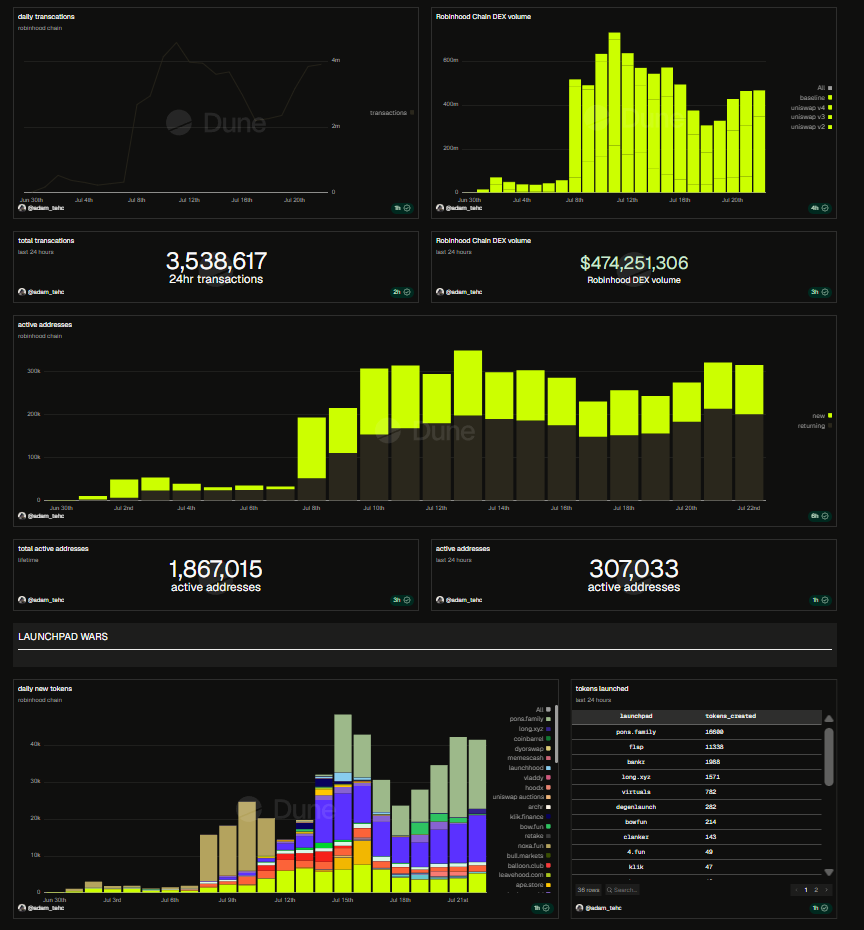
The daily on-chain RWA trading volume was approximately $65.7 million, which is a reasonable amount but still far less than the activity produced by memecoin markets. The launchpad ecosystem highlights this trend even more. With the popular platform Pons, nearly 19,000 tokens have already been created, whereas a number of rival launchpads have added tens of thousands of new assets.
Daily token launches are still high, indicating that one of the main forces behind Robinhood Chain activity is still speculative demand. Cash Cat (CASHCAT), which presently has the largest market capitalization on the network at about $46.5 million, is one of the most prominent projects. The token has emerged as the flagship memecoin of Robinhood Chain and continues to garner significant interest from traders.
Creating memecoin rivals
Artificial Inu (AI), a dog-themed token that many are already comparing to Shiba Inu ($SHIB), is another intriguing newcomer. Artificial Inu has rapidly become one of the chain's most well-known meme assets, with a market capitalization of more than $11.6 million and a daily trading volume of more than $2.4 million.
Its quick growth shows how quickly new meme narratives can gain traction on emerging blockchain networks, even though it is still small in comparison to $SHIB's ecosystem. The difference between memecoin and RWA activity demonstrates a common trend observed across all cryptocurrency markets.
While tokenized stocks, treasuries, and commodities may offer institutional appeal and long-term utility, retail traders still prefer riskier, more volatile assets that have the potential to yield large returns. As of right now, Robinhood Chain seems to be heading in the same direction as many earlier ecosystems: while tokenization and infrastructure garner media attention, memecoins account for the majority of attention, liquidity, and trading volume.

 u.today