
 ambcrypto.com

After a few years of unrelenting growth, centralized perpetual futures trading is now experiencing some slowdown as users are becoming increasingly selective. The selectivity is indicative of risk aversion rather than an absence of demand.
As a result, users have reduced their use of leverage and are waiting for clearer directional signals.
Currently, Binance leads the market in terms of cumulative perpetual volume at approximately $7.9 trillion through 2026. OKX and MEXC each reached nearly $4 trillion in cumulative perpetuals, whereas Bybit had approximately $2.7 trillion.
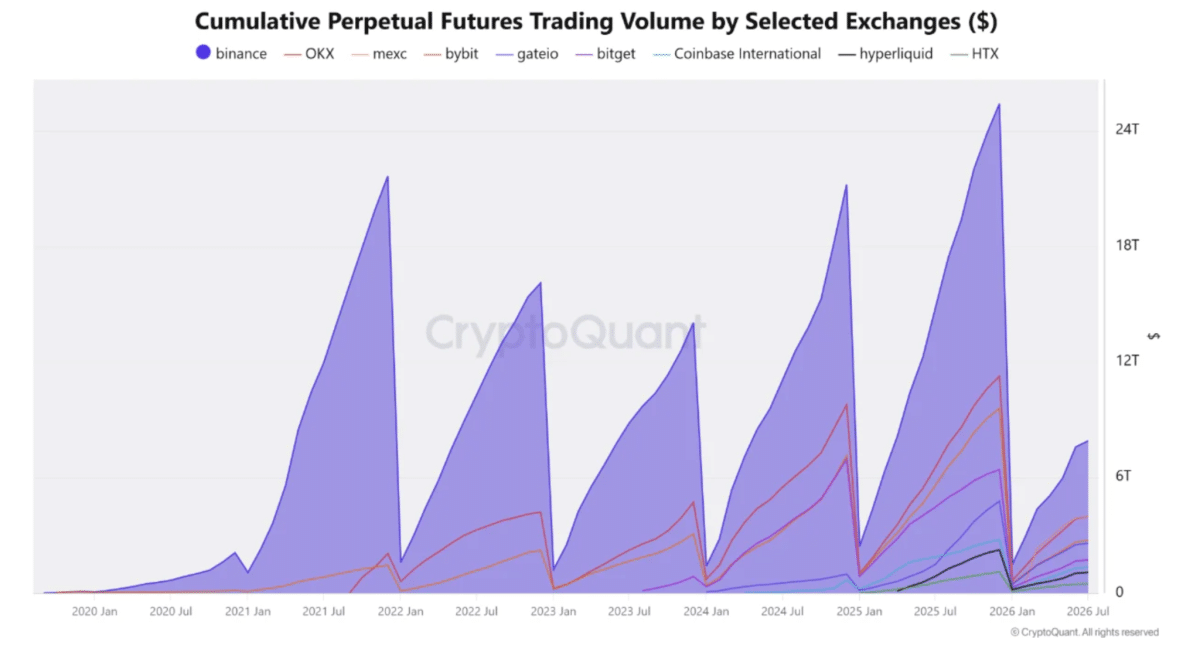
However, cumulative trading volumes have remained below the levels recorded during the same period in 2025. This shift indicates that speculation remains high but may be cooling among the top exchanges.
Simultaneously, the adoption of decentralized perpetual futures and relatively stable open positions is increasing. This indicates that capital is simply being redeployed rather than withdrawn. If this trend persists, derivatives markets may become healthier, relying more on conviction-driven positioning than excessive leverage.
Liquidity shifts toward on-chain perpetuals
As speculative activity cools across centralized exchanges, part of that liquidity is beginning to reappear on-chain rather than leaving the derivatives market altogether.
Speculative activity on centralized perpetual exchanges has continued easing as traders reduce leverage and become more selective. However, that decrease is being partially offset by an increase in on-chain speculation.
Lower transaction fees continue driving preference for on-chain speculation. This is in comparison to centralized exchanges and allows for quicker settlement and transparent, custodian-less trading.
On-chain perpetual derivatives traded approximately $147.6 billion during Q2 of 2026, while the total open interest was approximately $344.6 million. Even though leverage has eased, capital continues flowing into on-chain perpetual markets, highlighting sustained trader conviction.
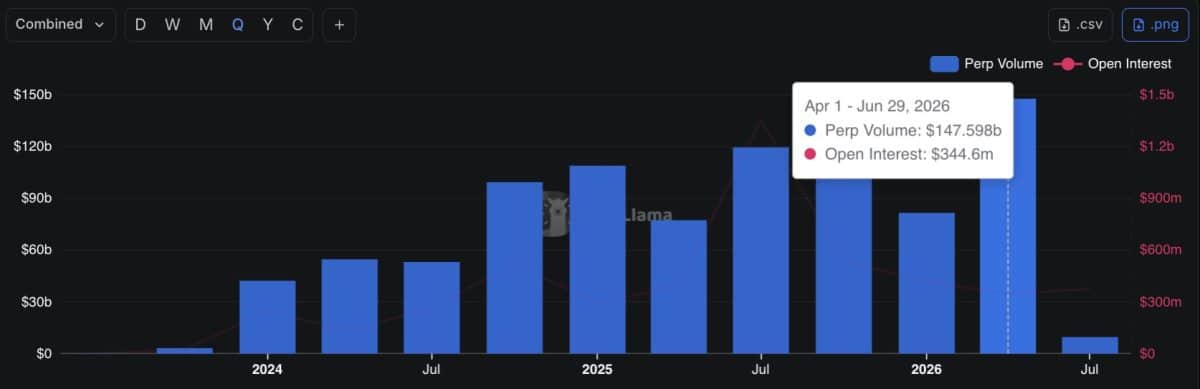
This trend increasingly favors Solana [SOL], which continues attracting a larger share of on-chain perpetual trading activity. More importantly, this provides more opportunities for users to execute trades efficiently through various perpetual derivative products.
Even so, centralized exchanges still dominate overall derivatives activity. If on-chain innovation continues outpacing centralized offerings, derivatives liquidity may become increasingly distributed across multiple venues. As a result, this creates a more competitive and resilient trading ecosystem.
Final Summary
- On-chain perpetual markets continue attracting derivatives liquidity as traders shift away from centralized exchanges.
- Centralized perpetual trading remains dominant, but on-chain execution is steadily reshaping derivatives market structure.