Opera's MiniPay launches Visa debit card for stablecoin spending
cointelegraph.com
23 June 2026 21:33, UTC
MiniPay has launched a Visa debit card that allows users in selected markets across Africa, Latin America, Southeast Asia and Europe to make purchases using stablecoins.
According to Tuesday's announcement, the card is powered by Gnosis Pay's infrastructure, enabling users to pay directly from their MiniPay wallets while merchants receive local currency through Visa's network.
MiniPay said it has grown to more than 16 million activated wallets across 65 countries since launching in 2023, with much of its adoption concentrated in Africa and other emerging markets.
Know when your coins move
Alerts, real-time prices, and market news — all in one app
Point your phone camera to install
4.8 based on 40K reviews in the App Store and Google Play
The card can be added to Apple Pay and Google Pay, while eligible users in some markets will receive cashback rewards denominated in stablecoins USDt and $USDC, as well as Tether Gold.
MiniPay is a stablecoin wallet owned by Opera, the Nasdaq-listed software company best known for its web browser. Built on the Celo blockchain, the wallet focuses on payments, transfers and savings using dollar-backed stablecoins.
Related: Bank of England eases stablecoin rules, introduces 40B pound issuance cap
Stablecoins see adoption in emerging markets
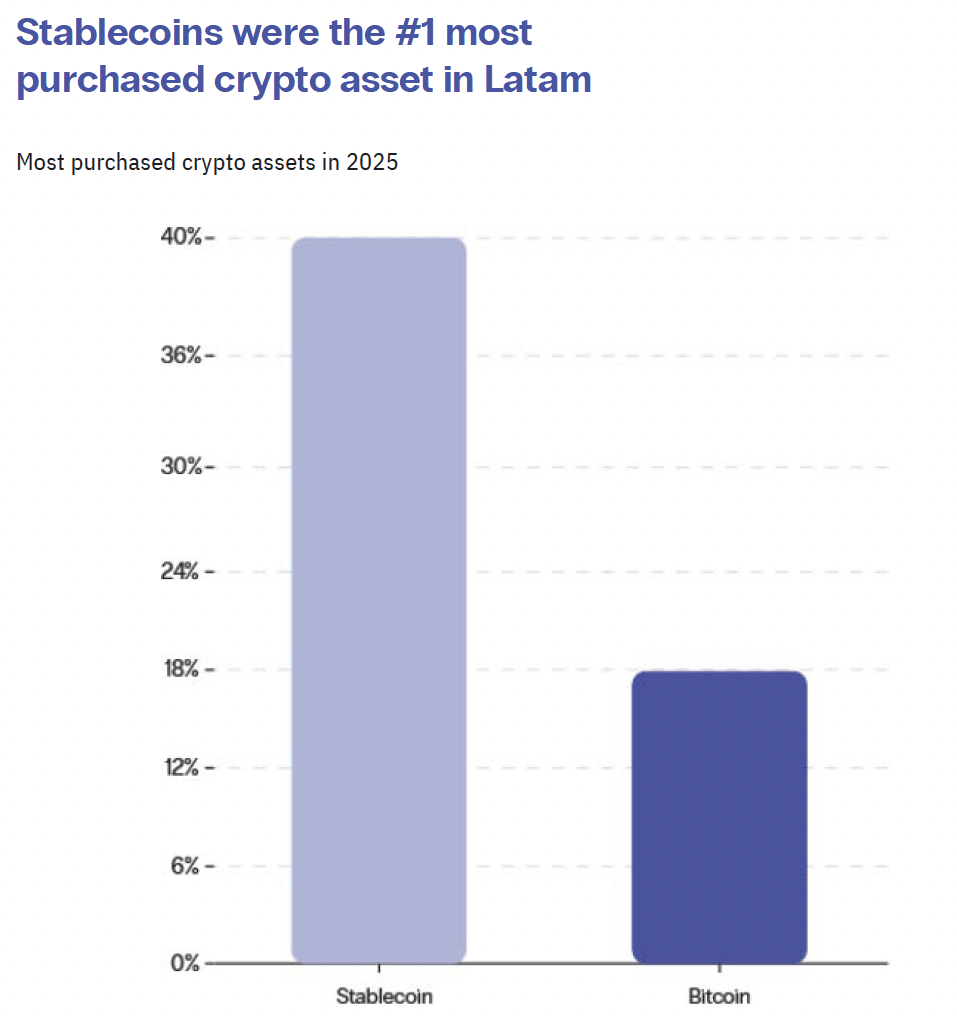
The launch comes as stablecoins gain traction in emerging markets. In Latin America, a recent Bitso report found that dollar-backed stablecoins overtook Bitcoin as the most-purchased crypto asset among the exchange's users in 2025, with $USDC and USDT accounting for a combined 40% of purchases.
Adoption is also accelerating among businesses in the region. Bitso reported that stablecoin transaction volumes among its institutional clients rose 81% year-on-year in the first half of 2026, while banks and licensed payment providers accounted for more than 60% of new business customers added during the period.
Bitso's "Stablecoin Landscape in Latin America report for the first half of 2026." Source: Bitso
Africa has also emerged as a key growth market for stablecoin issuers seeking to expand payment and remittance services.
In March, Circle partnered with African fintech Sasai to expand $USDC-powered cross-border payments across the region. The partnership integrates $USDC into Sasai's existing payments infrastructure, which supports cross-border transfers, enterprise payments and consumer wallets.
Last week, Ripple acquired a stake in Flutterwave, a $3.3 billion fintech operating in 35 African countries, with plans to integrate RLUSD and other blockchain-based payment tools.
The growth in stablecoin payments has coincided with a broader expansion of the market. According to DefiLlama data, the total value of stablecoins in circulation has risen to roughly $315 billion, up from about $250 billion a year ago.

 cointelegraph.com