
 bsc.news
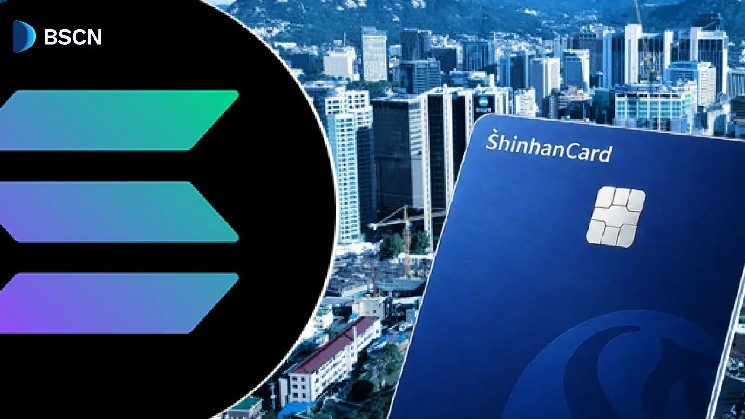
South Korea's largest credit card issuer, Shinhan Card, has signed a memorandum of understanding (MOU) with the Solana Foundation to collaborate on stablecoin payment technology.
BREAKING: South Korea's #1 card issuer Shinhan Card is bringing stablecoin payments to its 28 million cardholders on Solana 🇰🇷🔥 pic.twitter.com/2hxlyHuKhi
— Solana (@solana) April 30, 2026
The two organizations will run an advanced proof-of-concept on Solana's testnet, testing real-world payment scenarios between customers and merchants. The initiative builds on a preliminary proof-of-concept completed last year and could eventually reach more than 28 million cardholders in South Korea.
What Does the Shinhan Card and Solana Foundation MOU Actually Cover?
The agreement goes beyond a basic pilot. Shinhan Card and the Solana Foundation will jointly develop payment scenarios on the Solana testnet while assessing the technical stability of the blockchain network under real transaction conditions.
The key areas under evaluation include:
- Transaction speed, scalability, security, and user experience for customer-to-merchant payments
- Non-custodial wallet integration, where users retain full control of their assets without relying on a third party
- Smart contract execution stability and monitoring frameworks for next-generation financial models
- Oracle technology to connect real-world transaction data securely to the blockchain
A non-custodial wallet is one where the private keys are held by the user, not a platform or institution. This is distinct from custodial wallets used by most exchanges, where the service holds the keys on the user's behalf. Shinhan Card's decision to test this setup reflects a push toward user-controlled asset management in a regulated financial context.
Why Is Shinhan Card Testing a Hybrid Finance Model?
Shinhan Card aims to build a hybrid financial model that combines traditional finance infrastructure with decentralized finance (DeFi).
The plan involves using oracle technology to feed real-world data into smart contracts on-chain. Oracles are third-party services that supply external information, such as exchange rates or payment confirmations, to blockchain networks. Without them, smart contracts cannot interact with data that exists outside the blockchain.
What This Means for Regulatory Compliance
Both Shinhan Card and the Solana Foundation flagged regulatory compliance as a central requirement. A Shinhan Card official stated the company aims to deliver secure and convenient payment services by combining its expertise with Solana's infrastructure once regulatory conditions are in place. A Solana Foundation official echoed this, noting the collaboration prioritizes regulatory compliance and customer protection alongside the efficiency gains of DeFi.
South Korea is actively working toward implementing the Digital Asset Basic Act, which makes early-stage institutional testing inside regulatory frameworks a strategic move for firms like Shinhan Card.
How Does This Fit Into Solana's Broader Institutional Push?
The Shinhan Card MOU is one of several institutional moves Solana has made in recent months. In March 2026, the Solana Foundation launched the Solana Developer Platform (SDP), an API-based suite that allows enterprises and financial institutions to build financial products on Solana without managing the underlying blockchain infrastructure directly.
Mastercard, Worldpay, and Western Union are among the first institutions using SDP. Western Union, which handles billions of dollars in international remittances annually through correspondent banking, is building cross-border payment infrastructure on the platform, marking a practical shift toward blockchain-based rails.
Meta has also added USDC payment support on Solana, targeting creators in Colombia and the Philippines. Visa, separately, expanded its stablecoin settlement pilot to nine blockchains on April 29, including Polygon, Base, and Canton Network.
The Shinhan partnership adds to this pattern of traditional financial institutions testing stablecoin infrastructure on high-throughput blockchains as global regulatory clarity improves.
Conclusion
Shinhan Card and the Solana Foundation are running a structured, testnet-based pilot covering stablecoin payments, non-custodial wallets, oracle integration, and smart contract monitoring. The work builds on a completed preliminary proof-of-concept and is designed to eventually support a hybrid finance model for a cardholder base of over 28 million people, subject to regulatory clearance in South Korea.
-
Solana on X: Posts (April, 2026)
-
Report by The Korea Herald: Shinhan Card, Solana team up on stablecoin tech and online payments
-
Report by CoinDesk: Tech giant Meta starts paying some creators in stablecoin with Stripe's support