
 coinfomania.com
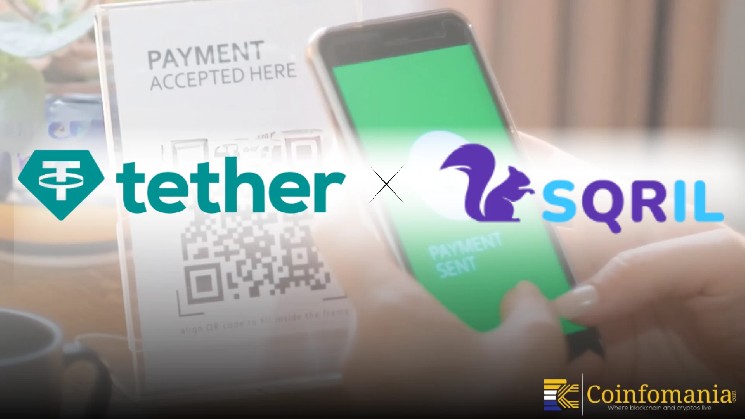
Tether has disclosed a new strategic investment in SQRIL. A real time, cross border QR code payment platform focused on emerging markets. The companies did not reveal the size of the investment. However, both sides confirmed that the funding aims to accelerate the development of stablecoin enabled payment infrastructure.
Stablecoin giant Tether has disclosed an investment in SQRIL, a real-time cross-border QR code payment platform. The size of the investment has not been disclosed. SQRIL currently focuses on markets in Asia, Africa, and Latin America, and can integrate via APIs with traditional…
— Wu Blockchain (@WuBlockchain) January 3, 2026
The move aligns with Tether’s broader efforts to expand real world use cases for stablecoins. Beyond trading and crypto-native transfers. Instead, the focus is shifting toward everyday payments. Especially in regions where traditional banking access remains limited.
What SQRIL Does and Where It Operates
SQRIL operates a payments API that allows banks, fintech firms and digital wallets to support scan-to-pay QR code transactions across borders. Users pay in their home currency. Meanwhile, merchants receive funds in local currency. SQRIL handles foreign exchange conversion and local settlement behind the scenes.
The platform currently targets Asia, Africa and Latin America. These regions have seen rapid adoption of national QR payment systems over the past decade. Countries such as the Philippines, Vietnam and Indonesia already support SQRIL’s QR payment flows. Bank transfer functionality is also live in Malaysia and Thailand. According to SQRIL, additional countries across all three regions are expected to come online during the first quarter of 2026. This expansion reflects rising demand for instant, low-cost payment methods that work across borders.
Stablecoins and QR Codes Converge
The partnership highlights a growing overlap between stablecoins and QR-based payments. In many emerging markets, QR codes already serve as the primary payment interface for consumers and merchants. Stablecoins, meanwhile, offer faster settlement and lower cross-border costs compared with traditional correspondent banking rails.
SQRIL’s system allows integrations with both traditional and digital financial institutions. These include large international banks such as Barclays and Bank of America. As well as digital platforms like Venmo, Revolut and Cash App. Through a single API, these institutions can enable their users to scan local QR codes abroad without opening new accounts or wallets. Tether said the investment will help explore deeper integration between stablecoins and QR-based payment flows. This includes improving settlement speed, liquidity management, and cross-border efficiency.
Why Emerging Markets Matter
QR payments dominate large parts of Asia and continue to grow across Africa and Latin America. In many cases, these systems leapfrogged card infrastructure altogether. As a result, QR codes have become the default payment method for daily transactions, from transport to retail. SQRIL’s leadership argues that this trend may reverse the usual technology flow. Instead of innovations moving from developed markets to emerging ones. QR-based payments could spread globally from these regions outward.
For Tether, the investment reflects a practical bet. Stablecoins already process trillions of dollars in annual volume. Embedding them into existing QR payment networks could extend their reach into physical commerce and cross border spending. The deal signals that stablecoin adoption in 2026 may depend less on speculation. Also, more on infrastructure quietly integrating into how people already pay.