“There is something unamerican about bank lobbyists pressing regulators to tell stablecoin customers what they can and cannot do with their own money after it is issued.”
The banking groups are seemingly concerned that widespread adoption of yield-bearing stablecoins could undermine the banking system, which relies on banks attracting deposits with high-interest savings products to back the loans they make.
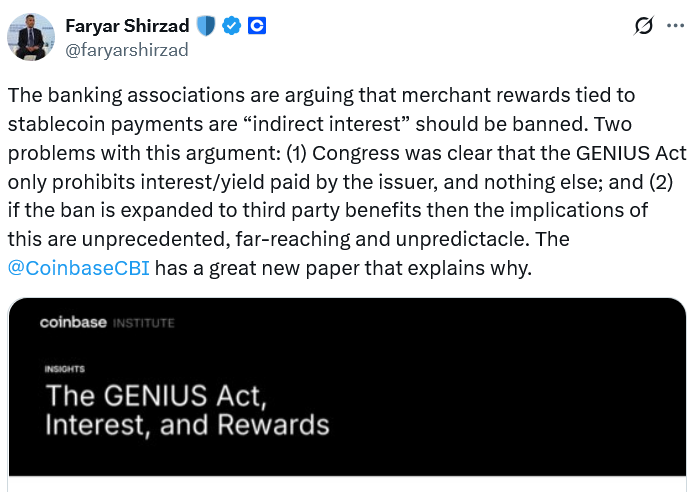
Source: Faryar Shirzad
Stablecoins expected to draw blood from banking
Widespread stablecoin adoption could result in more than $6.6 trillion in deposit outflows from the traditional banking system, according to an estimate by the US Treasury Department in April.
Coinbase argued stablecoins could slash the more than $180 billion in card fees that US merchants paid in 2024; however, “big banks” continue to stand in the way and prevent stablecoin innovations from challenging the traditional payments system.
Related: 21Shares launches crypto index ETFs under SEC’s Act 40
“If third parties are prevented from providing these benefits, consumers are less likely to see stablecoins as a viable payment alternative, and merchants will continue paying hefty fees.”
Centralized exchanges benefit when stablecoin trading soars
Companies like Coinbase benefit from stablecoin adoption, as they earn fees from increased trading volume on their exchange.
Many crypto exchanges issue credit cards to incentivize merchant spending with cashback and crypto rewards — an offering Shirzad fears is under threat but remains optimistic that “common sense will prevail.”
Magazine: 2026 is the year of pragmatic privacy in crypto: Canton, Zcash and more

 cointelegraph.com