
 en.coinotag.com

The dYdX outage in October 2025 lasted eight hours due to a code processing error and oracle delays during the largest crypto liquidation event, affecting traders with incorrect pricing on liquidations. No funds were lost onchain, but the community is voting on up to $462,000 in reimbursements from the insurance fund.
-
dYdX chain halt caused by misordered code and validator delays, leading to stale oracle data and improper trade processing.
-
Outage coincided with a $19 billion market crash, the biggest liquidation in crypto history, impacting decentralized exchanges heavily.
-
Binance responded with a $728 million relief package, including token vouchers and airdrops, to support affected traders amid volatility.
dYdX outage in October 2025 disrupts trading during massive crypto crash; community seeks insurance fund reimbursements. Binance pledges $728M aid. Stay informed on recovery efforts and market resilience. (148 characters)
What Caused the dYdX Outage in October 2025?
The dYdX outage in October 2025 was triggered by a misordered code process in the protocol’s matching engine, compounded by delays in validators restarting oracle sidecar services, halting the chain for approximately eight hours. This incident occurred amid extreme market volatility from the largest liquidation event in cryptocurrency history, where over $19 billion in positions were wiped out. dYdX’s official post-mortem report detailed that upon resumption, stale oracle data led to trades and liquidations processing at incorrect prices, resulting in losses for some traders despite no onchain fund thefts.
The dYdX outage in October 2025 lasted eight hours due to a code processing error and oracle delays during the largest crypto liquidation event, affecting traders with incorrect pricing on liquidations. No funds were lost onchain, but the community is voting on up to $462,000 in reimbursements from the insurance fund.
-
dYdX chain halt caused by misordered code and validator delays, leading to stale oracle data and improper trade processing.
-
Outage coincided with a $19 billion market crash, the biggest liquidation in crypto history, impacting decentralized exchanges heavily.
-
Binance responded with a $728 million relief package, including token vouchers and airdrops, to support affected traders amid volatility.
dYdX outage in October 2025 disrupts trading during massive crypto crash; community seeks insurance fund reimbursements. Binance pledges $728M aid. Stay informed on recovery efforts and market resilience. (148 characters)
What Caused the dYdX Outage in October 2025?
The dYdX outage in October 2025 was triggered by a misordered code process in the protocol’s matching engine, compounded by delays in validators restarting oracle sidecar services, halting the chain for approximately eight hours. This incident occurred amid extreme market volatility from the largest liquidation event in cryptocurrency history, where over $19 billion in positions were wiped out. dYdX’s official post-mortem report detailed that upon resumption, stale oracle data led to trades and liquidations processing at incorrect prices, resulting in losses for some traders despite no onchain fund thefts.
The eight-hour outage occurred during the largest liquidation event in crypto history, prompting dYdX to propose community-governed reimbursements from its insurance fund.
Decentralized exchange dYdX released a post-mortem and community update detailing plans to compensate traders affected by a chain halt that paused operations for roughly eight hours during last month’s market crash.
The exchange announced that its governance community will vote on compensating affected traders with up to $462,000 from the protocol’s insurance fund.
dYdX explained that the Oct. 10 outage stemmed “from a misordered code process, and its duration was exacerbated by delays in validators restarting their oracle sidecar services.” According to the DEX, when the chain resumed, “the matching engine processed trades/liquidations at incorrect prices due to stale oracle data.”
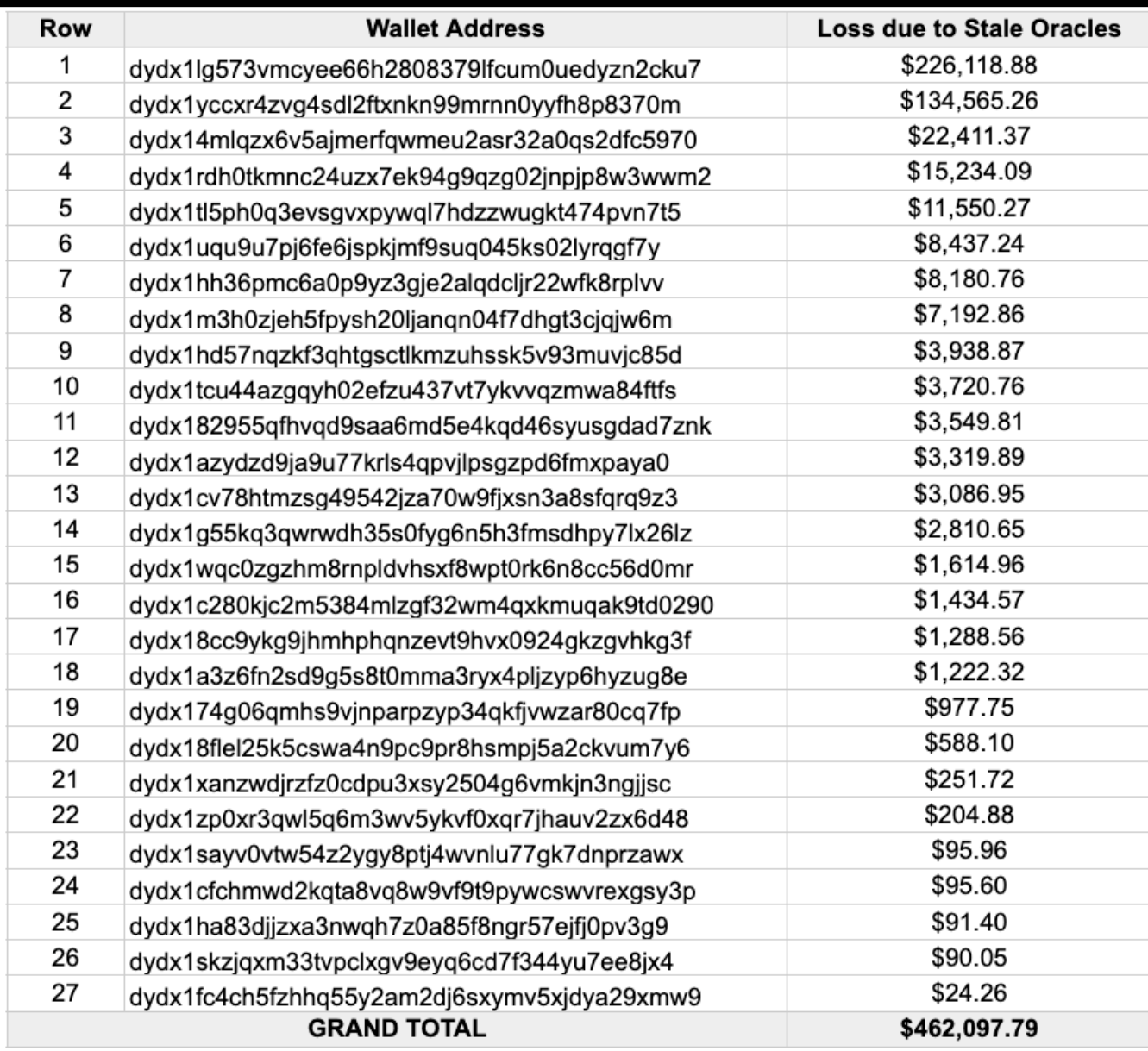
Wallets affected by the outage. Source: dYdX
dYdX confirmed no user funds were lost onchain, but some traders suffered liquidation-related losses during the halt.
The dYdX governance community will vote to decide whether affected traders should be compensated with funds drawn from the protocol’s insurance fund.
How Did the Crypto Market Crash Impact Decentralized Exchanges Like dYdX?
The October 2025 crypto market crash represented a pivotal stress test for decentralized exchanges, with dYdX experiencing a full chain halt that prevented order matching and liquidations for eight hours. During this period, the broader market saw an unprecedented $19 billion in liquidations, driven by sharp price drops in major assets like Bitcoin and Ethereum, as reported by on-chain analytics from sources such as Dune Analytics and Nansen. This event highlighted vulnerabilities in oracle dependencies and validator coordination in DeFi protocols.
Expert analysis from blockchain security firm PeckShield noted that similar outages in high-volatility environments can amplify losses by up to 20-30% due to delayed price feeds, underscoring the need for robust redundancy in oracle systems. dYdX’s team emphasized in their update that the issue was isolated to the matching engine and did not compromise the underlying blockchain’s integrity. Post-incident, the protocol implemented temporary measures to enhance validator responsiveness, reducing potential downtime in future scenarios. Statistics from the outage period show over 1,200 wallets directly impacted, with average losses per affected trader estimated at $385, based on internal dYdX metrics. This crash also prompted wider industry discussions on liquidity provision during black swan events, with DeFi total value locked dipping temporarily by 15% across major platforms.
The incident at dYdX serves as a case study in DeFi resilience, where community governance plays a crucial role in recovery. As per statements from dYdX contributors, “Our focus remains on transparency and user protection, ensuring that insurance mechanisms align with the decentralized ethos.” Comparable disruptions were observed on other DEXs like Uniswap, though none matched dYdX’s duration, per data from DefiLlama. Moving forward, enhanced monitoring tools and diversified oracle providers are being explored to mitigate such risks, fostering greater trust in perpetual futures trading on layer-1 chains.