“Coinbase has no intention of becoming a bank. It is our firm belief that clear rules and the trust of our regulators and customers enable Coinbase to confidently innovate while ensuring proper oversight and security.”
Luke Youngblood, a former Coinbase employee who led the creation of Coinbase staking rewards, explained in a podcast published on Friday that the license would enable Coinbase to “offer basically built-in on-ramp, off-ramp, and no longer have to use partner banks on-ramps, off-ramps.”
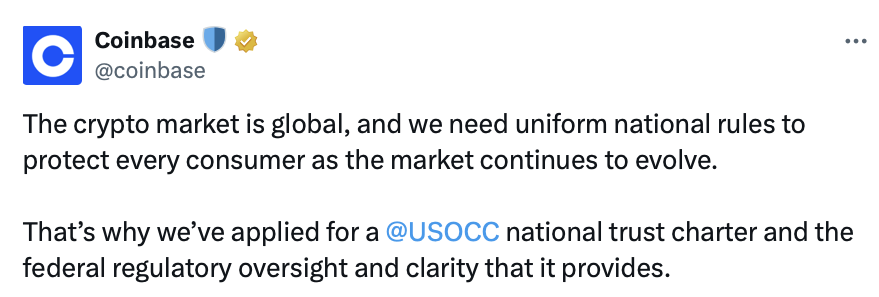
Source: Coinbase
Coinbase said that approval of the license would allow the exchange to expand beyond custody services, opening the door to payments and other related offerings under clearer regulatory guidance.
However, political commentator Brendan Pedersen added, “Trusts theoretically have more limitations than other types of banks when it comes to business activities, but the distinction has blurred over the years.”
Former Coinbase exec notes app improvement
Youngblood said the Coinbase retail application has improved significantly since he stopped working at the exchange in 2022. “When I worked there back in 2022, before I left, it was not that great. The features, like the Coinbase debit card, didn’t work very well,” Youngblood said.
“You can really tell they’ve hired some top engineering talent,” Youngblood said.It comes as several other crypto companies have also recently applied for the National Trust Charter.
On July 1, stablecoin issuer Circle applied to establish a national trust bank in the US. A couple of days later, Ripple Labs applied for the same license.
Ripple Labs CEO Brad Garlinghouse said if the license is approved, it would be a “new (and unique!) benchmark for trust in the stablecoin market”

 cointelegraph.com