
 bsc.news
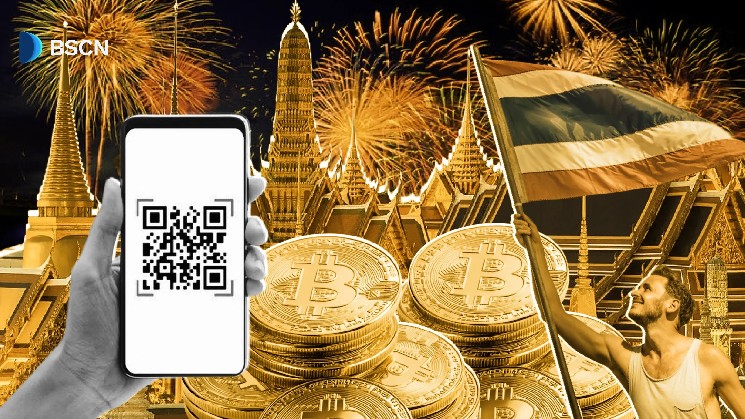
Thailand plans launching a nationwide crypto payments sandbox called TouristDigiPay, allowing foreign visitors to convert cryptocurrencies into Thai baht for everyday spending, according to The Nation. The program begins Monday, August 18, with full details expected at a press briefing led by Deputy Prime Minister and Finance Minister Pichai Chunhavajira, alongside officials from the Finance Ministry, the Securities and Exchange Commission (SEC), the Anti-Money Laundering Office (AMLO), and the Ministry of Tourism and Sports.
The scheme will not allow direct crypto payments. Instead, tourists will exchange digital assets through licensed providers, with merchants receiving baht through the country’s widely used QR payment system.
Why Thailand Is Turning to Crypto
Tourism has long been a cornerstone of Thailand’s economy, but arrivals have slipped in 2025.
- 19.3 million foreign visitors arrived in the first seven months of 2025, down 6% year-on-year.
- Revenue from international tourism fell 4.2% in the same period.
- Visitors from China, once the largest group, dropped 34%, according to the World Tourism Institute.
Officials hope TouristDigiPay will attract crypto-savvy travelers and boost spending at local businesses. Regulators see digital assets as a way to modernize payments while keeping financial oversight intact.
How TouristDigiPay Will Work
TouristDigiPay will function within a regulatory sandbox overseen by the SEC and the Bank of Thailand (BOT).
- Tourists must open accounts with licensed digital asset exchanges and regulated e-money providers.
- Assets will be converted into baht, enabling QR code payments at shops, restaurants, and hotels.
- Strict Know Your Customer (KYC) and Customer Due Diligence (CDD) checks will be required under AMLO rules.
Transaction caps are designed to reduce risks of fraud and money laundering:
- 500,000 baht per month limit for payments via merchant card terminals.
- 50,000 baht per month cap for general merchants.
- Spending blocked at businesses flagged as high-risk.
Eligible Cryptocurrencies
While the official list has not been confirmed, TouristDigiPay is expected to support assets already cleared by the SEC. These currently include:
- Bitcoin (BTC)
- Ethereum (ETH)
- XRP
- Stellar (XLM)
- USD Coin (USDC)
- Tether (USDT)
This means most trading will likely be limited to large-cap coins and stablecoins.
Thailand’s Broader Digital Asset Strategy
TouristDigiPay is the first major outcome of the SEC’s recent consultation on crypto’s role in tourism and economic growth. But it is only part of Thailand’s wider push into digital finance.
- In June 2025, Thailand announced a tax exemption on capital gains from crypto trading through licensed platforms. The waiver runs from 2025 to 2029.
- Last May, the Bank of Thailand announced to pilot a Tourist Wallet to support QR code payments and potentially link with foreign debit and credit cards.
- Also, in May, the Finance Ministry proposed issuing 5 billion baht ($150 million) in G-Tokens, blockchain-based digital investment instruments designed to raise capital from retail investors.
These moves are part of Thailand’s strategy to position itself as a regional financial hub while keeping transactions regulated.
A Controlled Opening, Not Full Adoption
Despite the new initiative, Thailand has not legalized direct crypto payments. Merchants will still receive baht, not digital assets, insulating them from volatility.
The model resembles earlier pilots where digital assets are exchanged for local currency behind the scenes, allowing tourists to spend crypto while keeping settlement flows within the regulated financial system.
Senior Bank of Thailand director Naphongthawat Phothikit said the Tourist Wallet will initially act as an e-money system but could later integrate with foreign credit cards for added convenience.
Conclusion
Thailand’s TouristDigiPay scheme marks a controlled step toward integrating digital assets into tourism spending. By converting crypto into baht within a regulatory sandbox, authorities are balancing financial innovation with strict oversight.
The program limits risks through caps, KYC rules, and SEC licensing requirements, while still giving crypto users a way to spend their holdings in the country.
Whether it lifts tourism numbers remains to be seen, but Thailand is clearly moving to align regulation, taxation, and infrastructure to capture more value from digital assets.
Resources:
-
Thailand crypto payments sandbox report: https://www.nationthailand.com/business/digital-assets/40054107
-
Thailand crypto-linked credit card report: https://www.nationthailand.com/business/digital-assets/40050484
-
Thailand’s $150M G-Token launch report: https://www.bloomberg.com/news/articles/2025-05-13/thailand-to-issue-150-milllion-in-government-investment-tokens?srnd=phx-crypto&embedded-checkout=true