Kalshi sued Nevada and New Jersey gaming regulators in March, claiming cease-and-desist letters from the states over offering its sports betting contracts are moot as it is regulated by the Commodity Futures Trading Commission.
Federal courts in both states sided with Kalshi and stopped the regulators from taking enforcement action against the company. Both lawsuits are still ongoing.
Robinhood claims harm if not allowed to offer contracts
Robinhood claimed that if the state regulators are permitted to take action against it but not Kalshi, then it’ll lose out to the platform in the sports event contracts space.
Event contracts let users bet on the outcome of events such as sports games or election outcomes, and have their roots in using blockchains for transparency and dealing with resolving the truth of the contract.
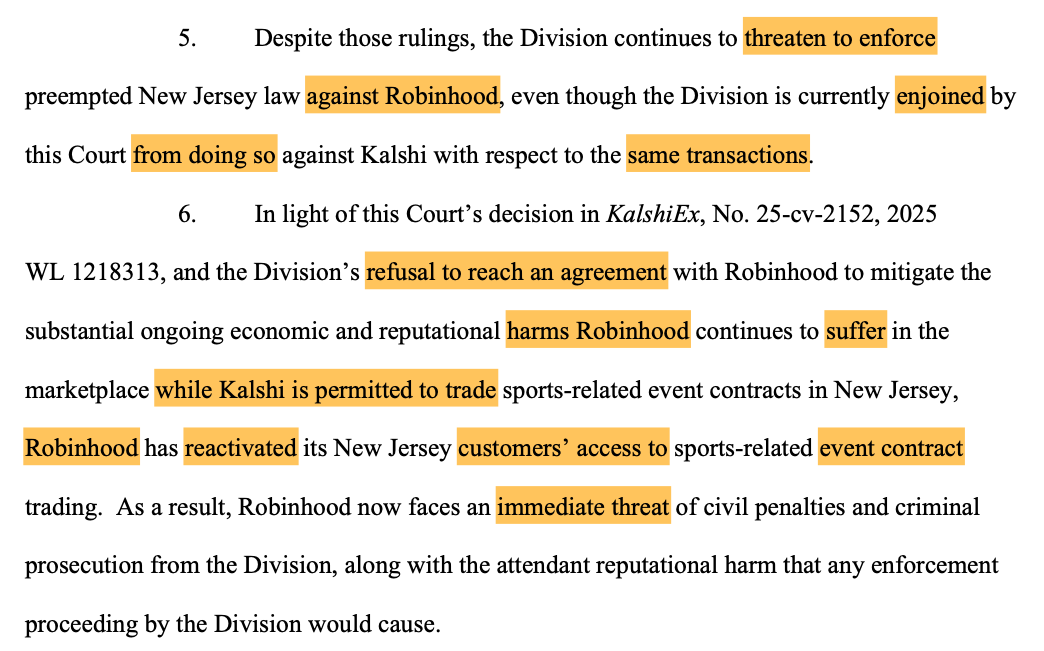
A highlighted excerpt of Robinhood’s suit in New Jersey claims it opened event contracts for trading; otherwise, it would be harmed. Source: CourtListener
Robinhood said its platform facilitates the placement and liquidation of event contracts for its users, which trade on Kalshi.
It said that given each state’s “refusal to acknowledge what this Court has already held — that its threatened enforcement of state law is likely preempted by federal law — Robinhood had no choice but to file this lawsuit to protect its customers and its business.”
Regulators declined Robinhood’s arguments
Robinhood claimed in its lawsuits that the gaming regulators from both states denied its assertions that it should be allowed to offer event contracts after the courts sided with Kalshi.
It said in its New Jersey suit that it contacted the state’s Division of Gaming Enforcement to explain that it should be allowed to offer the contracts through Kalshi with a federal court’s decision allowing Kalshi to offer them.
“Division officials informed Robinhood that they could not agree to refrain from enforcement action even while this Court’s order was in place concerning Kalshi,” the company said. It accused regulatory officials of not responding to a request to meet on the issue despite “several follow-ups.”
Related: Banking lobby fights to change GENIUS Act: Is it too late?
Robinhood said a similar scenario played out in Nevada after a local federal court sided with Kalshi, with its complaint claiming the state’s Gaming Control Board told the company that if it offered the contracts, it’d view it as “wilful violations” of law
It said the regulator declined its proposal to temporarily offer its customers based in the state the same contracts offered on Kalshi.
In both complaints, Robinhood has asked the courts to issue an order to stop the regulators from taking action against it and has filed for a temporary restraining order against each.
Magazine: Will Robinhood’s tokenized stocks REALLY take over the world? Pros and cons

 cointelegraph.com




