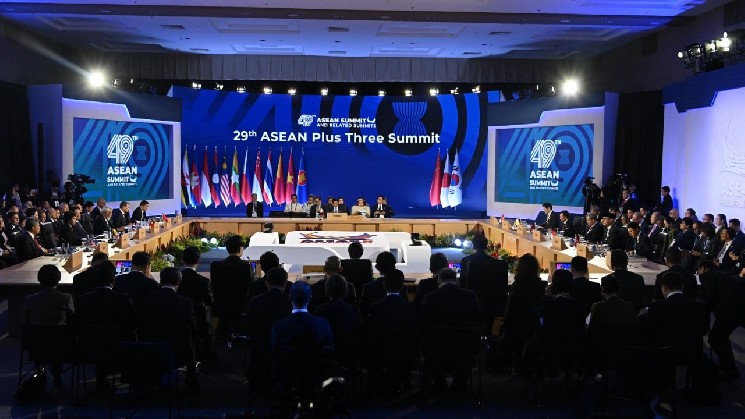
A mechanism to allow access to emergency funds to tackle pandemic and emergency-disaster-derived shocks was discussed as part of a $240 billion currency swap known as the Chiang Mai Initiative, launched in May 2000 for member countries to leverage during liquidity crunch periods. More details will be revealed at the next ASEAN+3 Finance Ministers and Central Bank Governors Meeting in May 2027.
Focusing on domestic payment methods ensures payment policies will involve local currencies, supporting the group’s de-dollarization push outlined since 2023 and accelerated by the surge of unilateral U.S. sanctions against Russia.
In 2025, Brunei, Cambodia, Indonesia, Laos, Malaysia, Myanmar, the Philippines, Singapore, Thailand, and Vietnam outlined their currency sovereignty strategy in the Economic Community Strategic Plan 2026–2030, released on May 26 during the 46th ASEAN Summit.
In the document, the organization states it will “promote the use of local currencies to reduce the region’s vulnerability to exchange rate fluctuations and external economic and financial shocks, and to lower transaction costs associated with cross-border payments.”
A February International Monetary Fund (IMF) paper found that cross-border digital payments can promote local currency usage and facilitate regional trade and financial integration among ASEAN countries, with Thailand leading the transition to digital cross-border payments.
Digital payments can also take advantage of central bank digital currencies, such as the digital yuan, providing China with some leverage across the region given the size and scope of its economy.
In 2023, the Chinese Region of Guanxi highlighted the possibilities of integrating the digital yuan for trade settlements across ASEAN, aiming to internationalize the digital currency that was in its initial stages at the time.

 news.bitcoin.com