AI Data Center Firms Face $13.4B Debt Maturities as Refinancing Costs Rise
coinedition.com
23 m
The companies building data centers for artificial intelligence continue to face a growing refinancing challenge as billions of dollars in debt approach maturity.
BloombergNEF estimates that about $13.4 billion in fixed-rate data center debt comes due in 2027. Refinancing at recent Treasury and bond yields could raise borrowing costs by about 2.85% points, adding at least $380 million in annual interest expenses.
Refinancing Costs Could Rise as Debt Comes Due
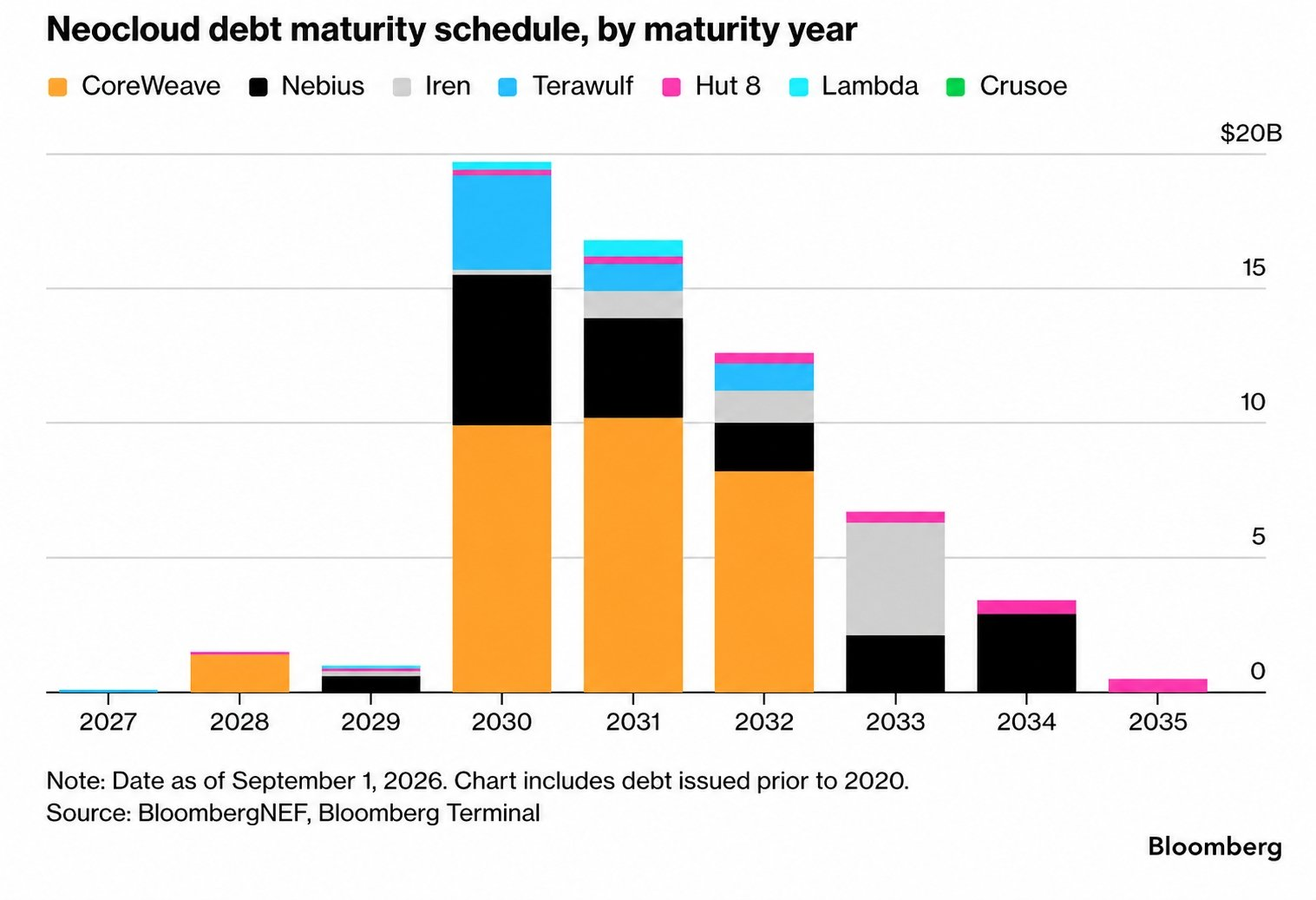
That 2027 maturity figure is separate from the larger debt schedule projected for neocloud companies, which rent computing capacity powered by high-performance chips. Bloomberg data show those firms face about $49 billion in maturities from 2030 through 2032.
Know when your coins move
Alerts, real-time prices, and market news — all in one app
Point your phone camera to install
4.8 based on 40K reviews in the App Store and Google Play
Repayments are projected to peak at nearly $20 billion in 2030, then reach about $17 billion in 2031 and $13 billion in 2032. CoreWeave accounts for the largest share of the period’s maturities, while Nebius and TeraWulf also contribute large amounts. The schedule falls to about $7 billion in 2033, with Iren representing a big portion that year alongside Nebius and Hut 8.
Source: X
The data shows roughly $4 billion due in 2034 and less than $1 billion in 2035. Separately, at least $1 trillion in total data center debt is expected to mature over the next five years, with large amounts tied to Vantage Data Centers, Switch and DataBank.
Follow us onXfor real-time crypto updates.
Lenders Tighten Terms for AI Infrastructure
The financing pressure comes as lenders and private credit investors turn more selective. Some banks have reportedly shown hesitation to support new data center projects, including projects backed by major technology companies. Spreads on 10-year debt for major cloud and AI companies have also widened faster this year than those for general industrial firms.
Borrowing costs have affected funding choices. Some AI-focused companies have halted new unsecured debt issuance, shifted toward secured bank loans or turned to share programs that can dilute existing shareholders. CoreWeave and Nebius have been among the companies adjusting their financing approaches.
CoreWeave’s 2032 bonds have recently yielded above 16%. That rate corresponds to current conditions in the bond market, while the projected maturity totals show when principal repayments are scheduled, not the amount companies must refinance at today’s rates.
Chip Depreciation Adds Another Financing Consideration
AI infrastructure companies use borrowed funds to build data centers and acquire costly GPUs. Those chips can lose value as newer generations emerge, potentially undermining the competitiveness and rental value of older equipment while debt obligations remain.
The maturity schedules do not predict how much demand for NVIDIA GPUs or technology stocks will change. They do show that refinancing costs, repayment timing, and hardware values will matter as companies fund further infrastructure expansion.
Subscribe to our YouTube channel for the latest crypto news.
Related: U.S. AI Data Center Boom Faces Debt Risks as Costs Rise and Projects Stall

 coinedition.com