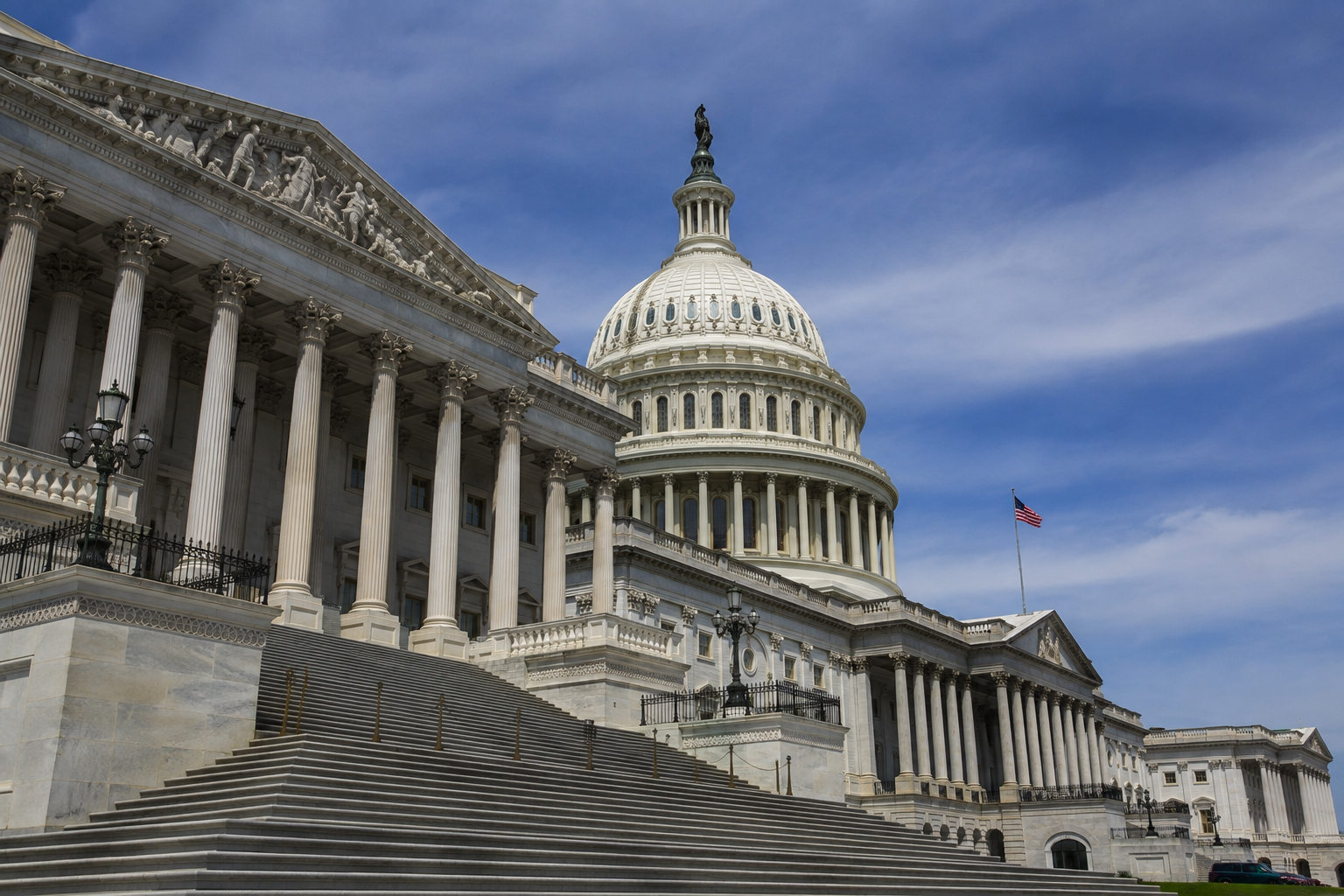
Industries that were relatively small or nonexistent a generation ago are now using their growing financial power to support candidates, influence regulation and oppose policies they view as unfavorable.
The increase in spending comes as lawmakers intensify scrutiny of crypto, AI, online gambling and related issues.
Campaign finance watchdogs and political strategists say the industries are increasingly seeking to shape the political environment around the regulations that could affect their businesses.
Corporate spending reaches record levels
US companies spent $517 million on congressional races through the first quarter, according to data compiled by Public Citizen.
That figure was reached before the final stretch of campaigning ahead of the November 3 elections, when political spending is expected to accelerate further.
The overall political advertising market is also expected to set a record.
AdImpact estimates that $11.6 billion could be spent on political advertisements during the midterm cycle, surpassing the $11.2 billion spent during the 2023-2024 cycle.
That broader figure includes spending by billionaires, labor groups and social causes, rather than corporate money alone.
The figures indicate that corporate and wealthy individual donors are becoming an increasingly important source of campaign funding. At the same time, the identity of the biggest corporate spenders is changing.
Wall Street, pharmaceuticals, oil and traditional media have historically played major roles in political spending.
In 2026, crypto, technology and online gaming have emerged as major contributors, supported by founders and executives who have accumulated substantial wealth from businesses that have expanded rapidly over the past decade.
Crypto leads a new political playbook
Crypto companies have been among the most aggressive participants in the new spending environment.
Crypto, technology and online gaming donations accounted for at least $294 million of corporate spending on midterm races from January 2025 through the first quarter, according to Public Citizen.
Much of the money has been routed through super PACs, affiliate PACs and dark-money nonprofits.
These structures allow political groups to accept unlimited contributions, although they cannot directly donate to candidates or coordinate with their campaigns. Instead, they can spend money on advertising, voter drives and campaign events.
The crypto industry's approach became particularly prominent during the 2024 elections through Fairshake, a super PAC backed largely by Coinbase, Ripple and venture capital firm Andreessen Horowitz.
The strategy differed from the traditional model of aligning political contributions with one party.
Instead, the industry supported candidates based on their positions toward cryptocurrency, regardless of whether they were Democrats or Republicans. It also spent money against politicians viewed as hostile to the sector.
That strategy is now being copied by other emerging industries, according to Democratic and Republican strategists cited in the Reuters report. Fairshake began 2026 with $193 million and had around $130 million remaining to spend, according to filings.
The industry's influence also extends beyond corporate donations.
SpaceX founder Elon Musk had already spent more than $90 million on the 2026 federal elections, with plans to spend more before November. Google co-founder Sergey Brin separately spent more than $106 million in California on issues including a proposed wealth tax.
Big Tech expands its political presence
Artificial intelligence companies have also become significant political participants during the current election cycle.
AI had little presence in the 2024 elections, but groups connected to OpenAI and Anthropic and their executives spent more than $23 million on two competing Democratic candidates in a liberal New York City district in June alone.
Brendan Glavin, director at campaign finance watchdog OpenSecrets, described the contest as effectively a battle between AI groups, with the candidates taking a secondary role.
The political activity reflects differing views within the AI industry over how the sector should be regulated.
The AI-focused super PAC Leading the Future has raised $140 million for the midterms, according to a person familiar with its funding. OpenAI co-founder Greg Brockman and his wife Anna are among its significant donors, alongside Andreessen Horowitz.
OpenAI has previously said that it does not finance or direct the group's activities and that its executives and employees are free to make political donations personally. The company also said that outside political groups do not represent its views.
Anthropic, meanwhile, has donated at least $40 million during the election cycle through the dark-money nonprofit Public First Action, which has raised $100 million.
The company is also linked to the Public First super PAC, which has raised an additional $3.9 million.
Anthropic has defended its donations to the nonprofit, saying the money is intended to educate the public about policies rather than support or oppose particular candidates.
The AI industry's approach resembles the political strategy pioneered by crypto, according to Glavin. Both industries have increasingly focused on candidates viewed as supportive of their policy priorities rather than adhering strictly to traditional party lines.
Online betting follows crypto's strategy
The online sports betting industry is also increasing its political spending as regulators pay closer attention to the rapidly expanding sector.
DraftKings, FanDuel, Fanatics and UK-based sportsbook bet365 have contributed more than $72 million to the midterms, according to Public Citizen estimates.
That makes sports betting the third-largest corporate donor industry in the current election cycle.
Much of the industry's political spending is being directed through two affiliate PACs, American Conservative Fund and American Future. The groups are focusing on state-level races where sports betting companies face significant regulatory scrutiny.
Prediction market operator Polymarket has also entered the political spending arena. Its corporate parent, Blockratize Inc., donated $1 million in June to the Congressional Leadership Fund, a Republican super PAC backed by House Speaker Mike Johnson.
The political activity comes as sports betting expands across the US and companies face questions about how the industry should be regulated.
Corporate influence faces growing criticism
The increase in corporate political spending has raised concerns among campaign finance watchdogs that a small number of industries and wealthy individuals could gain disproportionate influence over policymaking.
Critics argue that the flood of money could push issues such as crypto regulation, AI oversight,>There are also signs that voters are skeptical of the growing role of money in politics. Polls show that a majority of Americans believe there is too much money in politics.
Some Democratic Senate candidates, including James Talarico in Texas and Abdul El-Sayed in Michigan, have built campaigns around opposition to the influence of wealthy donors and corporations in Washington.

 invezz.com