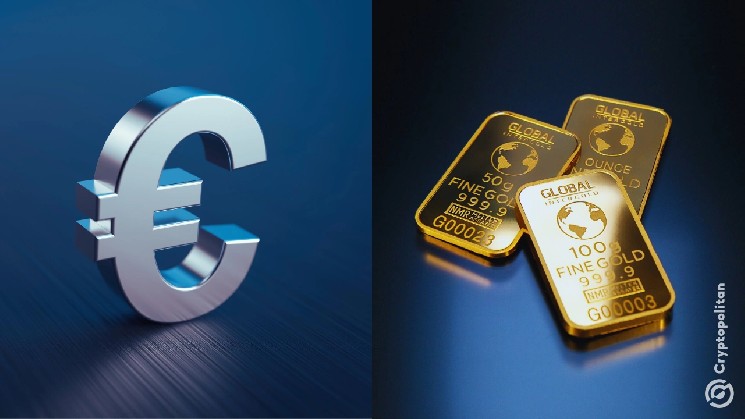
This ‘switch’ means gold has officially displaced the dominant reserve asset for the past few decades after the World Wars. The US government debt and treasuries served as the default store of value for central banks in managing exchange rate stability and liquidity. This has now switched actively to gold as a store of value.
U.S. sanctions a catalyst
After Russia’s invasion of Ukraine in 2022 and the war that followed, the US and its allies froze Russian dollar-based reserves in support of Ukraine. This move then prompted world governments to assess how much of their national wealth sat in assets the United States could restrict, and how this could be changed as noted by the ECB findings.
ECB President Christine Lagarde addressed the trend directly in the report. “Geopolitical tensions continue to drive strong demand for gold among central banks,” Lagarde said.
Gold, on the other hand, carries no such risk and cannot be frozen by a foreign government, a trait that became more attractive to central banks and world governments after the U.S.’ actions in 2022.
Will this switch affect demand for the dollar?
The results of the ECB’s assessment do not point to an immediate drop in demand for U.S. government debt. U.S. Treasuries continue to account for more than one-fifth of global foreign exchange reserves, while the dollar remains the dominant currency in international trade and finance.
Notably, the ECB‘s report also found that the euro’s share of global reserves had remained the same over the time period, which ultimately suggests the central bank value purchases are flowing primarily into gold rather than into competing reserve currencies.
China, India, Turkey, and Poland have been the largest buyers of gold for their central banks in recent years, as gold purchases by governments have continued to rise since 2022.

 cryptopolitan.com