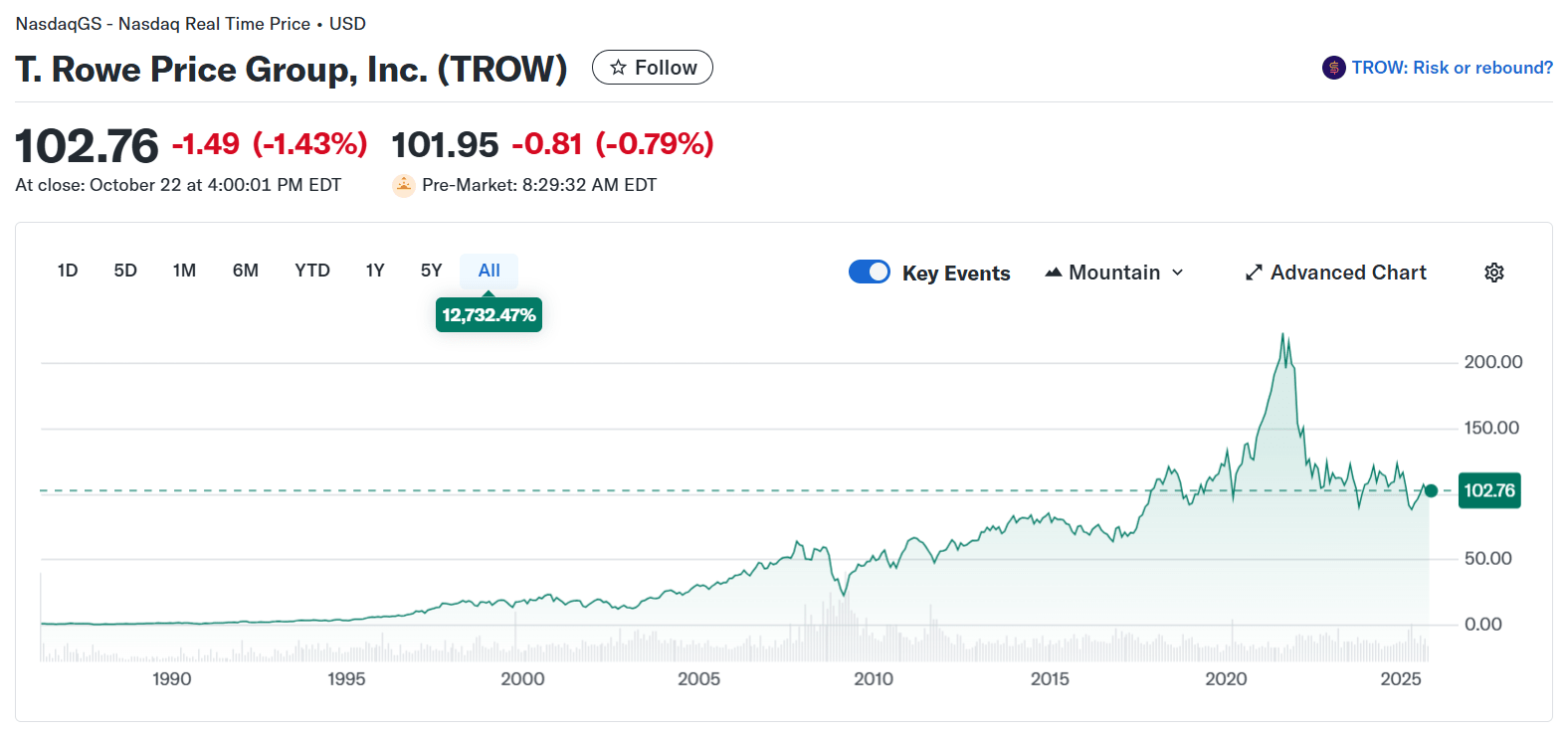
Because the ETF is actively managed, the fund manager will adjust allocations manually, giving T. Rowe Price flexibility during volatile market conditions. The portfolio may include shares of exchanges, mining companies, fintech firms, and other publicly traded businesses, as well as crypto-exposed derivatives.
Despite its strategy, the ETF will not directly purchase Bitcoin or Ethereum.
Why Traditional Finance Is Accelerating Into Digital Assets
ETF analyst Nate Geraci called the filing a “historic moment,” emphasizing that leading financial institutions are now competing for exposure to crypto. T. Rowe Price oversees $1.8 trillion in assets, and its participation signals growing confidence in the digital asset class.
The SEC is currently reviewing over 150 crypto ETF applications, although progress has temporarily slowed due to the ongoing U.S. government shutdown. Still, institutional momentum continues to build.
How Other Traditional Firms Are Entering the Crypto ETF Market
Traditional finance players are rapidly expanding into the digital asset investment space. BlackRock and Fidelity have already launched spot Bitcoin ETFs, attracting billions in inflows, while Franklin Templeton and VanEck have filed or launched their own crypto-focused products. This wave shows a clear pattern: legacy asset managers now view crypto ETFs as essential to remain competitive.
Wall Street’s broader strategy is straightforward:
-
Offer regulated crypto exposure for conservative investors
-
Leverage ETFs instead of direct custody to reduce risk
- Position early before crypto becomes a standard portfolio allocation
With household-name institutions onboard, digital assets are moving from speculation toward mainstream, long-term investment products.

 coinpaper.com