
 coindesk.com
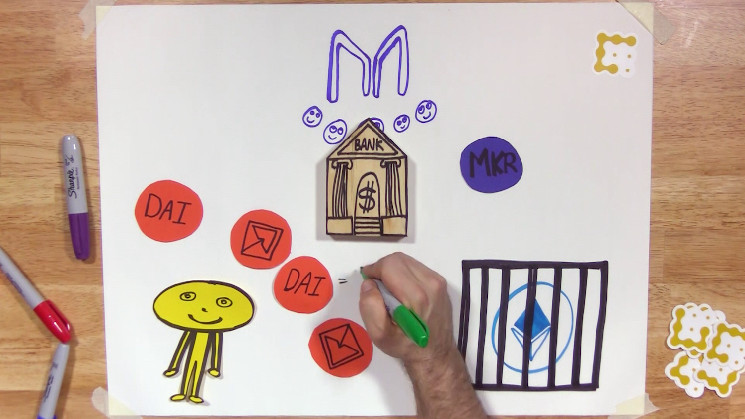
Pioneering cryptocurrency lending and stablecoin platform MakerDAO is addressing the cost and congestion of its native Ethereum environment by bridging to a cheaper, faster overlay network in the form of StarkNet, the zero-knowledge (ZK) side chain built by StarkWare.
Ethereum’s pricey gas fees have driven more activity and users to a wider variety of blockchains. Alongside its growth on Ethereum, MakerDAO plans to increase its product offerings and gradually move toward a multi-chain future by bridging to other protocols.
Rebuilding Maker on StarkNet’s system of ZK-rollups (a way of unburdening costly transaction settlement procedures from the main Ethereum chain using cryptographic proofs) will take place in four phases, starting with a simple bridge between the main blockchain and StarkNet’s layer 2 (L2), which will go live on April 28.
The second phase is the fast withdrawal which will allow users to withdraw from L2 to L1 by leveraging Maker’s “Wormhole” design. Such transactions will happen “in a couple of minutes and even shorter in the future,” said Louis Baudoin, an engineer on the MakerDAO/StarkNet project.
The third phase is dubbed “teleportation” and means being able to bridge between layer 2s – say you wanted to transfer 1,000 dai from StarkNet to Arbitrum, for example. The fourth phase will involve rebuilding multi-collateral dai (MCD) on StarkNet.
“With our Wormhole design, we are leveraging the fact that we have battle-tested oracles and we can mint dai as a DAO,” said Baudoin in an interview with CoinDesk. “That allows you to teleport dai from one layer to the other in minutes, something which would usually take much longer.”
Multi-chain Maker
In terms of timelines, the third phase of integration will be completed by the end of July, Baudoin said, while the fourth and final phase will be done by the end of this year or Q1 of 2023 at the latest, he added.
Blockchain bridging protocols have had their fair share of security challenges in the fast moving world of decentralized finance (DeFi).
“We have learned from the mistakes of the Solana Wormhole, and we learned from the hack of Poly,” said Baudoin. “Obviously there’s been a lot of testing done. It’s sensible to increase the bridge limit slowly so that the amount of money at risk is manageable, and also to have some emergency mechanisms in place internally to mitigate if there was a hack.”