
 blockster.com
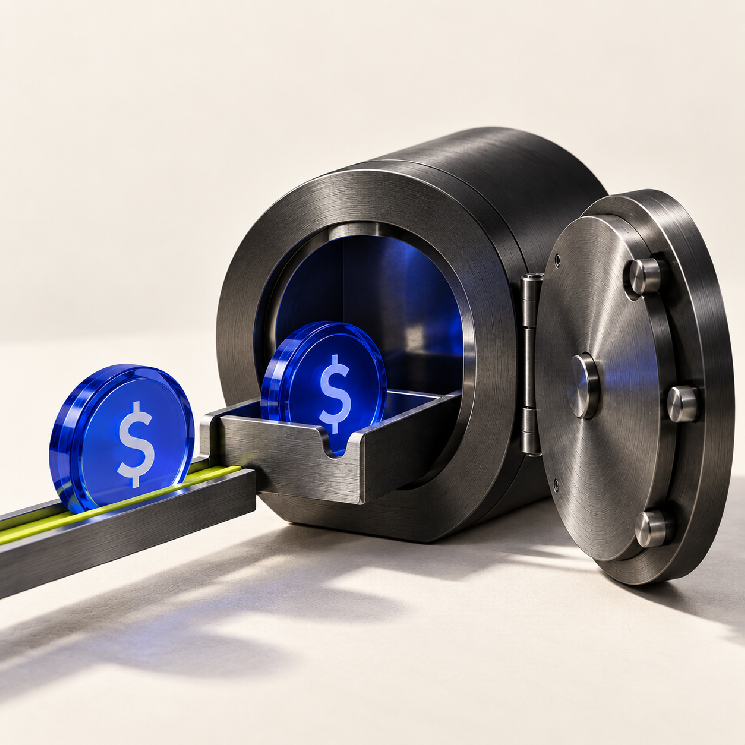
It took less than 40 minutes for more than $56 million in $USDC to move into a single Spark vault on Sunday, offering a striking example of how quickly stablecoin capital can move when DeFi investors find somewhere attractive to park it.
The money poured into Spark Finance's spUSDC V2, a savings vault that lets users deposit $USDC and earn yield without converting into another stablecoin. The vault currently offers a net yield of around 3.5% to 3.6%, with the underlying capital deployed through Spark's broader liquidity infrastructure.
The $56 million rush is significant for its speed, but it is part of a much larger shift. Stablecoins are increasingly being used as programmable cash balances that can sit in yield products between trades, move into lending markets when rates improve and return to liquid $USDC when users need the capital elsewhere.
Spark has built much of its business around capturing that money.
$56 Million Moves in Minutes
Users depositing $USDC into spUSDC receive a transferable vault token representing their position and accumulated yield. Because spUSDC is composable, it can also be moved between wallets or integrated into other DeFi applications without first closing the underlying savings position.
The yield is generated through the Spark Liquidity Layer, which allocates capital across DeFi, centralized finance and real-world assets rather than depending on demand from a single lending market. Spark describes itself as a two-sided capital allocator, using liquidity from the Sky ecosystem while packaging the resulting returns into savings products for users.
Current market data puts spUSDC at roughly $314 million in assets with a net APY around 3.5%. Staking Rewards recorded $44.4 million of net inflows during the previous 30 days, meaning Sunday's $56 million burst exceeded an entire month's recent inflows in less than an hour.
That comparison makes the latest move considerably more interesting than the headline number alone.
Spark Savings Is Already a Billion-Dollar Business
The rush into spUSDC comes as Spark's savings products have grown into one of the largest yield businesses in DeFi.
DefiLlama currently tracks roughly $1.29 billion in Spark Savings TVL across eight chains, with Ethereum accounting for about 74% of the total. Spark Savings ranks first among the yield protocols tracked by DefiLlama and represents approximately 28% of TVL in that category.
Spark's own figures are broader because the protocol includes additional institutional and capital-allocation products. Its current platform data shows more than $7.9 billion in total TVL, including billions across savings, borrowing and liquidity allocation.
Savings V2 has been attracting capital quickly since its introduction. According to Blockworks Research, the V2 vaults include spUSDC, spUSDT, spPYUSD and spETH, with deposited assets deployed into yield strategies through the Spark Liquidity Layer.
That gives Spark something increasingly valuable in DeFi: a large pool of stable capital that can be redirected as opportunities change.
Why 3.5% Is Attracting So Much Money
A yield around 3.5% hardly resembles the triple-digit APYs that defined earlier periods of DeFi.
That may be exactly the point.
For investors already holding $USDC, the decision is less about chasing speculative returns and more about whether idle dollars should sit in a wallet earning nothing or remain liquid while generating yield.
Spark has designed spUSDC around that use case. Depositors keep exposure to $USDC while Spark handles the allocation strategy behind the scenes, reducing the need for users to continuously compare lending markets and manually move funds between protocols.
The yield itself has also been relatively stable. Staking Rewards recorded a 3.54% net APY as of September 8, while DefiLlama's spUSDC data recently showed approximately 3.6%.
For larger holders, predictable returns on stablecoins can matter more than headline APY.



